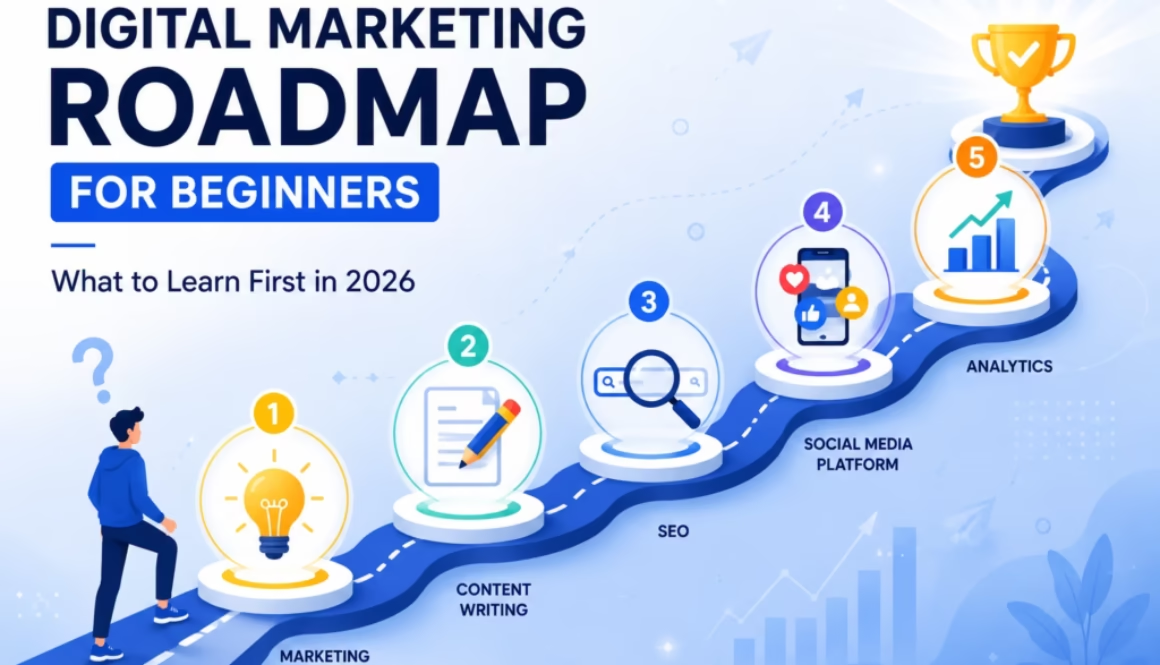
Digital Marketing Roadmap for Beginners: What to Learn First in 2026
This article was last updated in June 2026. All tools and resources mentioned were verified as free and accessible at the time of writing. If you spot a broken link, let me know.
Let me be honest with you.
When I first tried to learn digital marketing, I had no idea where to start. I opened ten browser tabs at once. I burned through hours of YouTube videos. I scribbled notes that made zero sense the next morning.
Everyone seemed to be telling me something different. One person said start with SEO. Another insisted Instagram was “dead” and I should focus on LinkedIn instead. A third told me to just run ads. Funnily enough, all of them happened to have a course to sell.
It felt like being dropped into a giant bookstore, blindfolded, and told to find one specific book.
So I slowed down. I stopped hopping between topics and started digging into what actually matters if you’re starting from zero — no experience, no audience, no budget.
This post is what I wish someone had handed me back then.
It’s a real digital marketing roadmap, built for beginners in 2026. No hype, no “you’ll make six figures in 90 days” nonsense — just a clear, honest sequence of what to learn first, and why it matters.
And the demand for these skills is very real: there are currently over 293,102 digital marketing jobs open in India on LinkedIn.
By the time you finish reading, you’ll know exactly where to begin, what order to follow, and how to build real, usable skills instead of spending months going in circles.
Table of Contents
- The Real Problem With “Just Learn Digital Marketing”
- The Step-by-Step Digital Marketing Roadmap
- Step 1: Understand the Basics First
- Step 2: Learn Content Writing
- Step 3: Get Into SEO
- Step 4: Pick ONE Social Media Platform
- Step 5: Learn to Read Your Numbers
- What Real Progress Looks Like (A Documented Example)
- Skill Learning Time: Realistic Estimates
- Frequently Asked Questions
- Conclusion and What to Do Next
The Real Problem With “Just Learn Digital Marketing
Here’s what nobody tells you when you’re starting out.
Digital marketing isn’t one skill — it’s a big umbrella. Underneath it sits SEO, content writing, social media, email marketing, paid ads, copywriting, video, analytics, and more.
When beginners hear “learn digital marketing,” they try to learn all of it at once. That’s the trap.
You end up watching an SEO video on Monday, reading about Instagram’s algorithm on Tuesday, skimming an email marketing article on Wednesday, and by Friday you feel busy — but you haven’t actually learned anything you can use.
I’ve been there. So has nearly everyone I know who’s tried to figure this out alone.
There’s another layer to this: digital marketing keeps changing. Platforms update their algorithms, new tools show up, and what worked in 2021 doesn’t always work the same way today.
That doesn’t mean the fundamentals change, though. It means you need to understand the “why” behind a strategy, not just the “what.”
Once you understand why something works, you can adapt as things shift. And that ability to adapt is exactly what separates people who build lasting skills from people who are always chasing the next trend.
So this roadmap isn’t about mastering everything at once. It’s about learning things in the right order — each step building on the one before it.
The Step-by-Step Digital Marketing Roadmap
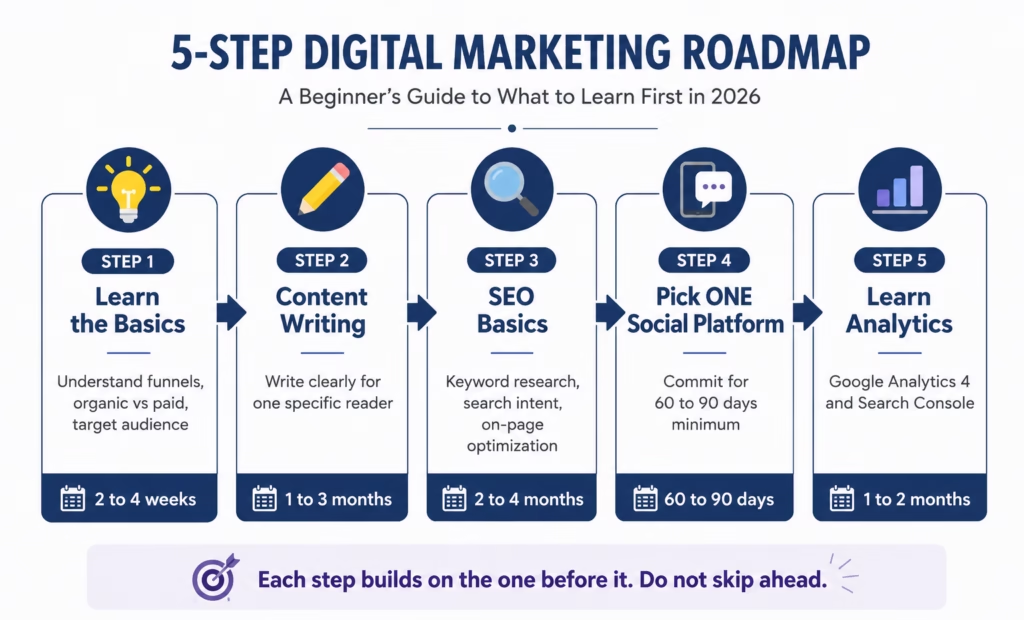
Before we get into each step individually, here’s the big-picture view of how it all fits together — a simple five-step sequence you can follow from zero experience to your first real, usable skills.
Step 1: Understand the Basics First
Before you touch any tool or platform, spend some time just understanding how digital marketing actually works.
I know that sounds boring. But trust me — skipping this step is exactly why so many beginners feel lost three months in.
Here’s what “understanding the basics” actually means in practice:
What is a sales funnel? A funnel is simply the path someone takes from not knowing you exist to actually buying from you or engaging with your content. Roughly: they hear about you → they get curious → they consider you → they take action.
Every piece of marketing you create fits somewhere in that funnel. Once that clicks, a lot of other things start making sense too.
What’s the difference between organic and paid marketing? Organic means you earn attention without paying for it — SEO, blogging, social media posts. Paid means you run ads. Both have their place, but beginners should start with organic, since it’s free and teaches you a lot about your audience along the way.
What is a target audience? It’s the specific group of people your content or product is actually for. “Everyone” is not a target audience. “19–25 year old students in India who want to build an online career” is.
Where to start learning this:
Google Digital Garage offers a free certification called “Fundamentals of Digital Marketing.” It covers all of this in a structured way, it’s completely free, and it takes just a few hours to complete. Not the most thrilling content in the world, but it’s solid for building a foundation.
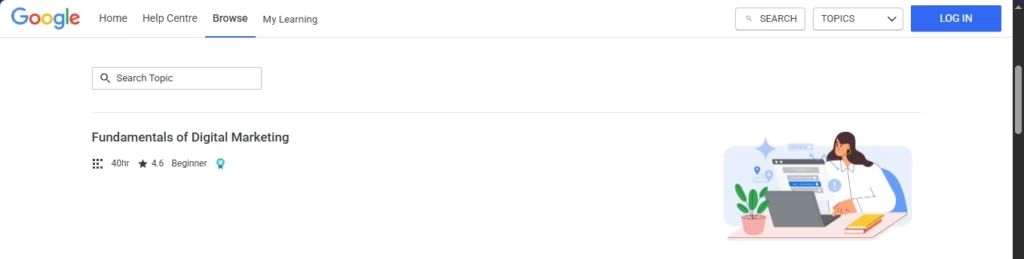
📸 [Place image here: Google Digital Garage (screenshot)]
HubSpot Academy also has free beginner courses that are well-organized and genuinely useful.
Give yourself two to four weeks here. Don’t rush it.
Step 2: Learn Content Writing
Content writing is the single most transferable skill in digital marketing.
Think about it: every blog post needs writing. Every social media caption needs writing. Every email, video script, and ad needs writing too. Once you learn to write clearly for a specific reader, you become useful across almost every area of digital marketing.
You don’t need to be a great writer to start. Seriously. You just need to practice communicating ideas in a simple, clear way.
What should you actually focus on?
Write for one person, not for everyone. Picture one specific reader. What do they already know? What confuses them? Write like you’re explaining something to that one person over a cup of tea.
Keep sentences short. If a sentence stretches across three lines, cut it in half. Then cut it again. Shorter sentences are easier to read, especially on a phone screen.
Structure matters. Every good piece of content has a beginning (here’s the problem), a middle (here’s how to solve it), and an end (here’s what to do now). It sounds obvious, but most beginners skip it.
Don’t worry about being “good.” Worry about being clear.
Practical exercise: Start a simple blog. Write about whatever you’re learning. Document your journey — it doesn’t need to be polished, it just needs to exist. This is also how you build a portfolio, which you’ll need later if you ever want to freelance.
Tools that help:
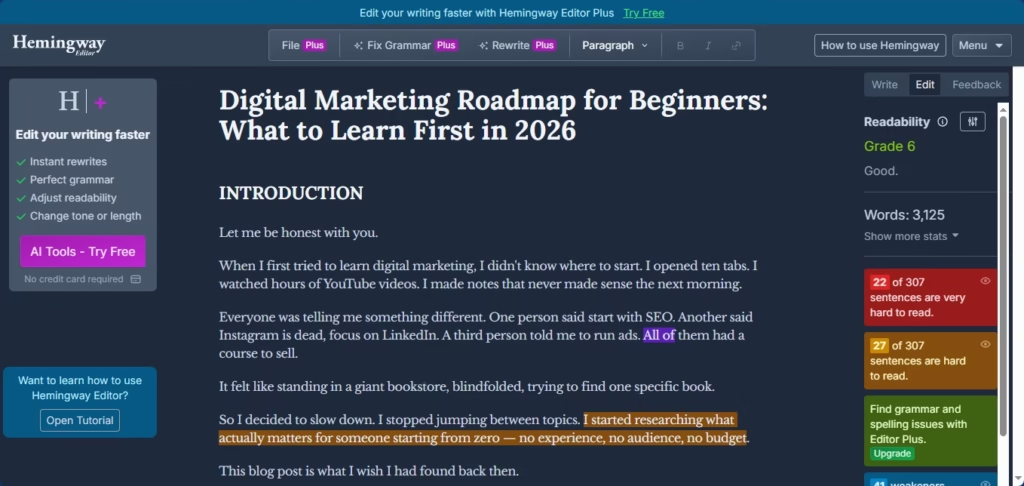
Hemingway Editor — paste your writing in and it flags sentences that are too complicated. Free to use online.
Notion or Google Docs — write wherever feels comfortable. You don’t need fancy tools yet.
Step 3: Get Into SEO
SEO stands for Search Engine Optimization.
Basically, it’s the practice of making your content easier for Google (and other search engines) to find and recommend.
Why does this matter so much?
Because SEO is one of the only marketing channels where you can get free, consistent traffic — without posting every day, without running ads, and without going viral.
You write something good, you optimize it, and over time people searching for related topics find it through Google. That’s the whole idea.
Research from Ahrefs shows that most pages ranking in the top 10 results are two to three years old, and that 90.63% of all web pages get zero traffic from Google. That’s exactly why SEO matters — without it, your content simply doesn’t get found.
Now, SEO can sound technical, and at an advanced level it genuinely gets complicated. But as a beginner, there are only a few things you need to understand to get started.
Keyword research. This is how you figure out what people are actually searching for. You don’t write about what you think is interesting — you write about what your audience is already looking for. Tools like Ubersuggest (free tier) or Google’s own search autocomplete can help. Google’s Search Central blog also explains how search works: developers.google.com/search/docs
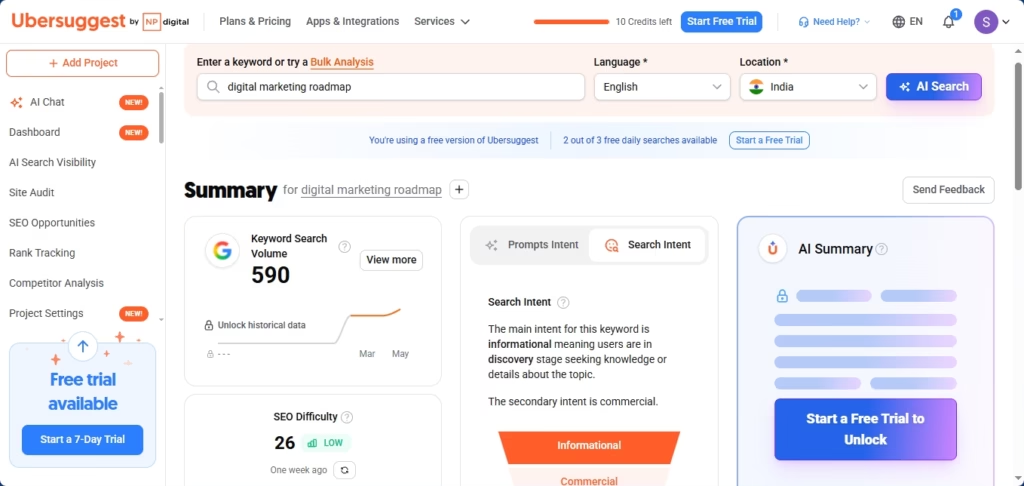
Search intent. This is the “why” behind a search. Someone typing “best laptops under 40000 rupees” wants a comparison list. Someone typing “how to clean a laptop keyboard” wants step-by-step instructions. Matching your content to the intent behind a search is one of the most important SEO skills you can build.
On-page basics. This covers your title, your headings (H1, H2, H3), your meta description (the short summary that shows under your page title in Google results), and how you structure your content overall.
A genuinely great free resource for going deeper is the Moz Beginner’s Guide to SEO — one of the best free SEO resources out there.
Read it slowly. Take notes. Come back to it more than once.
Step 4: Pick ONE Social Media Platform
I want to be clear about something here.
Being on every platform is not a strategy. It’s a recipe for burnout.
Most beginners sign up for Instagram, LinkedIn, TikTok, and YouTube in the same week, post inconsistently across all of them for two months, then wonder why nothing is growing.
Pick one platform. Just one.
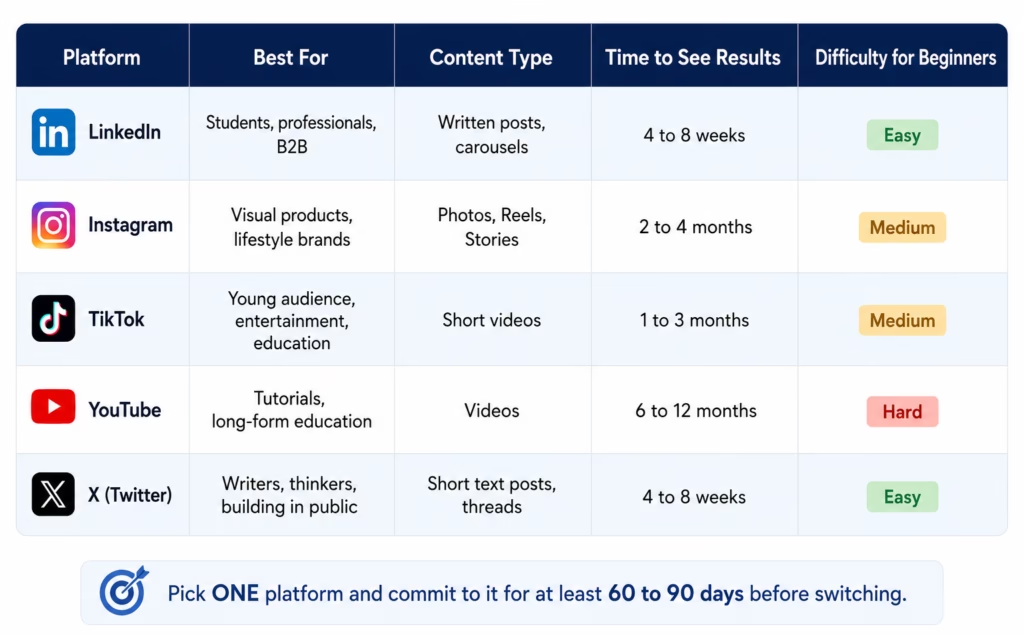
Here’s a rough guide to help you decide:
- LinkedIn — great for B2B content, career topics, professional services, and building in public as a student or aspiring marketer. If you’re documenting your learning journey, LinkedIn is genuinely a great place to do it.
- Instagram or TikTok — better for visual content, products, and lifestyle niches. If your content is better shown than written, these work well.
- YouTube — best for long-form educational content. Slower to grow, but the audience tends to be more loyal.
- X (formerly Twitter) — great for writers and thinkers, and also useful for building in public or engaging with a specific community.
Choose based on where your target audience actually spends time — not where you personally like to scroll.
A quick note on the data below: Pinterest and Reddit weren’t included in the Digital 2025: India report because DataReportal hadn’t published India-specific audience figures for them at the time. The newer Digital 2026: India report now includes Reddit, but Pinterest is still missing because Pinterest doesn’t provide publicly available India advertising audience data.
Here’s the updated table:
| Platform | Estimated Advertising Audience in India* |
| YouTube | 500 million |
| 481 million | |
| 403 million | |
| Snapchat | 213 million |
| LinkedIn** | 162 million |
| Facebook Messenger | 108 million |
| 30.8 million | |
| Threads | 26.6 million |
| X (formerly Twitter) | 22.2 million |
| Not publicly reported for India |
* Figures are estimated advertising audiences (late 2025/early 2026), not monthly active users.
** LinkedIn reports registered members rather than monthly active users, so its figure isn’t directly comparable with the others.
Source: DataReportal, Digital 2026: India. This is the most up-to-date verified dataset available as of June 2026 — it includes Reddit because DataReportal now reports it, while Pinterest remains unavailable due to the lack of official India-specific audience data.
Once you’ve picked a platform, commit to it for at least 60 to 90 days before judging whether it’s working. Learn the format, understand what performs well, post consistently, then evaluate.
Step 5: Learn to Read Your Numbers
Here’s something nobody talks about enough in beginner guides.
You can learn every tactic in the world, but if you don’t know how to measure what’s actually working, you’re just guessing.
Analytics is how you stop guessing.
At the beginner stage, you only need to get comfortable with two free tools:
Google Analytics 4 (GA4) — tells you how many people visited your site, where they came from, which pages they read the most, and how long they stayed.
Google Search Console — specifically for SEO. It shows which search queries brought people to your content, which pages appear in Google, and whether there are any technical problems with your site.
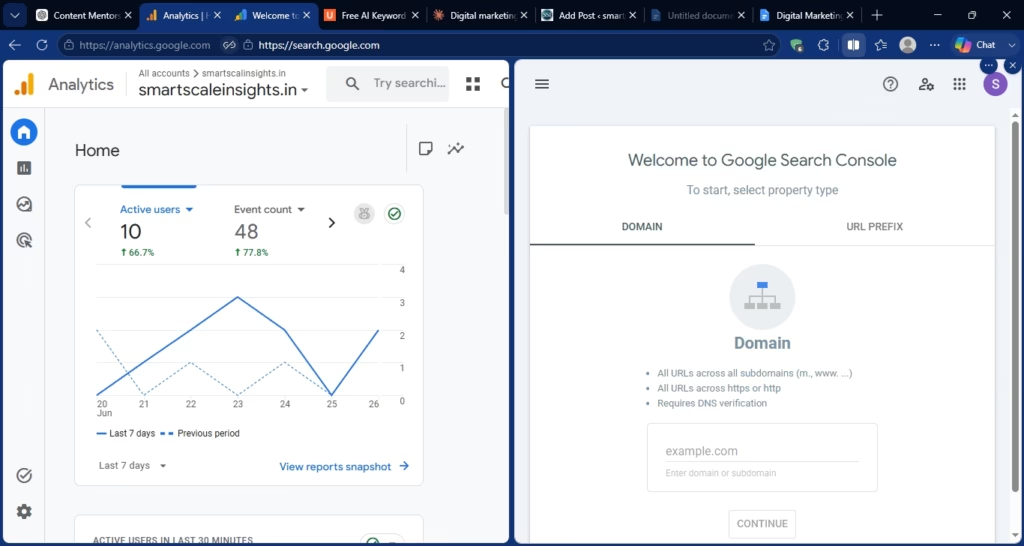
Both tools are free. Both take some time to get comfortable with. But even basic familiarity with them puts you ahead of most beginners.
Start by just looking around in them. Don’t worry about understanding everything right away — over time, you’ll start noticing patterns, and those patterns will tell you what to write more of, what to improve, and what’s not worth your time.
HubSpot Academy also has a free course on marketing analytics worth checking out: academy.hubspot.com
What Real Progress Looks Like (A Documented Example)
I want to share a documented example here — not to make you feel behind, but to show what consistent, focused effort can actually produce.
A 21-year-old student in India started a blog about productivity tools in early 2024. Zero experience, zero audience, zero budget.
Here’s roughly what her first year looked like:
Months 1 and 2: She finished the Google Digital Garage certification and started writing one blog post a week on a free WordPress site. The posts weren’t great. She published them anyway.
Months 3 and 4: She learned basic keyword research, went back to her old posts, and improved the titles and structure. She started targeting low-competition keywords — the kind bigger sites tend to ignore.
Months 5 and 6: A few posts started showing up on page 2 and page 3 of Google. No viral moment, no flood of visitors — but the numbers were moving.
Months 7 to 9: Three posts made it to page 1. Her blog was getting around 1,200 visitors a month, all organic, with zero ad spend.
Months 10 to 12: She used that traffic data as her portfolio, and two small businesses reached out for freelance content work.
Nothing explosive happened. There was no single breakthrough moment — just consistent work, in the right direction, for about a year.
That’s what a real digital marketing roadmap looks like in practice.
Skill Learning Time: Realistic Estimates
Here are rough time estimates for each area, assuming you’re putting in about 1 to 2 hours of actual practice per day:
Marketing Fundamentals → 2 to 4 weeks. You’ll know you’re there when you can explain what a funnel is, what organic vs. paid means, and why a target audience matters.
Content Writing → 1 to 3 months. You’ll know you’re there when you can write a clear, structured, useful blog post without spending five hours editing it.
Basic SEO → 2 to 4 months. You’ll know you’re there when you can do keyword research, optimize a page, and understand search intent.
Social Media (One Platform) → 60 to 90 days. You’ll know you’re there when you’re posting consistently, seeing real engagement, and understand what works on that platform.
Basic Analytics → 1 to 2 months. You’ll know you’re there when you can look at GA4 and Search Console data and draw simple conclusions from it.
Email Marketing → 1 to 2 months. You’ll know you’re there when you can build a basic email list, write a welcome sequence, and understand open rates.
Paid Ads (Google or Meta) → 3 to 6 months. You’ll know you’re there when you can set up a basic campaign without burning through your whole budget in a day.
Important note: these are estimates. Your actual timeline depends on how much you practice, how deeply you engage with the material, and — honestly — how often you test things for real instead of just watching tutorials.
Frequently Asked Questions
Can I learn digital marketing for free in 2026? Yes, absolutely. A huge amount of high-quality free content exists — Google Digital Garage, HubSpot Academy, Meta Blueprint, and YouTube channels from reliable educators cover most of what a beginner needs. Paid courses can add structure, but they’re not required to build foundational skills.
Start with free resources. Only invest in paid courses when you have a specific skill gap to fill — not because someone on Instagram told you their course will change your life.
How long does it take to become a digital marketer starting from scratch? For most consistent people, building a working skill set across three to five areas takes roughly six to twelve months. Getting to a point where you can take on freelance work or apply for entry-level roles is realistic within that window.
Getting to “experienced” is a different story — that takes two to three years of real practice, real mistakes, and real feedback from real results.
Do I need a degree to get a digital marketing job? No. Most entry-level roles and freelance opportunities care more about demonstrated skills than formal education. A portfolio — live blog posts that rank, a social account you’ve grown, a case study of something you actually did — carries more weight than a certificate for most employers.
That said, a marketing or communications degree still helps in certain corporate environments. Just know it’s not the only path in.
What’s the most in-demand digital marketing skill in 2026? Based on what freelance platforms and job listings consistently show, SEO content writing, paid social advertising (Meta and Google), and email marketing automation are reliably in demand.
AI-assisted content creation and analytics interpretation have also become skills employers look for. But SEO remains one of the best starting points for beginners, since the barrier to entry is low and you can practice it for free.
Should beginners start with paid ads or organic marketing? Start with organic. Every time.
Paid ads require a budget, and more importantly, they require you to understand your audience first — otherwise you’re just paying to learn expensive lessons.
Organic marketing — blogging, SEO, social media — teaches you what actually resonates with people. Once you understand that, your paid ads become far more effective.
Think of organic as your research phase. Paid ads are what you graduate to once you know what works.
A useful resource for understanding how organic and paid work together is the Backlinko blog. Brian Dean’s articles are practical, data-backed, and written in a way that genuinely makes sense for beginners.
Conclusion and What to Do Next
Here’s what I want you to take away from this.
Digital marketing isn’t complicated to start. It becomes complicated when people try to do everything at once without any direction.
This roadmap gives you a sequence — and that sequence matters more than most people realize.
Start with the fundamentals. Build your writing. Learn SEO. Pick one social platform and commit to it. Then learn to read your data.
After that? You can go deeper into email marketing, paid ads, video, or whatever direction makes sense for what you’re trying to build.
But you have to start somewhere specific.
One last thing — and I mean this genuinely.
The gap between people who make progress and people who stay stuck isn’t usually talent. It’s not even intelligence. It’s whether they’re willing to build something imperfect and keep going.
Start small. Publish something. Let it be mediocre. Improve it. Then do the next thing.
That’s the actual roadmap.
Recommended External Resources
These three resources are worth bookmarking. They’re free, reliable, and genuinely useful for beginners:
- Moz Beginner’s Guide to SEO — one of the most thorough free SEO resources available, updated regularly and written in plain language. moz.com/beginners-guide-to-seo
- HubSpot Academy — Free Digital Marketing Courses — well-structured free certifications covering inbound marketing, content strategy, and analytics. academy.hubspot.com
- Backlinko Blog by Brian Dean — data-driven articles on SEO and content marketing that are practical, specific, and beginner-accessible. backlinko.com/blog
Before You Publish
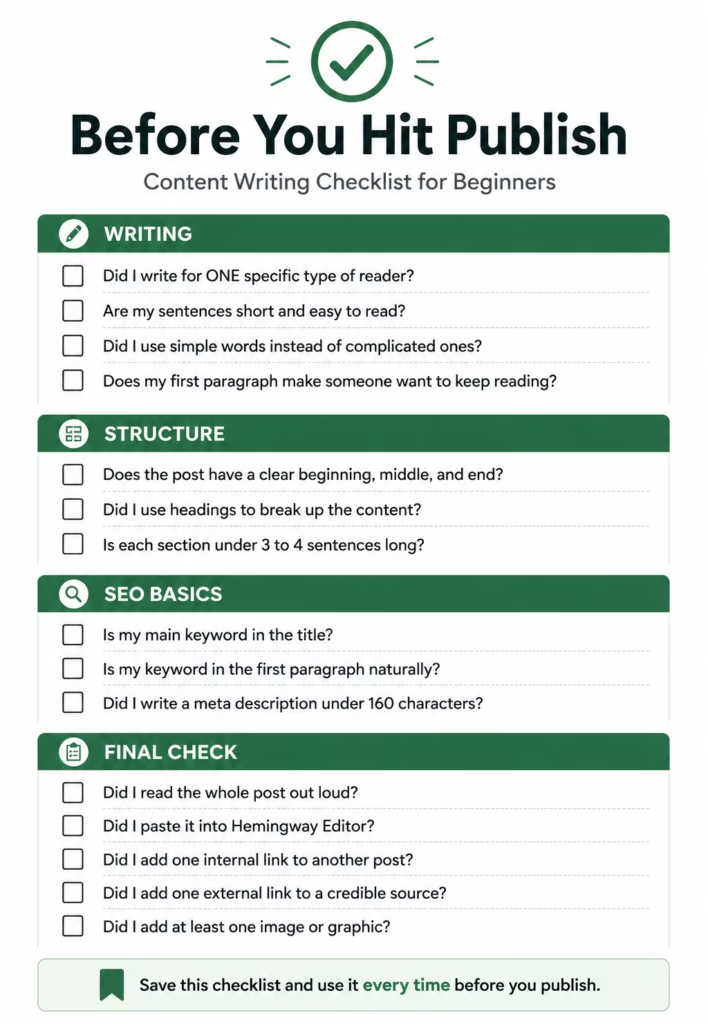
Run your draft through a quick checklist before hitting publish — it catches most of the small things that quietly hurt readability and SEO.
Disclaimer
This article was written by a beginner creator for educational purposes — documenting a learning journey, not claiming professional expertise. Results vary. No income claims are made here. Always verify information from multiple sources and use your own judgment.