
The Complete Student Expenses List: 25 Costs You’re Probably Forgetting
You Made a Budget. It Still Fell Apart. Here’s Why.
Picture this. You sit down at the start of the semester, open a notes app or a spreadsheet, and write down the obvious stuff: rent, food, tuition, phone bill. You feel good. Organized, even. Like you’ve got this figured out.
Thank you for reading this post, don't forget to subscribe!
Then week three hits.
A lab fee shows up out of nowhere. Your friend’s birthday is next weekend, and you’re expected to chip in for a gift. Your laptop charger dies, and replacing it isn’t cheap. Suddenly, the “perfect” budget you made three weeks ago is already broken.
Here’s the thing, though. This isn’t really a money problem. It’s a list problem.
Most student budgets fail for one simple reason: they only include the expenses that happen every single month, like clockwork. Everything irregular gets left out. And irregular doesn’t mean optional. It’s still real money leaving your account.
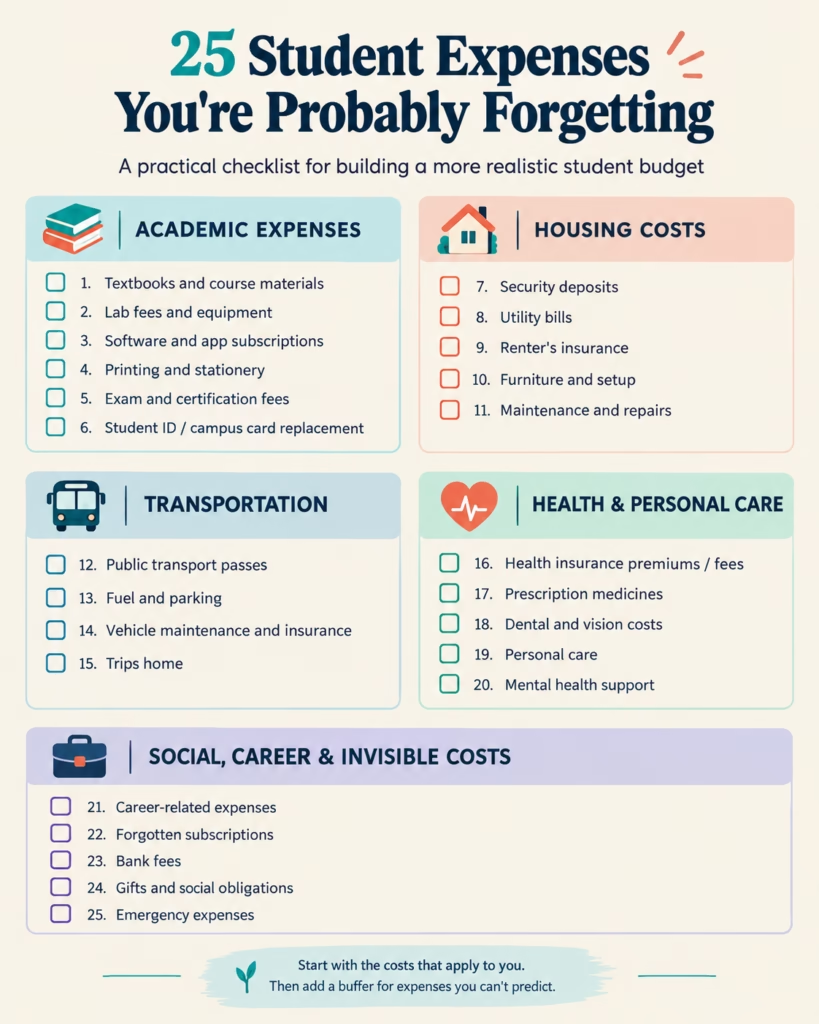
Quick summary, in case you’re skimming: a solid student expenses list needs to go beyond rent and tuition. It should include academic fees, health costs, transportation, and the small “invisible” spending that adds up fast. This post walks through 25 of the most commonly forgotten ones, based on general guidance from student finance resources like the Consumer Financial Protection Bureau and Federal Student Aid.
Quick disclaimer before we dive in: I’m not a financial advisor. I’m 19, and I’m figuring this out the same way a lot of you are, through research and a fair amount of trial and error. So treat this as a starting point you build on, not gospel.
Table of Contents
- Why Budgets Fall Apart in the First Place
- Academic Expenses Beyond Tuition
- Housing Costs People Forget
- Transportation Costs That Sneak Up
- Health and Personal Care Costs
- Social, Career, and “Invisible” Costs
- Comparing Budgeting Approaches
- Common Budgeting Mistakes to Avoid
- A Quick Disclaimer
- FAQ
- Final Thoughts
Why Budgets Fall Apart in the First Place
Let’s slow down for a second, because this part actually matters more than the list itself.
Rent happens every month. So does your phone bill. Those are easy to remember, they’re already written down somewhere in your head.
But a textbook you need in week three? That doesn’t have a fixed date. Neither does a dentist appointment in October, or a friend’s wedding next spring. Nobody puts those on a monthly recurring bill.
These costs just don’t show up on a calendar. So naturally, they don’t show up in a budget either, not until they hit your bank account and you’re left wondering where the money went.
Turns out, this happens to a lot of people, not just you. According to Trellis Strategies’ Fall 2025 Student Financial Wellness Survey, 65% of the 65,816 undergraduate students surveyed said they had run out of money at least once since the start of the year. That’s a huge number, and it tells you this isn’t a personal failing. It’s a planning gap.
And the fix, honestly, isn’t complicated. You don’t need to predict every expense down to the dollar. You just need a bit of room built in, a category that can absorb the stuff you can’t fully predict yet.
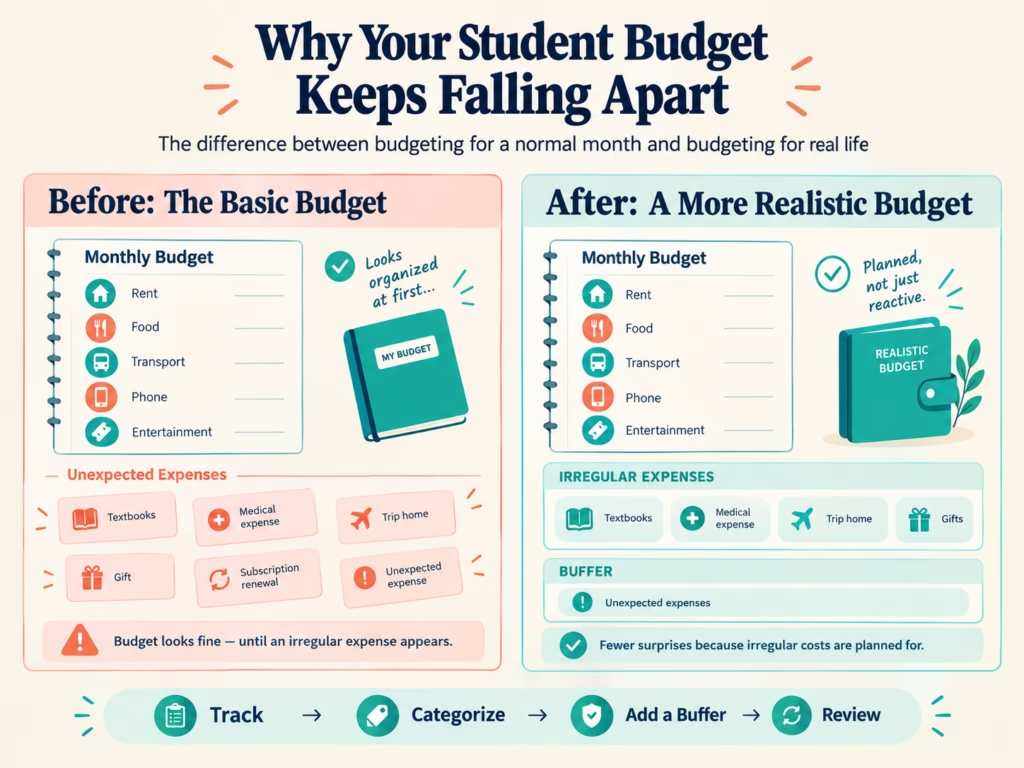
That’s really what this whole student expenses list is about. Fewer blind spots. Fewer “wait, where did that money go” moments.
Academic Expenses Beyond Tuition
Tuition is the headline cost, the number everyone talks about. It’s also usually just the entry fee. There’s more hiding underneath it.
1. Textbooks and course materials. Some classes need specific books, and prices swing a lot depending on whether you buy new, buy used, rent, or track down a digital copy.
2. Lab fees and equipment. Science courses, art classes, and technical programs often charge extra on top of tuition. This covers materials or tools tuition alone doesn’t stretch to.
3. Software and app subscriptions. Design software, coding tools, citation managers, whatever your course happens to require. If it’s subscription-based, that’s a recurring cost that quietly slipped past your radar.
4. Printing and stationery. Small on its own, sure. But add it up over a semester and it’s a steady little drain you barely notice.
5. Exam and certification fees. Some courses charge separately for exams, resits, or certifications. Worth reading the fine print early, before it catches you off guard.
6. Student ID or campus card replacement. Lose it, and you’ll probably be paying to replace it. Ask me how I know.
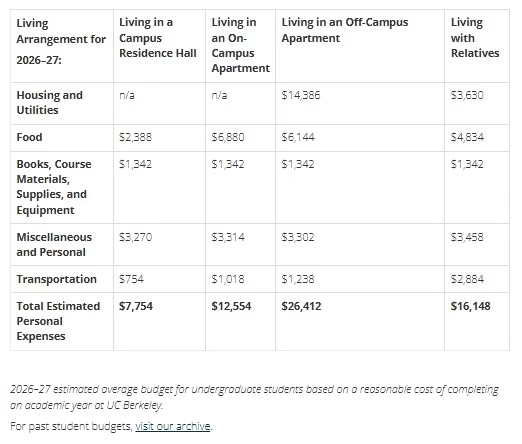
According to Federal Student Aid, the official “cost of attendance” that colleges publish is supposed to include books, supplies, and personal expenses, not just tuition and fees. It’s worth actually checking your own school’s estimate to see what it accounts for. You can read more about how cost of attendance works directly on Federal Student Aid’s site.
And a small confession here. I didn’t get this right myself the first time either. When I was putting together my own budget, I completely forgot about a lab fee for one of my courses. It wasn’t a huge amount, but it showed up out of nowhere right after I’d already “finished” my monthly plan. I’d also signed up for a free trial of an app months earlier and never got around to cancelling it, so it had been quietly charging me the whole time without me noticing. Small mistakes. But exactly the kind of thing this list is meant to help you dodge.
Housing Costs People Forget
Rent gets remembered, obviously. It’s the big scary number. These smaller ones usually don’t get the same attention, even though they’re just as real.
7. Security deposits. This is money you pay upfront when you rent a place. One month’s rent is a common amount, but the actual figure and legal limits depend entirely on where you live and local rental laws. Check the rules in your state or country before you sign anything.
8. Utility bills. Electricity, water, gas, internet. Some of these are separate from rent, and some aren’t. Check your lease. Don’t just assume, because assuming is how you end up short one month.
9. Renter’s insurance. Not always required, but it can be relatively affordable. According to National Association of Insurance Commissioners data, the average U.S. renters insurance premium was $170 per year in 2021. Prices vary depending on your state, coverage, and insurer, but it can genuinely help protect your belongings against covered losses.
10. Furniture and setup costs. Mattress, desk lamp, kitchen basics, curtains. Moving into an unfurnished place costs a lot more upfront than most students plan for, and it hits all at once.
11. Maintenance or repair costs. Depending on your lease, you might be on the hook for small repairs, or for anything you accidentally damage. Worth reading that part of your lease more than once.
Transportation Costs That Sneak Up
12. Public transport passes. A monthly pass can feel expensive at first glance. Compare it to paying per ride every single day, though, and it usually wins by a mile.
13. Fuel and parking. Campus parking permits, street parking, gas. Easy to underestimate if you’re commuting regularly and just eyeballing it.
14. Vehicle maintenance and insurance. Oil changes, new tires, insurance premiums. These are periodic, not monthly, which makes them incredibly easy to forget when you’re building a month-to-month budget.
15. Trips home. Flights, train tickets, gas money. If you study away from home, visits during breaks are a real, recurring cost, not a one-off.
Health and Personal Care Costs
16. Health insurance premiums or fees. Some schools charge a mandatory health fee. Others expect you to arrange your own coverage. Either way, it’s a cost that exists whether you remember it or not.
17. Prescription medications. Even with insurance, co-pays add up over a semester more than you’d think.
18. Dental and vision care. Often not covered by basic student health plans. Easy to keep postponing. Also easy to become urgent, and expensive, if you wait too long.
19. Personal care items. Toiletries, haircuts, skincare, laundry detergent. Individually small. Monthly, though, they genuinely add up.
20. Mental health support. Therapy or counseling, if it’s not covered by your school, is worth budgeting for if you think you might need it at some point.
The Consumer Financial Protection Bureau has free tools built specifically around student budgeting, including worksheets that walk through housing, health, and personal expenses side by side. You can look at their budgeting resources for students if you want a more guided version of this. For something even more thorough, the CFPB’s Your Money, Your Goals toolkit is free and covers budgeting, debt, and savings goals in a lot more depth than any single blog post can.
Social, Career, and “Invisible” Costs
21. Career-related expenses. Interview outfits, resume printing, LinkedIn Premium, transportation to interviews. Small costs that show up suddenly, right when opportunities do.
22. Forgotten subscriptions. Streaming, cloud storage, a gym membership you stopped using back in March. Worth a quick audit of your bank statement every couple of months, honestly.
23. Bank fees. ATM withdrawal fees, overdraft charges, monthly maintenance fees. These quietly chip away at your balance if you’re not paying close attention.
24. Gifts and social obligations. Birthdays, holidays, a group gift for a roommate’s going-away party. This is real spending. Not “fun money” you can just skip.
25. Emergency expenses. A cracked phone screen, a laptop that dies, a sudden trip home. You can’t predict what it’ll be. You can predict that something eventually will happen.
Comparing Budgeting Approaches
There’s no single “correct” way to budget, no matter what any one article tells you. Here’s a quick side-by-side of three common approaches students actually use.
The 50/30/20 approach, for example, was popularized by Elizabeth Warren and Amelia Warren Tyagi in their book All Your Worth. It divides after-tax income into roughly 50% for needs, 30% for wants, and 20% for savings and debt repayment.
| Approach | How It Works | Best For | Watch Out For |
|---|---|---|---|
| 50/30/20 Rule | 50% needs, 30% wants, 20% savings | Students who want a simple starting formula | Doesn’t account well for irregular costs like the ones on this list |
| Zero-Based Budget | Every dollar is assigned a job, income minus expenses equals zero | Students who like detail and control | Time-consuming to maintain if your income is irregular |
| Envelope / Category Method | Set spending limits per category (food, transport, fun) | Students prone to overspending in specific areas | Requires discipline to stop once an “envelope” is empty |
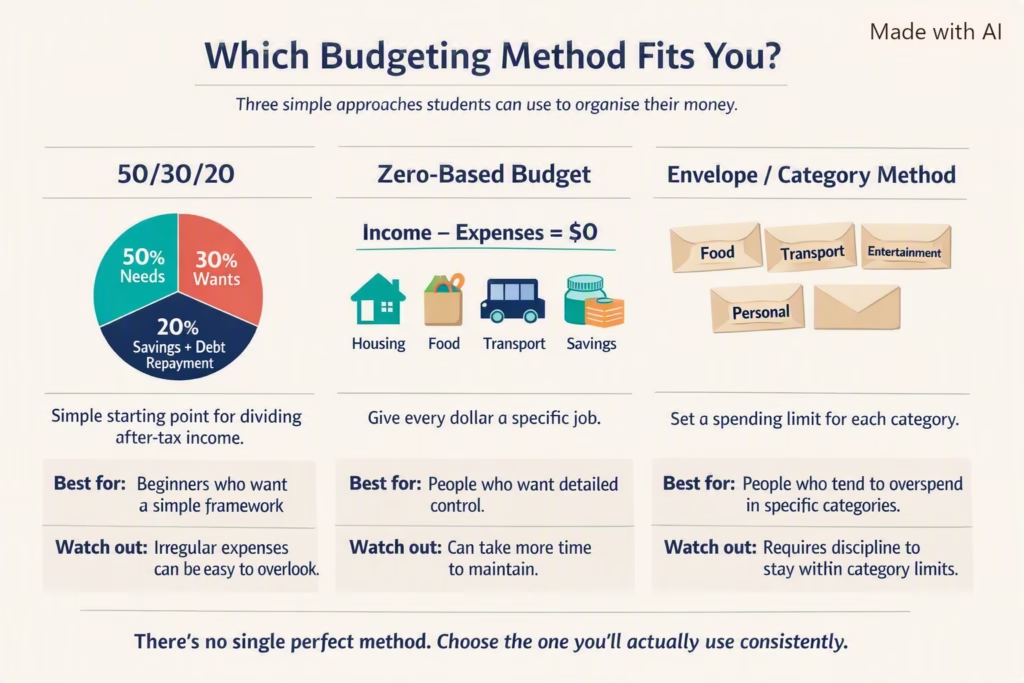
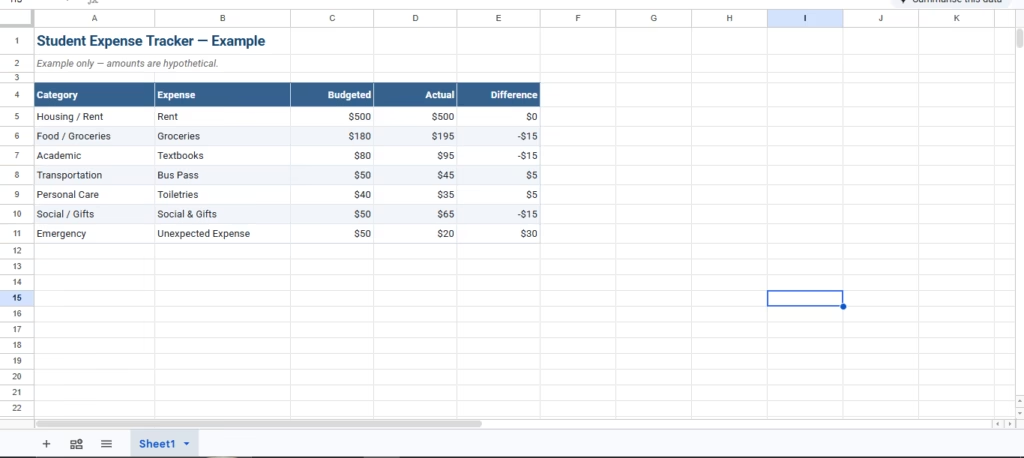
None of these are wrong, to be clear. The trick is picking one, adding a buffer category for the 25 items above, and actually sticking with it for a few months before you decide to switch.
Common Budgeting Mistakes to Avoid
Mistake 1: Only budgeting for what happens every month. This is the whole point of this article, honestly. Irregular costs are still costs, whether they’re monthly or not.
Mistake 2: Not tracking spending before building a budget. It’s hard to plan for the future if you don’t actually know what you’re spending right now. Spend two or three weeks just tracking, before you try to build the “perfect” plan.
Mistake 3: Treating “miscellaneous” as optional. A buffer category isn’t extra padding. It’s the part of your budget that absorbs real life when real life happens.
Mistake 4: Never reviewing the budget again. A budget you set once in September and never touch again isn’t really a budget. It’s more of a guess with extra steps.
Mistake 5: Comparing your spending to other people’s. Everyone’s situation is different. Someone else’s “cheap” month might not be even remotely realistic for your city, your course, or your life.
A Quick Disclaimer
Please note: This article is for general educational purposes only. It is not financial, legal, or professional advice. Costs vary a lot depending on your country, school, and personal situation. Always check official sources, like your school’s financial aid office or a licensed advisor, before making financial decisions.
FAQ
What should a student’s monthly budget include? At minimum, it should include tuition-related costs, housing, food, transportation, and a buffer for irregular expenses like health costs, textbooks, and social spending. See the full student expenses list above for the details.
How much should students budget for hidden or irregular expenses? There’s no fixed number, since it really depends on your lifestyle and location. A common starting point is setting aside a small percentage of your monthly budget, often discussed as part of the 50/30/20 rule, purely as a buffer for the unexpected.
What is the biggest expense students forget to budget for? Based on common student finance guidance, textbooks, health-related costs, and irregular travel (like trips home) tend to be the most frequently forgotten, mostly because they don’t happen every single month.
Do students need renter’s insurance? It’s not always required, but it can be relatively affordable and helps cover your belongings if something is lost, stolen, or damaged. Check with your landlord or lease agreement for the specifics.
How often should a student review their budget? Monthly is a reasonable starting point. Life changes, a new semester, a new apartment, a new job, and your budget honestly should change right along with it.
Final Thoughts
A complete student expenses list isn’t really about predicting the future perfectly. Nobody can do that anyway.
It’s about reducing surprises. That’s it. That’s the whole goal.
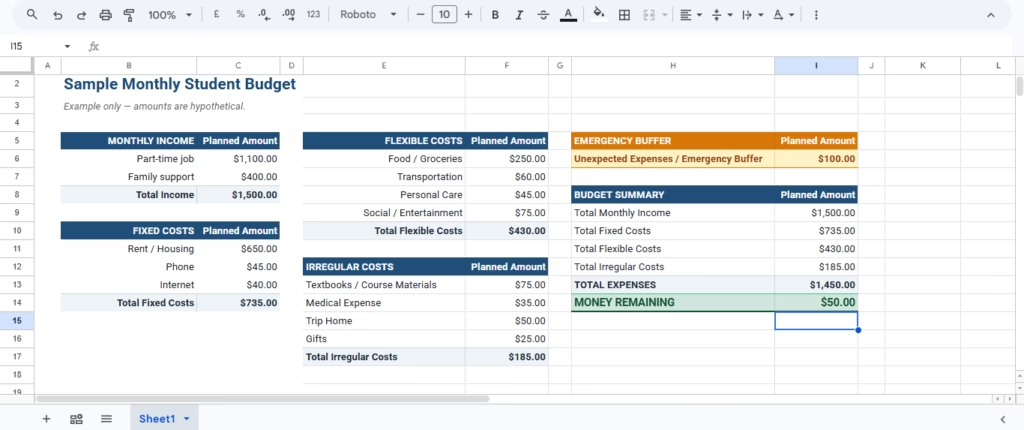
Every item on this list won’t apply to you, and that’s completely fine. Go through it, mark what’s relevant to your own life, and build a buffer for the rest. Then check in on it monthly, not once a year and never again.
If you want a second opinion beyond this article, NerdWallet has a detailed breakdown of common college student budget categories that’s worth comparing against your own numbers.
What’s next? Pick just one thing from this list that applies to you and isn’t in your current budget yet. Add it this week. That’s it. That’s the whole first step, and it’s a lot less intimidating than trying to fix everything at once.
Building a complete student expenses list isn’t something you do once and forget about. It’s something you keep adding to as you notice new costs, semester after semester. The more honest your student expenses list becomes, the fewer surprises you’ll run into, and the more control you’ll actually feel over your money. So don’t aim for perfect right away. Just aim for a little more complete than it was yesterday.