How Online Traffic Works: The Complete 2025 Guide That Finally Makes Sense (No Tech Degree Required)
Here’s a question nobody asks out loud: Why do some websites get thousands of visitors while yours sits there like an empty restaurant on a Tuesday afternoon?
I spent $2,400 building my first website in 2018. Beautiful design. Perfect branding. Content I was genuinely proud of. I hit publish, grabbed a coffee, and waited for the flood of visitors.
Spoiler: Nobody came.
Not a soul. Just me, refreshing Google Analytics every fifteen minutes like a lunatic, watching that sad little “0” stare back at me.
The truth nobody tells beginners? Building a website doesn’t mean people will visit it. That’s like opening a store in the middle of the desert and wondering why you have no customers. You need roads. You need signs. You need a reason for people to make the journey.
Here’s what finally clicked for me: Online traffic isn’t random. It’s not luck. It’s not magic. It follows specific, predictable patterns—patterns that make perfect sense once someone explains them in actual English instead of marketing gibberish.
According to Google Search Central, over 90% of web pages receive zero organic search traffic. Zero. That’s not because those sites are terrible—it’s because most website owners are playing a game without understanding the rules.
This guide changes that. You’re about to learn exactly how online traffic works, where your visitors actually come from, how Google decides who wins (and who gets buried on page 47), and the realistic steps to start getting real human beings clicking through to your site.
No jargon. No BS. Just the stuff that actually works, explained the way I wish someone had explained it to me seven years ago.
Table of Contents
- The Traffic Reality Check: What Website Traffic Actually Means
- The 6 Roads to Your Website (And Which One to Focus On First)
- How Google Really Decides What to Show You
- Your First 30 Days: The No-Fluff Action Plan
- Bounce Rate Decoded: When to Worry and When to Relax
- Real Numbers: What Traffic Growth Actually Looks Like (Not the Instagram Version)
- FAQ: The Questions You’re Too Embarrassed to Ask
What Is Website Traffic in Simple Terms (And the Lies You’ve Been Told)
Let’s destroy some myths right now.
Myth: “If I build a great website, traffic will come naturally.”
Reality: The internet has over 1.8 billion websites. Nobody’s finding you by accident.
Myth: “I just need to get to #1 on Google and I’ll be rich.”
Reality: Ranking #1 for a search term that gets 10 searches per month won’t pay your rent.
Myth: “Traffic is traffic—more is always better.”
Reality: 1,000 visitors who leave immediately are worthless. 100 visitors who engage can change your business.
So what is website traffic, really?
Traffic = real human beings who clicked something and landed on your web page.
That’s it. Strip away all the fancy terminology and that’s what we’re talking about. People. Humans. With problems, questions, and needs.
But here’s where beginners get confused—and honestly, where I was confused for an embarrassingly long time: not all visitors are created equal.
Think about it this way. You own a physical bookstore. On a given day:
- 200 people walk past your storefront (impressions)
- 50 people actually come inside (clicks/visits)
- 15 people browse for more than a minute (engaged visitors)
- 3 people buy something (conversions)
Which number matters most? Depends on your goal, right? But you wouldn’t brag about “200 daily visitors” if only 3 ever bought anything.
Online traffic works the same way. Quality beats quantity every single time.
Where Do Website Visitors Come From (The Part Everyone Skips)
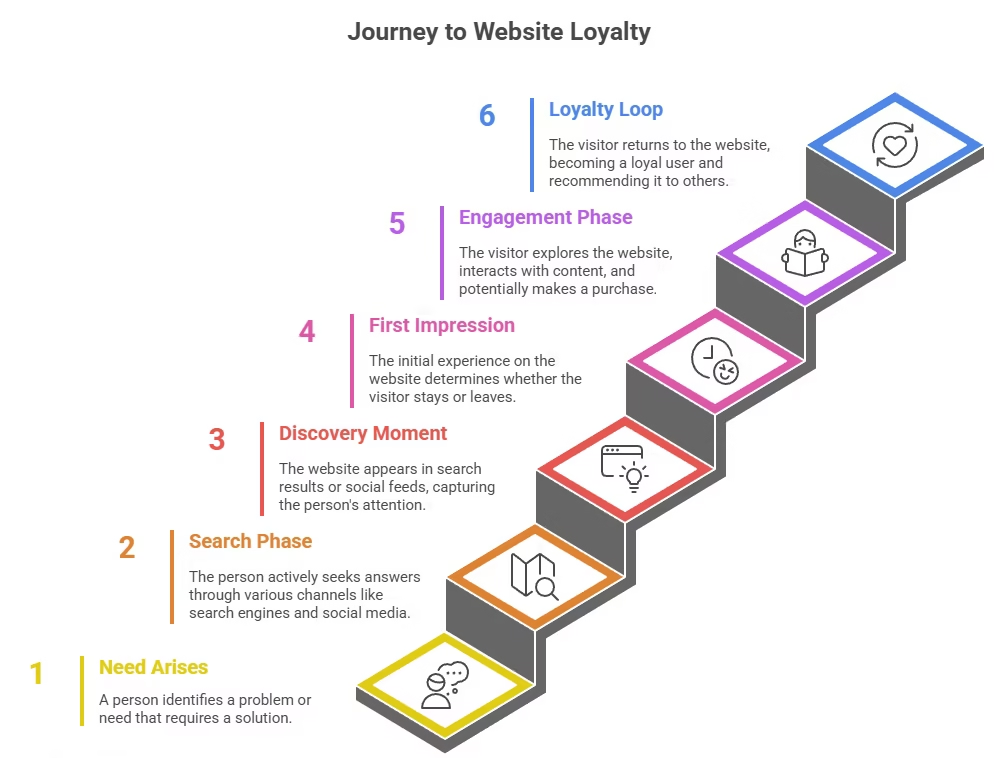
Here’s what nobody explains clearly: visitors take six main paths to get to your website. Understanding these paths is literally the entire game.
Most beginners make one of two mistakes:
- They focus all their energy on one traffic source (usually SEO) and wonder why growth is so slow
- They try to do everything at once and burn out within a month
The smart move? Understand all six paths, then pick the one that makes most sense for where you are right now. Master it. Then expand.
(We’ll break down all six in detail in the next section—trust me, this is where things get interesting.)
The Beginner’s Biggest Misunderstanding About Traffic
Ethan, a friend who started a fitness blog last year, texted me after two months: “I don’t get it. I published 15 articles. Why am I only getting 30 visitors a month?”
Here’s what she didn’t realize: The internet doesn’t owe you attention.
Creating content doesn’t automatically mean people will find it. You need to either:
- Make it discoverable (SEO, so search engines can find and rank you)
- Put it in front of people (social media, ads, email)
- Get other people to recommend it (links from other sites)
There’s no passive “build it and they will come” strategy. You have to actively connect your content with the people who need it.
But here’s the good news Sarah eventually discovered: once you understand how these connections work, you can build them systematically. Traffic becomes predictable. Repeatable. And yes, scalable.
The 6 Traffic Sources Explained: How People Actually Find Your Website
Imagine your website is a house. There are six different roads leading to your front door. Some roads are highways packed with traffic. Some are dirt paths. Some take months to build, while others you can create this afternoon.
Here’s the complete map:
| Traffic Type | What It Actually Is | Intent Level | Time to Build | Cost | Best For |
|---|---|---|---|---|---|
| Organic Search | People finding you on Google/Bing | 🔥 Very High | 3-12 months | Free (time) | Long-term growth |
| Direct | Typing your URL or using bookmarks | 🔥🔥 Extremely High | Ongoing | Free | Brand loyalty |
| Referral | Clicks from other websites | 🔥 High | 1-6 months | Free (relationships) | Authority building |
| Social Media | Instagram, TikTok, Facebook, LinkedIn | 💧 Medium | Days to months | Free or paid | Awareness + testing |
| Paid Ads | Google Ads, Facebook Ads, etc. | 💧🔥 Varies | Immediate | $$$ | Quick wins + testing |
| Newsletter subscribers | 🔥🔥 Extremely High | Ongoing | Free (after building) | Sales + loyalty |
Let me break down each road—not in boring technical terms, but in ways that’ll actually click.
Organic Search Traffic: The Gold Mine That Takes Forever to Dig
What it really means: Someone typed a question into Google. Your website appeared in the results. They clicked.
Why this matters: These people are actively looking for what you offer. They have a problem right now and they’re searching for solutions. The intent is sky-high.
Someone searching “best project management tool for small teams” is infinitely more valuable than someone who randomly saw your ad while scrolling Instagram at 2am.
The catch? Google doesn’t trust new websites. You need to prove yourself through consistent, genuinely helpful content. This takes time—usually 3-6 months minimum before you see meaningful results.
But once you start ranking? That traffic keeps flowing without constant effort. I have blog posts from 2020 that still bring me 400-500 visitors every month. I haven’t touched them in years.
Real example: A client in the accounting software space published one comprehensive guide titled “Accounting for Freelancers: The Complete Beginner’s Guide.” Took them about 12 hours to write and optimize. Three months later, they were ranking on page 1. That single article now brings them 800+ monthly visitors and generates approximately 15-20 qualified leads per month. For free. Forever.
Direct Traffic: Your Superfans
What it really means: Someone already knows your name and came directly to you.
These are your ride-or-die visitors. They typed your website address into their browser, or they bookmarked you and came back. This is the closest thing to a physical storefront regular—someone who specifically chose you.
How to get more: Build a brand people remember. Be consistently valuable. Deliver on promises. There’s no hack here—just genuine quality over time.
(We’ve all been there, right? You find a blog or website so good you bookmark it immediately. That’s what you’re aiming for.)
Referral Traffic: Digital Word of Mouth
What it really means: Another website linked to you, and someone clicked that link.
This is like getting recommended by a trusted friend. If TechCrunch or a popular industry blog mentions your website and links to you, their audience is likely to check you out. They’re arriving with pre-built trust.
The quality varies wildly. A link from The New York Times brings highly engaged visitors. A link from some random directory nobody’s heard of? Basically worthless.
How to earn it: Create genuinely link-worthy content. Build real relationships with other creators. Guest post on respected sites. Or—and this is my favorite—create free tools or resources that people naturally want to reference.
My friend built a free social media image size guide. Nothing fancy. Just a simple, always-updated reference. That single resource has earned her links from over 200 websites because it’s genuinely useful. Those links drive steady referral traffic and boost her authority for everything else she publishes.
Social Media Traffic: The Awareness Builder
What it really means: Someone saw your content on Instagram, TikTok, Facebook, LinkedIn, or Pinterest and clicked through.
Here’s where things get interesting. Social media visitors typically have lower intent. They’re not actively searching for solutions—they’re scrolling through their feed and you caught their attention.
But don’t dismiss it. Social media is phenomenal for:
- Building brand awareness (getting your name out there)
- Testing content ideas quickly (what resonates?)
- Growing your email list (the real long-term asset)
- Creating genuine community and connection
The smartest creators use social media as the top of their funnel. Catch attention → provide value → capture emails → build relationships through email → drive repeat traffic back to your site.
Warning: Algorithms change. Platforms rise and fall. Never build your entire business on rented land (social media). Always own your traffic sources (email list, search rankings).
Paid Traffic: Instant Visibility (With a Price Tag)
What it really means: You’re paying Google, Facebook, Instagram, or another platform to show your content to specific people.
The beautiful thing about paid traffic? Speed. You can literally have targeted visitors clicking through to your website within hours.
The expensive thing about paid traffic? The second you stop paying, the traffic stops flowing.
When it makes sense:
- You’re testing a new offer and need quick feedback
- You have a proven offer that converts well (spend $1 on ads, make $3 in sales)
- You need immediate leads while building your organic presence
- You want to retarget people who already visited your site
When it doesn’t make sense:
- You have no idea if your offer converts yet (you’ll burn money learning)
- You’re hoping ads will magically fix a broken product or confusing website
- You think of it as the only traffic strategy (dangerous dependency)
I usually recommend beginners start with small paid campaigns ($5-10/day) just to learn the mechanics and get initial feedback, while simultaneously building organic traffic sources for long-term sustainability.
Email Traffic: Your Secret Weapon
What it really means: Someone gave you their email address. You sent them an email with a link. They clicked.
This is hands-down the most underrated traffic source. Most beginners completely ignore it, which is bonkers because email subscribers are typically 10-20x more valuable than casual visitors.
Think about it: these people specifically asked to hear from you. They gave you permission to show up in their inbox. When you send a good email, 20-40% of recipients open it. Of those, 2-10% click through to your website.
The math: If you have 1,000 email subscribers, sending one email might bring 50-100 people back to your site. And you can do this weekly, or even daily if your content is good enough.
How to build it: Offer something genuinely valuable in exchange for an email address. A free guide, a helpful template, a discount code, exclusive content. Make the value obvious and immediate.
Then—and this is crucial—actually deliver value in your emails. Don’t just pitch constantly. Teach. Share. Help. Build trust. The traffic (and sales) will follow naturally.
How Does Google Decide What to Rank (The Simple Truth Behind the Mystery)
Okay, let’s talk about the elephant in the room: How does Google actually decide what shows up first?
Most “SEO experts” make this sound impossibly complex. They throw around terms like “algorithm updates” and “ranking factors” and “domain authority” until your eyes glaze over.
Here’s the simple version that actually helps you.
Google Has One Job (And It Takes That Job Seriously)
Google’s mission is brutally simple: help people find the best answer to their question as quickly as possible.
That’s it. Everything else flows from that single goal.
Think about it from Google’s perspective. You have billions of web pages indexed. Someone types in “how to fix a leaky faucet.” You have approximately 0.5 seconds to scan all those billions of pages, figure out which ones actually answer that question, and rank them from best to worst.
How do you do it?
The Three Core Principles Google Uses to Rank Websites
Principle #1: Relevance (Does this page actually answer the question?)
This seems obvious, but you’d be shocked how many websites miss this.
If someone searches “best budget laptops for college students,” Google wants to show pages specifically about budget laptops for college students—not general laptop reviews, not gaming laptops, not a laptop store’s homepage.
Google has gotten incredibly sophisticated at understanding search intent. It knows the difference between:
- Informational searches (“how to tie a tie”)
- Navigational searches (“Facebook login”)
- Commercial investigation (“best running shoes”)
- Transactional searches (“buy iPhone 15 Pro”)
Your content needs to match the actual intent behind the search, not just contain the keywords.
Principle #2: Quality (Is this page actually helpful?)
Google evaluates quality through dozens of signals, but they basically boil down to: Does this content genuinely help people?
Some specific things Google looks at:
- Depth: Does this thoroughly cover the topic, or just skim the surface?
- Expertise: Does the author actually know what they’re talking about?
- Usefulness: Can someone accomplish their goal after reading this?
- User signals: Do people engage with this content, or immediately hit the back button?
According to Google’s SEO Starter Guide, they prioritize content created with expertise, authoritativeness, and trustworthiness in mind. That’s not marketing speak—it’s literally how their systems are designed to work.
Here’s what this means practically: Stop trying to game the system. Create content that’s genuinely the best resource available on that topic. Make it more comprehensive, more current, clearer, or more actionable than competing pages.
Principle #3: Authority (Do other trusted sources vouch for you?)
Google uses links like recommendations. When The New York Times links to your article, Google thinks: “Hmm, a respected publication is vouching for this content. It’s probably legitimate.”
The more high-quality sites that link to your content, the more authority you build in Google’s eyes. This makes everything you publish rank faster and higher.
But here’s the catch: You can’t buy your way to authority (well, you can try, but Google will penalize you). You have to earn it through consistently valuable content and genuine relationship building.
How Google Ranking Actually Works (Step by Step)
Let me walk you through what happens when you publish a new article:
Step 1: Discovery (Google finds your page)
Google’s crawlers constantly browse the web, following links from one page to another. When they discover your new page (through links from other pages on your site, links from other websites, or because you submitted it through Google Search Console), they add it to their index.
Step 2: Analysis (Google figures out what your page is about)
Google reads your content, analyzes your headings, examines your images, looks at your structure. It’s trying to understand: “What is this page actually about? Who would find this helpful?”
This is why clear, well-organized content matters. You’re not just writing for humans—you’re helping Google’s systems understand your content correctly.
Step 3: Initial Ranking (Google gives you a starting position)
Based on everything it knows about your page and your website’s history, Google assigns an initial ranking. New websites with limited authority might start on page 5 or 10. Established websites with proven track records might start on page 1 or 2.
Step 4: Testing and Adjusting (Google watches how people interact)
Google doesn’t rank you once and forget about you. It constantly monitors:
- Do people click on your result when it appears?
- Do they stay on your page, or immediately go back to search?
- Do they find what they’re looking for?
- How does your page perform compared to competing results?
Based on these signals, your ranking gradually adjusts up or down. This is why good content often climbs the rankings over time—Google sees that people find it helpful.
Step 5: Ongoing Evaluation (The game never ends)
New content gets published by competitors. Google updates its algorithm. User behavior changes. Your rankings continue adjusting based on all these factors.
This is why SEO is ongoing work, not a one-time project.
SEO Explained Without Complicated Words: What You Actually Need to Do
Forget everything you’ve heard about “SEO tricks” or “ranking secrets.” Here’s what actually works in 2025:
✅ Create genuinely helpful content
- Answer real questions thoroughly
- Use clear, natural language
- Include examples and specifics
- Make it scannable with headings and short paragraphs
✅ Make your site technically solid
- Fast loading speed (compress images, choose good hosting)
- Works perfectly on mobile phones
- Easy to navigate
- Secure (HTTPS)
✅ Build authority over time
- Consistently publish quality content
- Earn links through genuine relationship building
- Guest post on respected sites
- Create resources people naturally want to reference
❌ Stop wasting time on:
- Keyword stuffing (makes content unreadable and Google hates it)
- Buying links (you’ll get penalized)
- Over-optimization (writing for robots instead of humans)
- Looking for shortcuts (there aren’t any)
Here’s the part most beginners miss: SEO isn’t complicated. It’s just unglamorous. It’s showing up consistently, creating valuable content, and building trust over months and years instead of days and weeks.
That’s not exciting. It doesn’t make for a good Instagram post. But it works.
How Do Websites Get Visitors: Your First 30 Days Action Plan
Enough theory. Let’s get tactical.
You’ve got a website. Now you need visitors. Here’s exactly what to do in your first month, broken down week by week so you don’t get overwhelmed.
Days 1-7: Foundation (The Boring Stuff That Actually Matters)
Day 1: Set up your tracking tools
You can’t improve what you don’t measure. Install:
- Google Analytics (free, shows who visits and what they do)
- Google Search Console (free, shows how you’re performing in Google search)
Both take about 20 minutes to set up. Do it now, even though you have zero traffic. You need the baseline.
Day 2-3: Research your first 3 target keywords
Don’t try to rank for everything. Pick 3 specific search terms that:
- Your target audience actually searches for (use Google autocomplete and “People also ask” sections)
- You can realistically provide value around
- Aren’t dominated by huge brands with unlimited budgets
Example: Instead of targeting “marketing tips” (impossibly broad and competitive), target “email marketing tips for local bakeries” (specific, achievable).
Day 4-7: Write your first cornerstone article
This is your flagship content. Aim for 1,500-2,500 words of genuine value—not fluff stretched to hit a word count.
Ask yourself: “If someone lands on this page, will they feel like they actually learned something useful?”
If the answer is “meh, maybe,” keep working. Your goal is to create the best resource on this specific topic that currently exists.
Days 8-14: Content Creation + Initial Distribution
Day 8-10: Create 2 more solid articles
You’re building momentum and proving to Google that you’re serious about this topic, not just publishing one random article.
Target your other two keywords with the same level of quality.
Day 11-12: Choose ONE social media platform
Not five platforms. ONE. The one where your target audience actually hangs out.
- B2B service? LinkedIn.
- Visual products? Instagram or Pinterest.
- Younger audience? TikTok.
- General audience? Facebook or Twitter.
Set up a complete, professional profile. Write a compelling bio that makes it obvious who you help and how.
Day 13-14: Share your content strategically
Post your articles on your chosen platform. Don’t just drop a link—provide context. Why should someone care? What will they learn?
Find 3-5 relevant online communities (Reddit, Facebook groups, forums, Slack communities) where your audience hangs out. Share your content when it genuinely adds value to existing conversations. Don’t spam. Add value first, link second.
Email 5-10 friends or contacts who might genuinely find it helpful. Not a mass blast—personal messages explaining why you thought they’d be interested.
Days 15-21: Relationship Building (The Part Everyone Skips)
Day 15-17: Engage with 5 related blogs daily
Find other blogs or websites in your niche. Read their content. Leave thoughtful, substantive comments that add to the conversation.
Some of these sites allow you to include your website link in comment signatures. Some don’t. Either way, you’re building visibility and potentially earning referral traffic.
Day 18-19: Reach out for collaboration
Identify 3-5 websites or creators that cover similar topics but aren’t direct competitors.
Send personalized emails (not templates) suggesting genuine collaboration opportunities:
- “I noticed you wrote about X. I recently covered Y, which your audience might find useful. Would you be interested in linking to it?”
- “I’d love to write a guest post for your site on [specific topic]. Here are three ideas I think your audience would love…”
- “I’m creating a roundup post on [topic]. Would you be interested in contributing a quick tip?”
The key: Lead with value you can provide them, not what you want from them.
Day 20-21: Create a simple lead magnet
Offer something valuable in exchange for email addresses. This could be:
- A helpful checklist or cheat sheet
- A downloadable template
- A short email course (5 days of tips)
- A resource guide
Keep it simple. You can create something useful in 2-3 hours. Add an opt-in form to your website.
Real talk: Email will become your most valuable traffic source over time. Start building that list from day one.
Days 22-30: Momentum Building
Day 22-25: Maintain content consistency
Publish at least one more quality article. You’re establishing a pattern: you show up consistently with valuable content.
Day 26-27: Engage daily on social media
Spend 15-30 minutes per day actively engaging on your platform. Comment on others’ posts. Answer questions. Share valuable insights without always linking back to your stuff.
You’re building relationships, not just broadcasting.
Day 28: Create a welcome email sequence
Write 3-5 emails that automatically send to new subscribers:
- Email 1: Deliver what you promised (the lead magnet) + introduce yourself
- Email 2: Share your best content + tell your story
- Email 3: Provide more value + gentle pitch (if relevant)
- Emails 4-5: Continue providing value + building the relationship
Day 29: Analyze what’s working
Check your analytics. What content got engagement? Which traffic sources are showing promise? Where are people coming from?
You’re looking for signals, not definitive answers. It’s too early for major conclusions, but you can spot early trends.
Day 30: Plan your next 30 days
Based on what you learned, create a simple plan for month two. Focus on doubling down on what’s working and cutting what’s clearly not resonating.
Realistic Expectations: What “Success” Looks Like at Day 30
Let’s be brutally honest. After 30 days of consistent effort, you’ll probably see:
- 50-200 monthly visitors (mostly from social and direct traffic)
- 5-20 email subscribers
- 2-5 meaningful connections with others in your space
- Your first few pages indexed in Google (but not ranking high yet)
- Zero to minimal revenue (unless you’re running paid ads to a proven offer)
That might sound disappointing. It’s not. It’s real progress from zero.
Most people quit in month one because they expect hockey stick growth. The people who win are those who understand that month one is about laying foundation, not hitting home runs.
What Is a Bounce Rate Easily Explained (And When You Should Actually Care)
Let’s demystify one of those metrics that sounds scarier than it actually is.
The Dead Simple Definition
A bounce happens when someone lands on your website and leaves without clicking on anything else. They view one page, then bounce away.
Your bounce rate is what percentage of visitors do this. If 100 people visit your site and 70 of them leave after one page, you have a 70% bounce rate.
But Here’s What Nobody Tells You: Context Is Everything
A high bounce rate isn’t automatically bad. Sometimes it’s actually great.
Good bounce scenario:
Someone searches “how to reset iPhone password.” They land on your clear, helpful tutorial. They follow the steps. Their problem is solved. They close the tab and go about their day.
Technically? That’s a bounce. In reality? That’s a massive success. They got exactly what they needed.
Bad bounce scenario:
Someone lands on your homepage. Your site takes 8 seconds to load. They get frustrated and hit the back button before your content even appears.
That’s a problem. You lost them before they even saw what you offer.
What’s “Normal” for Bounce Rate?
According to analytics research from industry experts at Backlinko, average bounce rates vary dramatically by site type:
| Site Type | Typical Bounce Rate | What This Means |
|---|---|---|
| Blog/content sites | 70-90% | Totally normal—people find info and leave satisfied |
| E-commerce sites | 20-45% | Lower because shopping involves browsing multiple products |
| Service websites | 30-55% | Medium because people explore offerings before deciding |
| Landing pages | 60-90% | High because they’re designed for a single action |
The point: Don’t panic about the number itself. Look at the context.
How to Know If Your Bounce Rate Is Actually a Problem
Ask these four questions:
1. How long are people staying?
If your bounce rate is 80% but average session duration is 4 minutes, people are reading your content. That’s good.
If your bounce rate is 80% and average session duration is 12 seconds, your page isn’t delivering what people expected. That’s bad.
2. Are people converting?
If 75% of people bounce but 5% of total visitors sign up for your email list, you’re doing fine. You’re attracting the right people.
3. Are you meeting expectations?
If your headline promises “complete beginner’s guide” but your page is actually trying to sell a $997 course, people will bounce immediately. You’re not delivering what you promised.
4. How fast does your site load?
If your site takes more than 3 seconds to load, you’re losing people before they even see your content. 53% of mobile users abandon sites that take longer than 3 seconds to load. That’s not an opinion—that’s data.
How to Actually Improve Bounce Rate (When It Matters)
Fix #1: Speed up your site immediately
- Compress all images (use TinyPNG or similar tools)
- Choose quality hosting (cheap hosting = slow site)
- Remove unnecessary plugins or scripts
- Enable caching
Test your speed with Google PageSpeed Insights. It’ll tell you exactly what’s slowing you down.
Fix #2: Match expectations from the first second
The visitor should immediately see they’re in the right place. If someone clicks “5-Minute Breakfast Recipes,” the first thing they see should be… 5-minute breakfast recipes. Not a long story about your childhood. Not ads. The recipes.
Get to the point fast.
Fix #3: Make your content scannable
Most people don’t read word-for-word. They scan for what’s relevant. Help them:
✓ Use clear, descriptive headings (H2s, H3s)
✓ Keep paragraphs short (2-4 sentences max)
✓ Use bullet points and numbered lists
✓ Bold key takeaways
✓ Add relevant images to break up text
Fix #4: Give clear next steps
Don’t leave people wondering “okay, now what?” Include:
- Links to related articles at the end
- A clear call-to-action
- An email signup form
- Product recommendations (if relevant)
Make the next step obvious.
Fix #5: Optimize for mobile (seriously)
Over 60% of web traffic is mobile now. Pull up your site on your phone right now. Is it easy to read? Do buttons work properly? Can you navigate without zooming and pinching?
If your site sucks on mobile, you’re bouncing the majority of potential visitors.
Fix #6: Remove annoyances
Every friction point increases bounce rate:
❌ Pop-ups that appear within 3 seconds of landing
❌ Auto-playing videos with sound
❌ Ads that cover the content
❌ Tiny, difficult-to-read fonts
❌ Walls of text with no breaks
Audit your site honestly. What would annoy you as a visitor? Fix those things.
The Metric That Actually Matters More
Here’s what I’ve learned after analyzing dozens of websites: Engagement beats bounce rate every time.
Would you rather have:
- 1,000 visitors, 50% bounce rate, 30-second average session
- 400 visitors, 75% bounce rate, 5-minute average session, 8% email signup rate
The second scenario crushes the first, even though the bounce rate is higher.
Focus on attracting the right people and providing genuine value. Bounce rate will sort itself out.
Real Numbers: What Traffic Growth Actually Looks Like (Not the Guru Version)
Time for some brutal honesty about growth timelines. I’m going to show you what realistic traffic growth looks like, because most content online lies to you.
Case Study: My Actual Food Blog (First 12 Months, No BS)
I started a food blog in August 2019 specifically to test these principles from scratch. Here’s exactly what happened, month by month:
| Month | Visitors | Primary Source | What I Did | Key Insight |
|---|---|---|---|---|
| 1 | 47 | Direct (friends/family) | Published 4 recipes, shared on personal social | Nobody cares yet |
| 2 | 89 | Social (40%), Direct (60%) | Published 6 recipes, joined cooking groups | Slow is normal |
| 3 | 156 | Social (55%), Organic (20%) | Published 8 recipes, started Pinterest | First Google rankings (page 3-5) |
| 4 | 243 | Organic (35%), Social (50%) | Published 6 recipes, first page 1 ranking! | Low-competition wins matter |
| 5 | 318 | Organic (50%), Social (40%) | Published 5 recipes, 2 guest posts | Momentum building |
| 6 | 501 | Organic (65%), Social (30%) | Published 7 recipes, started email (24 subscribers) | Organic taking over |
| 7 | 689 | Organic (70%), Social (25%) | Published 6 recipes, one recipe went semi-viral | Pinterest can pop |
| 8 | 1,124 | Organic (78%) | Published 5 recipes, focused on keyword research | Older content climbing |
| 9 | 1,503 | Organic (82%) | Published 7 recipes, email list growing | Compounding kicking in |
| 10 | 1,952 | Organic (85%) | Published 6 recipes, more collaborations | Multiple page 1 rankings |
| 11 | 2,378 | Organic (87%) | Published 5 recipes, updated old posts | Content refreshing helps |
| 12 | 3,104 | Organic (90%) | Published 6 recipes, established authority | Critical mass achieved |
What This Actually Shows (And What the Gurus Won’t Tell You)
The frustration phase (Months 1-3): Growth feels glacially slow. You’re publishing consistently but seeing minimal results. This is where 80% of people quit.
Most beginners expect linear growth. They think: “If I got 50 visitors this month, I’ll get 100 next month, then 150, then 200…”
Nope. Growth is exponential, not linear. Which means it sucks at first, then suddenly accelerates.
The tipping point (Months 4-7): A few articles start ranking. Organic traffic becomes noticeable. You’re getting consistent visitors without actively promoting everything.
The momentum phase (Months 8-12): Compounding effects kick in hard. Older content ranks higher. New content ranks faster because you’ve built authority. Traffic grows faster with the same effort.
Beyond month 12: By month 18, that blog was getting 9,500+ monthly visitors. By month 24, over 18,000. The growth curve kept accelerating because the foundation was solid.
Why Most Traffic Success Stories Are Misleading
You’ve definitely seen articles like:
- “I went from 0 to 50,000 visitors in 3 months!”
- “How I got 100,000 monthly visitors in my first year!”
- “The traffic strategy that got me 10,000 visitors in 30 days!”
Here’s what they’re not telling you:
- They had an existing audience somewhere (email list, social following, another successful site they migrated traffic from)
- They spent $10,000+ on paid ads to jumpstart growth
- They’re in an extremely niche topic with almost zero competition
- They got lucky with one viral piece of content (not repeatable)
- They’re cherry-picking their best result and ignoring 5 other sites that failed
- They’re straight-up lying (sorry, but this happens)
Could you grow faster than my timeline? Sure. With a budget, existing connections, or hitting a specific market at the perfect time.
But for most people starting from absolute zero? My growth trajectory is actually pretty typical.
The Uncomfortable Truth About Traffic Timelines
Here’s what you need to hear: Sustainable traffic takes time to build.
Most websites don’t see meaningful organic traffic for 3-6 months. Many take 8-12 months to really gain traction. Some need 18+ months.
That’s not because SEO is broken. It’s because trust takes time. Authority takes time. Google needs to see that you’re consistently delivering value, not just publishing a few articles and disappearing.
But here’s the flip side: Once you build that foundation, traffic becomes increasingly passive.
I have blog posts from 2020 that still bring me 500-600 visitors every month. I haven’t touched them in years. That’s the power of compounding—but you have to stick around long enough to see it work.
What to Actually Expect in Your First Year (Realistic Benchmarks)
If you’re publishing 3-5 quality articles per month, doing basic SEO, and being somewhat active on social media, here’s what’s realistic:
Months 1-3: 50-400 monthly visitors
Months 4-6: 400-1,200 monthly visitors
Months 7-9: 1,200-3,000 monthly visitors
Months 10-12: 3,000-7,000 monthly visitors
These aren’t guarantees—they’re possibilities based on consistent effort and quality work.
Some sites grow faster (less competitive niche, better execution, existing advantages). Some grow slower (highly competitive space, learning curve, mistakes along the way).
The key insight: Traffic growth is rarely linear. You’ll plateau. You’ll get discouraged. You’ll wonder if it’s working.
Then suddenly—often around month 6-8—things start clicking. Older content starts ranking. New content ranks faster. Social media momentum builds. Email list grows. Everything compounds.
The people who win are simply the ones who don’t quit during the frustrating early months.
FAQ: The Questions You’re Too Embarrassed to Ask (But Really Need Answered)
How long does it really take to get consistent traffic from Google?
Honest answer: 3-6 months to see your first meaningful traction. 6-12 months to build reliable, consistent organic traffic.
This assumes you’re publishing 2-4 quality articles per month, doing basic keyword research, and building some links naturally through relationships.
Quick wins exist (social media, paid ads, email), but sustainable organic traffic is a 6-12 month game minimum. Anyone promising faster results is either in an unusual niche or not being fully honest about their methods.
Can I just pay for traffic instead of waiting for SEO?
Absolutely. And sometimes you should.
Paid traffic gives you immediate feedback. You can test messaging, offers, and positioning within days instead of waiting months.
But here’s the thing: Paid traffic is renting. Organic traffic is building equity.
The moment you stop paying for ads, the traffic stops. But once you rank organically? That traffic keeps flowing without ongoing costs.
Smart strategy: Use small paid campaigns early ($5-10/day) to learn what resonates. Simultaneously build your organic presence for long-term sustainability. Best of both worlds.
How much does a beginner realistically need to spend on traffic?
You can start with $0.
Seriously. You don’t need paid tools or ads to get your first 500-1,000 monthly visitors. Focus on:
- Creating genuinely helpful content
- Engaging on one social media platform consistently
- Building relationships through comments and outreach
- Starting an email list from day one
Once you have some traction and understand what works, smart investments include:
- $50-100/month: Quality hosting + email marketing tool
- $100-200/month: Keyword research tool (Ahrefs/SEMrush) – optional but helpful
- $200-500/month: Small paid ad budget for testing – once you have proven offers
But starting? Invest time, not money. Prove the concept first.
What if my bounce rate is 85%?
Don’t panic. Look at context.
Check these metrics:
- Average session duration: If it’s 3+ minutes, people are engaging despite bouncing
- Pages per session: Are some visitors exploring even if most bounce?
- Conversion rate: Are you still getting email signups or sales?
If bounce rate is 85% AND average time on page is under 20 seconds, that’s a problem. Focus on:
- Speeding up your site (images, hosting, caching)
- Matching visitor expectations immediately
- Making content scannable and easy to digest
- Optimizing for mobile users
But if bounce rate is high because you’re running a blog where people find answers and leave satisfied? That’s actually success.
Is social media traffic worthless compared to search traffic?
No, but they serve different purposes.
Search traffic typically converts better immediately because people are actively looking for solutions. Social traffic is more exploratory—people weren’t searching for you, you caught their attention.
But social media is incredibly valuable for:
- Building brand awareness (getting your name out there)
- Testing content ideas quickly (what resonates?)
- Growing your email list (the real long-term asset)
- Creating genuine community
Use social to build relationships and capture emails. Then use email to bring people back to your site repeatedly. That’s the smart play.
How many articles do I need before Google starts ranking me?
There’s no magic number, but here’s what I’ve observed:
- 20-30 quality articles: You start seeing some rankings
- 50+ articles: Organic traffic becomes meaningful
- 100+ articles: You often dominate specific topic clusters
Quality matters infinitely more than quantity. 20 genuinely excellent, thoroughly researched articles will outperform 100 thin, generic posts every time.
Focus on creating the absolute best resource available on each topic you cover. One incredible article beats five mediocre ones.
Should I focus on one traffic source or try everything at once?
Start with one. Master it. Then expand.
Trying to be good at SEO, Instagram, TikTok, Pinterest, Facebook, LinkedIn, paid ads, and email all at once as a beginner is a recipe for burnout and mediocrity across the board.
Pick the source that makes most sense for your situation:
- Long-term focused? Limited time? → SEO
- Need quick feedback? Have budget? → Paid ads
- Visual products? → Instagram or Pinterest
- B2B? → LinkedIn
- Building community? → Social media + email
Get that one channel working consistently. Then add another. One done well beats five done poorly.
My competitor ranks higher than me for everything. What do I do?
First, analyze why without getting emotional. Look at their top-ranking pages objectively:
- Is their content more comprehensive?
- More current?
- Better organized?
- Faster loading?
- More links from other sites?
Then ask: “How can I create something genuinely better?”
Don’t just match what they did—exceed it. Add unique insights. Include better examples. Make it more actionable. Update it with current information.
And remember: there’s room for multiple sites on page 1. You don’t need to crush every competitor. You just need to earn your spot among the top results.
How do I know which keywords are worth targeting?
Look for the sweet spot: search terms with decent volume but achievable competition.
For beginners, target “long-tail” keywords (3-5 word phrases) instead of broad terms:
- ❌ “marketing tips” (impossibly competitive)
- ✅ “email marketing tips for real estate agents” (specific, achievable)
Use tools like:
- Google autocomplete (free)
- “People also ask” sections (free)
- Answer The Public (free with limits)
- Google Search Console (free, shows what you already rank for)
And ask yourself: “If I ranked #1 for this term, would it bring me the right kind of visitors?”
Ranking for irrelevant keywords is pointless, even if they’re easy.
What’s more important: traffic volume or traffic quality?
Quality. Every single time.
Would you rather have:
- 10,000 monthly visitors with 95% bounce rate and zero conversions
- 1,000 monthly visitors with 60% bounce rate and 5% conversion rate
The second scenario wins massively. Those 50 conversions (email signups, sales, qualified leads) are infinitely more valuable than 10,000 people who leave immediately.
Focus on attracting the right people—your ideal audience who actually needs what you offer—not just chasing volume for vanity metrics.
Conclusion: Your Traffic Journey Starts With One Click (And A Lot of Patience)
Here’s what nobody tells you when you’re starting: Building website traffic is boring.
It’s not glamorous. It won’t make for inspiring Instagram posts. There’s no “one weird trick” that changes everything overnight.
It’s showing up consistently. Publishing helpful content even when nobody’s reading. Engaging on social media when you have 47 followers. Sending emails to a list of 12 people. Building relationships one person at a time.
For months, it feels like you’re screaming into the void.
Then something shifts. Usually around month 5 or 6, sometimes later. Your articles start appearing in search results. Someone shares your content unprompted. You get an email from a reader saying “this actually helped me.” Your analytics show 500 visitors this month instead of 50.
The compound effect kicks in.
By month 12, you have momentum. By month 18, you have a traffic machine that increasingly runs itself. By month 24, you’re looking back wondering how you got here.
But you have to stick around long enough to see it work.
Most people quit in month 3 when growth feels impossibly slow. The winners are simply those who understand that traffic growth isn’t about finding shortcuts—it’s about showing up consistently long enough to build something real.
Your Simple Action Plan (Start Today, Not Tomorrow)
Stop overthinking. Pick three things from this list and do them today:
☐ Set up Google Analytics and Search Console
☐ Research 3 specific keywords your audience searches for
☐ Write one genuinely helpful article (1,500+ words)
☐ Set up a simple email opt-in form
☐ Post on ONE social platform consistently
☐ Comment on 3 relevant blogs in your niche
☐ Reach out to one potential collaboration partner
That’s it. Don’t try to do everything. Pick three. Do them well. Build momentum.
The Real Secret Nobody Wants to Hear
After helping dozens of people build traffic over the years, I’ve noticed one pattern: The people who succeed aren’t the smartest or most talented. They’re the most consistent.
They’re the ones who:
- Publish every week even when nobody’s watching
- Keep optimizing even when growth feels slow
- Build relationships without expecting immediate payoff
- Trust the process long enough to see results
Consistency + patience + genuine value = sustainable traffic.
There’s no shortcut. But there’s also no mystery.
You now understand how traffic works. You know the six main sources. You understand how Google makes decisions. You have a 30-day action plan.
The only question left: Will you actually do it?
Most people won’t. They’ll read this, feel motivated for 20 minutes, then go back to waiting for magic to happen.
But you’re different. You’re still reading this 6,000-word guide because you’re actually serious about building something real.
So here’s my challenge: Publish one genuinely helpful piece of content this week. Not perfect. Not earth-shattering. Just helpful.
Then publish another next week. And the week after that.
Do that for 12 months, and I promise—your traffic situation will be completely different than it is today.
The journey starts with one click.
Make it count.
👉 Go to the Next Lesson: What Are Marketing Funnels? A Beginner-Friendly Guide That Finally Makes Sense
Getting traffic is only the first step.
If visitors land on your site and leave without taking action, nothing really changes.
In the next lesson, you’ll learn what marketing funnels are, why traffic alone doesn’t convert, and how to guide visitors step-by-step—from first click to real results (without complicated jargon or tools).
➡️ Read next: What Are Marketing Funnels?
Still have questions about building traffic for your specific situation? Something I didn’t cover clearly enough? Drop a comment below. I read every single one and respond to as many as I can. Let’s figure this out together.