Organic vs Paid Marketing: Which One Should You Start With? (A Beginner’s Decision Framework)
You just launched your business. Your product’s ready. Website’s live. You know you need to market it.
And that’s where you freeze.
Should you spend time on organic marketing or throw money into paid ads?
After working with dozens of first-time founders and small business owners, I’ve seen the same mistakes repeat over and over. Someone burns $3,000 on Facebook ads before their website even explains what they’re selling. Or they spend five months writing blog posts while their bank account bleeds out because they needed sales three months ago.
Here’s what nobody tells you: Most people don’t fail because they chose organic or paid. They fail because they chose the wrong one first.
This guide is written for beginners, solopreneurs, and small business owners trying to grow without burning money on the wrong strategy.
There’s no universal answer. But there is a right answer for you—based on your budget, timeline, and what you’re actually trying to build. This guide will help you figure that out without wasting time or money on the wrong path.
TL;DR — Organic vs Paid Marketing
Start with organic if budget is limited and building trust matters.
Start with paid if offers are proven and speed is required.
Long-term growth comes from combining both—in the right order.
💡 This isn’t an organic vs paid debate. It’s a sequencing framework for beginners.
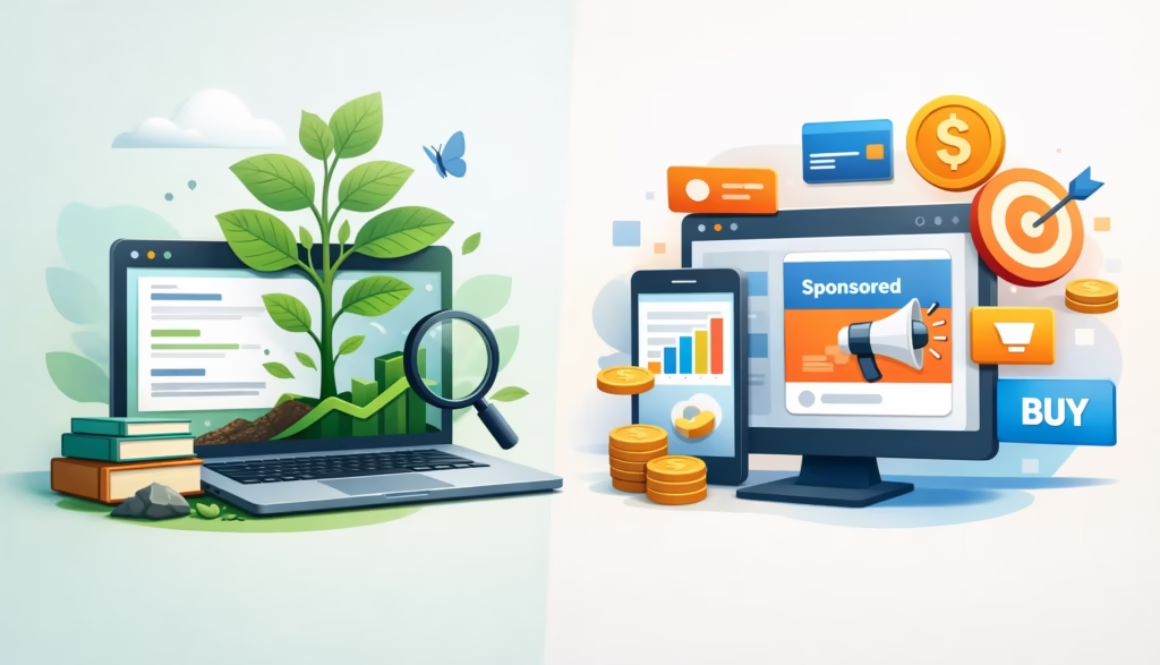
This guide isn’t about choosing sides—it’s about choosing order. Most advice tells you which channel is “better.” This framework shows you which one to start with based on where you actually are right now.
Table of Contents
- The Real Problem Most Beginners Face
- Organic vs Paid Marketing for Beginners: What to Choose First
- Organic vs Paid Marketing: How Beginners Should Decide (Decision Framework)
- Organic vs Paid Marketing: Key Differences Beginners Must Understand
- Organic vs Paid Marketing for Small Business: What Actually Works
- Organic Marketing Explained (Reality Checks Included)
- Paid Marketing Explained (No Hype)
- Side-by-Side Comparison: Organic vs Paid
- Real Example: Why Sequence Matters
- Common Mistakes That Cost Beginners Thousands
- How to Combine Organic and Paid Marketing for Small Businesses
- Your Questions Answered
- What to Do Next
The Real Problem Most Beginners Face
Most people ask the wrong question.
They ask: “Which one is better?”
They should ask: “Which one matches where I am right now?”
You’ve probably read a blog post making SEO sound like free traffic forever. Then you saw a YouTube ad promising customers by next week. Both sound great. Both need different resources you might not have.
Then someone tells you to “do both.”
That’s fine advice if you have a marketing team. But if you’re doing this solo? Splitting your time and tiny budget across two complex strategies gets you mediocre results in both.
Statistics say 67% of marketers use organic social media. About 42% run paid ads. But here’s what those numbers hide: the order matters more than the choice.
Jump into paid advertising for beginners without understanding your audience? You’re paying to test messages that could’ve been validated for free first.
Pour months into organic content without any revenue? You might run out of cash before you see a single result.
The problem isn’t organic vs paid traffic. It’s knowing which one builds the foundation you need right now, and which one amplifies what’s already working.
Sequence matters more than the choice.
Most beginners lose money or time because they pick the strategy that sounds better, not the one that fits their situation. They follow advice meant for businesses with established audiences and revenue. That’s like following a marathon training plan when you’re still learning to jog.
Organic vs Paid Marketing for Beginners: What to Choose First
Let me give you the straight answer most articles avoid.
If you’re a complete beginner, start with organic marketing in almost every scenario.
Here’s why.
The Budget Reality for Beginners
Most beginners have $0-$500 monthly for marketing. That’s not enough for paid ads to work.
Most paid ad campaigns require 6-8 weeks of testing before becoming profitable. During that time, you’re losing money while you learn. If you only have $500/month, you’ll run out before learning anything useful.
With organic marketing, your budget can be $0. You just need time and consistency.
The Learning Curve Difference
Organic marketing teaches you:
- How to communicate your value clearly
- What your customers actually care about
- Which problems matter most to them
- How to create content that resonates
These skills transfer to everything. When you eventually run paid ads, you’ll already know what works.
Paid marketing throws you in the deep end:
- Complex ad platforms with steep learning curves
- Budgets that burn fast when you make mistakes
- Pressure to optimize daily while still learning basics
- Technical tracking setup that confuses most beginners
You’re paying to learn lessons that organic teaches for free.
Risk Tolerance Reality Check
Organic marketing risks:
- Your time (which you have more of than money)
- Opportunity cost (could’ve spent time differently)
- Zero financial loss
Paid marketing risks:
- Real money you might need for other business expenses
- $2,000-$5,000 burned while learning (typical beginner loss)
- Emotional stress of watching money disappear
- Potential to quit business entirely after expensive failure
This is the part most people rush—and it’s exactly why they get stuck.
The Beginner Success Pattern
Here’s what works for most beginners:
Months 1-6: Pure organic. Learn to create valuable content. Build an audience slowly.
Months 7-12: Organic is working. Steady traffic. Some leads. Revenue starting.
Month 13+: Add small paid campaigns to amplify proven messages.
This sequence minimizes risk while maximizing learning.
When Beginners Should Consider Paid First
Only start with paid marketing as a beginner if:
- You have $3,000-$5,000 you can afford to lose completely
- You need market validation faster than organic allows
- You have a high-margin product that can absorb learning costs
- Someone experienced is guiding you (mentor, consultant, course)
Otherwise, start organic. Build your foundation. Learn your market. Then scale with paid.
Organic vs Paid Marketing: How Beginners Should Decide (Decision Framework)
Let me cut through the confusion.
Answer these questions honestly. You’ll know exactly where to start.
Step 1: Look at Your Bank Account
Less than $500/month for marketing?
Start organic. You don’t have enough budget to run paid campaigns long enough to learn anything. Most campaigns need $1,000-$2,000 monthly and 2-3 months of testing to work.
Think about it this way: $500 gets you maybe 200 clicks on Google Ads. If your conversion rate is 2% (which is decent), that’s 4 leads. Can you learn what’s working from 4 leads? Not really.
Between $500-$1,000/month?
This is the awkward middle. You could try paid, but you’ll struggle to get enough data. Consider starting organic and banking that money. When you have $2,000-$3,000 saved, then test paid campaigns with a proper budget.
More than $1,000/month and you need revenue in 60 days?
Paid might work. But finish Step 2 first.
Step 2: Check Your Foundation
Before you spend one dollar on ads, answer these:
Does your website clearly explain what you sell and how to buy it?
If people are confused, paid traffic won’t help. You’ll just pay to confuse more people faster.
Can someone understand your offer in 10 seconds?
Vague offerings don’t convert. Not even with perfect targeting. Your grandmother should be able to explain what you do after looking at your homepage.
Do you have Google Analytics installed?
Can you track where visitors come from and what they do? Can you see which pages they visit before buying or leaving?
Have you made at least one sale already?
Even one. To a friend, a family member, anyone. If you haven’t validated that someone will pay for what you’re offering, paid ads won’t magically fix that.
If any of these are broken, start with organic. You’ll be forced to clarify your message and understand your audience before paying for attention.
Step 3: Match This to Your Skills
Be honest about what you’re actually good at.
Start with organic marketing if:
- You like writing or creating content
- You have time but not much money
- You can commit 5-10 hours weekly for 3-6 months
- You’re willing to learn basic SEO (it’s easier than people claim)
- You enjoy teaching or explaining things
- You’re patient and think long-term
Start with paid marketing if:
- Numbers don’t scare you
- You can write short, punchy copy
- You have budget you can afford to lose while learning (you should expect some loss while learning)
- You need to test the market fast
- You’re comfortable making daily decisions based on data
- You can handle losing money for 2-3 months before seeing profits
Here’s something nobody mentions: Your personality matters. If checking numbers and adjusting bids stresses you out, paid ads will make you miserable. If writing consistently feels like pulling teeth, organic will burn you out.
Pick the one that matches how you naturally work.
Step 4: Be Honest About Timeline
This part frustrates people, but it’s true.
Organic marketing timeline:
- Months 1-2: Nothing happens. Pure investment.
- Months 3-4: You get your first trickle of traffic.
- Months 6-12: Things start building. Results compound.
- Year 2+: You have a machine that generates leads while you sleep.
Paid marketing timeline:
- Week 1-2: Traffic shows up. You’re probably losing money.
- Weeks 3-8: Still testing. Still spending more than you make.
- Months 3-6: If you don’t crack profitability here, you probably won’t.
- Ongoing: Requires constant management and budget forever.
Need customers next month? Have money to spend? Paid’s your only option.
But know you’re taking the expensive learning route. You’re essentially paying for speed. That’s not wrong. Just expensive.
Step 5: Consider Your Business Model
Some business models favor one approach over the other.
Organic works better for:
- High-trust services (coaching, consulting, therapy)
- Complex products needing education (B2B software, technical services)
- Niche markets with specific pain points
- Personal brands and thought leadership
- Content-driven businesses (courses, memberships)
Paid works better for:
- E-commerce with proven products
- Local services with clear value (plumbing, electricians)
- High-margin products that can absorb ad costs
- Time-sensitive offers (events, seasonal products)
- Products with instant gratification appeal
Quick Decision Checklist
Start with Organic if:
- ✓ Budget under $1,000/month
- ✓ You have 3-6 months minimum
- ✓ Need to understand your audience better
- ✓ Building expertise or authority matters
- ✓ You enjoy creating content
- ✓ Your product needs education to sell
Start with Paid if:
- ✓ Already have a proven offer
- ✓ Know your exact target audience
- ✓ Have $2,000+ testing budget
- ✓ Need results in 30-60 days
- ✓ Comfortable with data and testing
- ✓ Can afford to lose money while learning
If you want a printable version of this decision framework, save this page or bookmark it—you’ll come back to it.
⏸️ Pause here. Look at your answers honestly.
Which path did you want to choose versus which one actually fits your situation right now? There’s usually a gap between those two answers—and that gap is where most beginners make expensive mistakes.
[Insert Decision Framework Flowchart]
- Visual: Flowchart showing decision tree from budget → timeline → skills → recommended starting point
- Purpose: Gives readers a visual reference they can screenshot and return to
- Alt text: “Decision flowchart showing how to choose between organic and paid marketing based on budget, timeline, and skills”
Organic vs Paid Marketing: Key Differences Beginners Must Understand
Before we dive deeper, let’s clarify what actually separates these two approaches. Understanding these core differences will help everything else make sense.
The Intent Difference
Organic traffic: People are actively searching for solutions. They’re looking for answers to questions. They’re researching problems they already know they have.
When someone finds your blog post about “how to fix a leaky faucet,” they have a leaky faucet. They’re qualified. They’re motivated. They’re in problem-solving mode.
According to HubSpot’s research, organic search drives the majority of website traffic for most businesses because it captures existing demand rather than creating it.
Paid traffic: You’re interrupting someone’s browsing. They might not even know they have the problem you solve. You’re creating awareness or capturing attention they weren’t planning to give you.
When someone sees your ad for plumbing services while scrolling Facebook, they weren’t thinking about their plumbing. You have to capture attention, create interest, and convince them to act—all in a few seconds.
This intent difference changes everything about how you need to communicate.
The Cost Structure Difference
Organic marketing costs:
- Your time (biggest cost)
- Tools and software ($0-$200/month)
- Content creation tools ($0-$50/month)
- Website hosting ($10-$50/month)
- One-time learning investment
Once you create content, it costs nothing to maintain. A blog post from 2020 can still bring traffic in 2025 at zero additional cost.
Paid marketing costs:
- Ad spend (starts at $500-$1,000/month minimum)
- Tools and tracking ($50-$200/month)
- Creative production (time or money)
- Ongoing learning and optimization time
- Continuous investment required
Stop paying, traffic stops immediately. There’s no residual value. According to data from Statista, average cost per click across industries ranges from $1.16 to $6.75, which adds up fast.
The Timeline Difference
Organic marketing builds over time.
Month 1 is harder than month 2. Month 2 is harder than month 3. But month 12 is easier than month 6. It compounds.
Your 50th blog post gets easier to write than your 5th. Your 100th social media post performs better than your 10th because you understand your audience now.
Paid marketing stays consistently difficult.
Month 1 requires the same effort as month 12. You’re always testing, always optimizing, always managing. The work never gets easier. It just gets more expensive as platforms raise their costs.
The Trust Difference
People know when you’re paying to reach them.
They see “Sponsored” or “Ad” in the corner. Their guard goes up slightly. Not always a dealbreaker, but it’s there.
When they find you organically through search or a referral, there’s an implicit endorsement. Google chose to show you. A friend shared your content. You earned the attention rather than bought it.
For high-trust purchases or complex decisions, this matters more than you’d think.
The Control Difference
With organic: You control your content but not your ranking. Google decides if you show up. Social platforms decide how many people see your posts. You’re playing by their rules.
With paid: You control who sees your message and when. Want to target 35-year-old women in Denver who like yoga? Done. Want to show up only between 9am-5pm on weekdays? Easy.
You trade money for control.
Organic vs Paid Marketing for Small Business: What Actually Works
Small business owners face specific constraints that change the equation entirely.
Limited budget. Limited time. Usually one person doing everything.
Here’s what actually works in this situation.
The Budget Reality
Most small businesses start with under $500 monthly for marketing. That’s not enough for paid ads to work properly.
Here’s why: You need data to make decisions. To get data, you need volume. To get volume, you need budget.
With $500, you might get 200 clicks on Google Ads. Maybe 2-4 become leads. Maybe 0-1 become customers. Is that enough to know if your targeting is right? If your offer resonates? If your landing page works?
No. You’re guessing with expensive guesses.
But $500 monthly can cover your organic marketing completely:
- Website hosting: $20/month
- Email marketing tool: $0-$30/month
- Basic SEO tools: $0-$50/month
- Content creation tools: $0-$30/month
- Your time: The real investment
The Time Constraint
You’re probably doing sales, product, customer service, and marketing. You’ve got maybe 10 hours a week for marketing if you’re lucky. Sometimes less.
Organic marketing fits this better. You can write one blog post a week. Or create three social posts. Or send one email to your list. Small, consistent actions compound over months.
You don’t need to check your stats every day. You don’t need to adjust anything mid-week. You create, publish, and move on.
Paid marketing demands constant attention. Check numbers daily. Adjust bids. Test new ads. Turn things off that aren’t working. Monitor your spend. Watch for click fraud. Optimize landing pages based on performance.
It’s a part-time job that never stops.
Why Most Small Businesses Should Go Organic First
Start with organic marketing strategies for three to six months. Here’s why:
You’ll learn what messages actually resonate. For free. Through blog comments, email replies, social media reactions. When you eventually run ads, you’ll already know which headlines work and which pain points matter.
You’ll build assets that keep working. A blog post you write today can still bring traffic in two years. According to HubSpot, organic search drives over 1000% more traffic than most channels once momentum builds.
You’ll develop skills that benefit everything else. Writing. Understanding your customer. Creating offers people want. These matter for all marketing.
You’ll validate your business model cheaply. If you can’t get people interested through free content, paying for attention won’t fix that.
The Small Business Success Pattern
Here’s the pattern I’ve seen work repeatedly:
Months 1-6: Pure organic. Blog, social, email. Build audience slowly.
Months 7-9: Start seeing traction. Some leads. Maybe first customers.
Months 10-12: Organic machine is working.
Month 13+: Add small paid campaigns ($500-$1,000/month) to amplify proven messages.
This works because you’re not guessing with expensive paid traffic. You’re scaling what already works.
That’s the sequence that works for most small businesses.
Organic Marketing Explained (Reality Checks Included)
Let’s talk about what organic marketing really is. No fantasy version. Just facts.
What It Actually Means
Organic marketing is earning attention instead of buying it.
You create valuable content. People find it. They trust you because you helped them. Some eventually become customers.
According to Google’s own guidance, the key to organic success is creating content primarily for people, not search engines.
Main channels:
- SEO: Getting found on Google when people search
- Social Media: Building an audience through valuable posts
- Email: Nurturing subscribers over time
- Content: Blog posts, videos, podcasts that teach or entertain
- Community Building: Forums, groups, relationships
The Part Nobody Mentions
It’s slow. It’s inconsistent. You probably don’t have the skills yet. That’s okay. Nobody starts with the skills.
Most people quit around month three. Right when it’s about to work.
They publish 15 blog posts. Get 200 visitors total. Zero leads. They conclude “SEO doesn’t work.”
But research shows 49% of marketers say organic search has their best ROI. The catch? That ROI comes from compounding effects that take months.
You’re not building a sprint. You’re building a snowball rolling downhill.
[Insert Organic Growth Timeline Visual]
- Visual: Timeline graph showing organic marketing growth curve from flat start to exponential results
- Purpose: Helps readers visualize the compound effect and set realistic expectations
- Alt text: “Timeline graph showing organic marketing growth curve from flat start to exponential results after 6-12 months”
The Real Organic Marketing Process
Month 1: You’re learning. Everything takes forever. You don’t know what topics to write about. You’re not sure if your content is good. You publish anyway.
Month 2: Still learning. Faster now. You’re finding your voice. Starting to understand what your audience wants. Traffic is still minimal.
Month 3: This is where most people quit. Still barely any traffic. But your early content is starting to age. Google is starting to notice you exist. Don’t quit here.
Months 4-5: First signs of life. One post gets 50 visitors in a day. Your email list grows from 0 to 50 subscribers. Someone asks a question. You’re making progress.
Months 6-9: Things accelerate. Several posts rank. Traffic becomes predictable. You know what works now. Creating content is easier because you’ve done it 30-40 times.
Months 10-12: You have a real asset. Content brings consistent traffic. Email list is growing. Some posts bring leads monthly without any additional work. This is what compounding looks like.
Year 2+: The compound effect is real. Old content still performs. New content ranks faster because you have authority. You’ve built something that works while you sleep.
When Organic Makes Perfect Sense
You’re building a business based on expertise.
Consulting? Coaching? Therapy? Financial advising? People need to trust you first.
Content demonstrates expertise better than any ad. When someone reads 5-10 of your blog posts before contacting you, they’re already convinced you know your stuff. They’re not price shopping. They’re ready to work with you specifically.
Your sales cycle is long.
B2B software? High-ticket services? These take months to research. Nobody buys enterprise software from one ad.
Content educates buyers throughout their journey. They find your guide at the beginning. Subscribe to your email list. Read your case studies. Watch your videos. Six months later, they’re ready to buy and you’re the obvious choice.
Your market is tiny.
Targeting “vegan dog trainers in Portland”? Paid ads might not have enough volume. Facebook might only find 200 people matching that description.
But those 200 people are definitely searching Google for solutions. Organic content attracts the few perfect customers who exist. You don’t need scale. You need precision.
You’re bootstrapped.
More time than money? Welcome to entrepreneurship.
Commit 10 hours weekly for six months. That’s 240 hours of content creation. If each blog post takes 4 hours, that’s 60 posts. Enough to establish real authority in a niche.
Organic marketing for beginners is your most realistic path. Not because it’s easier. Because it’s accessible.
Organic Marketing Examples That Work
SEO Content: Write guides solving specific problems your customers have.
- “How to file taxes as a freelance writer”
- “Best accounting software for therapists”
- “What to pack for a week in Iceland in winter”
Social Media: Share insights, lessons, and personality consistently.
- Daily tips on LinkedIn
- Behind-the-scenes Instagram stories
- Twitter threads breaking down complex topics
Email Marketing: Build a list by offering something valuable. Then nurture with helpful content.
- Weekly newsletter with one actionable tip
- Case studies and lessons learned
- Exclusive content not available on your blog
Community Engagement: Answer questions where your audience hangs out.
- Reddit threads in your niche
- Facebook groups for your target market
- Quora questions related to your expertise
Basic Tools You Need
Grammarly – Catches writing mistakes
- Free version works fine
- Premium costs extra but isn’t necessary
- Helps you look professional
Canva – Creates graphics for posts
- User-friendly interface
- Free templates available
- Downside: Designs can look generic
Google Search Console – Shows how you rank
- Completely free
- Direct from Google
- Can overwhelm beginners at first
- Critical for understanding what’s working
Mailchimp or ConvertKit – Email marketing
- Free up to 500-1,000 subscribers
- Easy to use
- Professional-looking emails
WordPress – Blogging platform
- Free (with paid hosting)
- SEO-friendly out of the box
- Tons of tutorials available
You don’t need expensive tools. You need consistency and patience.
Paid Marketing Explained (No Hype)
Now the paid side. Without marketing hype or doomsday warnings.
What You’re Actually Doing
Paying to put your business in front of people who might become customers.
You’re essentially renting attention. You pay. People see your message. Some click. Fewer buy. You measure everything and adjust.
Common channels:
- Google Ads: Show up when people search for solutions
- Facebook & Instagram: Target users by demographics and interests
- LinkedIn: Reach professionals and businesses
- YouTube: Video ads before or during content
- Display Ads: Banner ads across websites
Real Paid Marketing Examples
Google Search Ads:
You sell organic baby food. Someone searches “best organic baby food delivery.” Your ad shows at the top.
You pay $2.50 per click. Your conversion rate is 2%. Customer lifetime value is $240.
Math: 100 clicks = $250 spent. 2 customers acquired. $480 revenue. $230 profit.
That’s the theory. Reality involves months of testing to reach those numbers.
Facebook Lead Ads:
You’re a real estate agent. You target homeowners in specific zip codes where home values are rising. You offer a free home valuation.
You pay $8 per lead. You convert 2% of leads to listings. Average commission is $5,000.
Math: 100 leads = $800 spent. 2 listings = $10,000 revenue. $9,200 profit.
Again, theory. Getting to 2% conversion takes testing multiple ad creatives, landing pages, and follow-up processes.
Instagram Ads for E-commerce:
You sell minimalist phone cases. You target people interested in minimalism, tech, and design.
You pay $15 per purchase (customer acquisition cost). Average order value is $45. You make $15 profit per order after costs.
Break even on first purchase. Make money on repeat purchases.
This works if you nail your targeting and creative immediately. Most don’t.
The Brutal Truth
Average click-through rate for Google Ads in 2024 was 6.42%.
That means 93.58% of people who see your ad won’t even click.
And here’s the kicker: PPC returns about $2 for every $1 spent. Sounds great until you realize it took most businesses 3-6 months of losing money to reach that return.
Most paid ad campaigns require 6-8 weeks of testing before becoming profitable. During those months, expect to lose $1,500-$3,000 as you learn what works.
Some businesses never reach profitability. They give up after burning through $5,000-$10,000.
Ads work. But they’re expensive to learn. You’re renting traffic, not building equity.
When Paid Makes Perfect Sense
You have proven offers that convert.
You know 5% of website visitors buy. Your website is optimized. Your checkout process works. You just need more visitors.
Paid ads get them fast. You’re not testing if your offer works. You’re scaling what already works.
You’re launching something time-sensitive.
Running a webinar next week? Opening enrollment for 10 days? Hosting an event next month?
You can’t wait for SEO. Organic takes months. Paid ads get eyeballs immediately.
Customer lifetime value is high.
One customer is worth $5,000? You can afford to pay $500 to acquire them while learning.
The math supports testing. Even with inefficiency during learning, you’ll be profitable.
You need market validation fast.
Testing five different product ideas? Not sure which angle resonates?
Run small ad campaigns to each idea. See what people actually click and buy. It’s faster than creating months of content to test the same questions.
You’re in a competitive market where organic is saturated.
Some industries are brutal for organic marketing. Personal injury law. Insurance. Mortgages.
The top ranking spots are occupied by sites with millions in SEO investment. You’re not breaking in anytime soon.
Paid ads let you compete immediately. You’re paying for position rather than earning it.
The Hidden Costs of Paid Marketing
Beyond the ad spend, here’s what paid marketing actually costs:
Learning time: 2-3 months of daily attention to understand what works. That’s 60-90 hours minimum.
Creative production: You need new images, videos, and copy constantly. Ads fatigue. You can’t run the same creative for months.
Landing page optimization: Your website needs to convert cold traffic. That means A/B testing, copywriting, and ongoing improvements.
Tracking setup: Google Analytics, Facebook Pixel, conversion tracking. This stuff is technical and frustrating to set up correctly.
Opportunity cost: Money spent on ads is money not spent on product, hiring, or anything else.
Most beginners only calculate ad spend. They forget everything else. Then they’re surprised when their “profitable” campaigns actually lose money.
Paid Marketing Tools Overview
Google Ads Platform – Run search, display, and YouTube campaigns
- Pros: Massive reach, intent-based targeting
- Cons: Steep learning curve, can burn budget fast
- Cost: Ad spend only, platform is free
Facebook Ads Manager – Create and manage Meta platform ads
- Pros: Incredible targeting options, visual platform
- Cons: Costs rising, ad fatigue is real
- Cost: Ad spend only, platform is free
Google Analytics 4 – Track website behavior and conversions
- Pros: Free, comprehensive
- Cons: Complex for beginners, different from old version
- Cost: Free
Hotjar – See how visitors interact with your site
- Pros: Visual heatmaps are intuitive
- Cons: Requires traffic volume to be useful
- Cost: Starts at $39/month
Quick Comparison: Organic vs Paid Marketing at a Glance
Here’s the difference between organic and paid marketing in one clear comparison:
| Factor | Organic Marketing | Paid Marketing |
|---|---|---|
| Initial Cost | Time-intensive, $0-$200/month for tools | Requires budget, $1,000-$5,000+/month typical |
| Speed to Results | 3-6 months to see real traffic | Days to weeks for initial data |
| Trust Factor | High – earned attention builds credibility | Lower – users know you paid to be there |
| ROI Timeline | Slow start, then compounds; best after 12+ months | Can be immediate but needs constant spend |
| Scalability | Limited by content creation speed | Scales with budget; can 10x traffic fast |
| Skills Needed | Writing, basic SEO, consistency, patience | Copywriting, data analysis, budget management |
| Longevity | Content works for years without additional cost | Traffic stops immediately when budget stops |
| Risk Level | Low financial risk, high opportunity cost | High financial risk if campaigns fail |
| Learning Curve | Moderate, gets easier over time | Steep, stays difficult |
| Best For | Building authority, trust, long-term foundation | Immediate sales, testing offers, scaling what works |
| Maintenance | Low after initial creation | High, requires daily management |
| Competition | Depends on niche | Depends on budget |
Understanding the Traffic Difference
It’s not just how you get organic vs paid traffic. It’s what happens after.
Organic traffic comes from people actively searching for answers.
They found you because your content matched what they needed. They’re in research mode. Looking for solutions. Often further along in their decision process.
These visitors are warmer. Often convert better. They’ve self-selected by choosing to click your result over 9 others.
Paid traffic interrupts people’s browsing.
They weren’t looking for you. You appeared in their feed or search results because you paid to be there. You’re creating awareness or capturing attention they weren’t planning to give.
These visitors are colder. Need more convincing. But you control exactly who sees your message and when.
With recent changes in search behavior and AI, organic traffic that builds genuine relationships is more valuable than ever.
AI overviews and featured snippets mean fewer clicks overall. But those clicks that do happen? They’re higher intent than ever.
The Conversion Rate Reality
Here’s something most people don’t talk about:
Organic traffic typically converts at 2-5%. Paid traffic typically converts at 1-3%.
Why the difference?
Intent. Organic visitors chose you. Paid visitors were chosen by your targeting.
This means you need more paid traffic to generate the same number of customers. Which means higher costs to achieve the same revenue.
But paid traffic lets you scale immediately. Organic requires patience.
Real Example: Why Sequence Matters
Outcome: Built steady traffic and leads using organic marketing before scaling with paid ads.
Let me show you what the right sequence looks like.
Result snapshot: From $0 marketing budget to $15,000 in annual recurring revenue in 12 months using organic-first marketing.
Sarah’s Situation:
Runs boutique bookkeeping for creative freelancers. Has $300/month for marketing. About 10 hours weekly to dedicate. Needs to replace her income within 12 months.
She looked at paid ads. Quickbooks was paying $30+ per click for “bookkeeping services.” She’d burn through her budget in 10 clicks.
Organic was her only realistic option.
Months 1-3: Building the Foundation
Sarah started a blog. Answered common bookkeeping questions her audience Googles.
“How to track business expenses as a freelancer” “What business expenses can I deduct” “QuickBooks vs FreshBooks for freelancers” “How much should I save for taxes as a freelancer”
Published two posts weekly. Each took 3-4 hours to write. She wasn’t fast yet. Didn’t know what she was doing. Published anyway.
Started an email newsletter. Offered a free expense tracking template for signups. Simple Google Sheets template she made in an afternoon.
Promoted it in Facebook groups where freelancers hang out. No spamming. Just helpful comments with a link in her profile.
Results: 30 blog visitors monthly. 12 email subscribers. Zero clients.
This looked terrible. Sarah felt like quitting. But she had no better option with her budget.
Most beginners quit right before this starts working.
Months 4-6: Things Shift
Earlier content started ranking. One post hit page one of Google for “business expense categories for freelancers.” Traffic jumped to 200 monthly visitors.
Email list grew to 75 subscribers. She sent one email weekly. Tips, tools, answers to common questions. Nothing salesy.
She got her first inquiry. From someone who’d been reading her blog for two months. Downloaded the template. Got value. Hired her.
Results: First client worth $3,000 annually.
[Insert Traffic Growth Chart]
- Visual: Bar chart showing month-over-month visitor increase from 10 to 250
- Purpose: Demonstrates realistic organic growth trajectory
- Alt text: “Bar chart showing Sarah’s blog traffic growth from 10 monthly visitors in month 1 to 250 visitors in month 6 using organic marketing”
Months 7-12: The Compound Effect
With 30 blog posts published, several ranked on page one. Traffic reached 800 monthly visitors.
Email list hit 200 subscribers. People were forwarding her emails to friends. That’s when she knew her content was working.
She landed 4 more clients. All from organic search or email nurturing. No ads. No cold outreach. Just helpful content consistently.
Results: $15,000 in annual recurring revenue.
[Insert Email List Growth Chart]
- Visual: Line graph showing subscriber growth from 0 to 200 over 12 months
- Purpose: Shows how organic content builds an audience asset over time
- Alt text: “Line graph showing email list growth from 0 to 200 subscribers over 12 months through organic content marketing”
Month 13: Adding Paid Acceleration
Now Sarah had proof her messaging worked. She knew:
- “Bookkeeping for freelancers” was her best angle
- Her audience cared most about tax preparation and expense tracking
- Her free template converted visitors to subscribers at 18%
- Her email nurture sequence closed deals without any sales calls
She took $500 of profit and tested Google Ads. Targeted her best-performing keywords: “freelance bookkeeping,” “bookkeeper for freelancers,” “bookkeeping help for self-employed.”
Because she’d spent a year understanding her audience through organic marketing, her ads converted at 8%. Industry average is 2-3%.
She could profitably pay $30 per lead. Her cost per acquisition was around $240. Customer lifetime value was $3,000+. The math worked.
This approach works because organic validated demand before paid amplified it.
She didn’t burn money figuring out messaging. She didn’t waste budget on targeting that didn’t work. She amplified what organic already proved.
The Lesson:
Sarah’s organic-first approach worked because she had more time than money. She needed to understand her market. She could wait 6-12 months for results.
When she added paid marketing, it amplified what already worked. She wasn’t figuring everything out with expensive clicks. She was scaling a proven system.
If she’d started with paid ads at Month 1, she’d have burned $500/month for 12 months ($6,000 total) while learning the same lessons organic taught her for free.
Common Mistakes That Cost Beginners Thousands
After watching dozens of businesses make these mistakes, here are the most expensive ones:
Mistake 1: Starting Paid Too Early
You think: “I need customers now. Ads are fast.”
Reality: You don’t know your messaging yet. You don’t know your audience. You don’t know which offers convert.
You spend $3,000 learning lessons you could’ve learned for free through organic content. Your website isn’t optimized. Your offers aren’t clear. You’re paying for expensive lessons.
Fix: Wait until you have at least one proven customer acquisition channel. Even if it’s just referrals. Prove your messaging works before paying to amplify it.
Mistake 2: Giving Up on Organic Too Soon
You think: “I’ve been doing SEO for 2 months. It’s not working.”
Reality: Organic takes 4-6 months minimum. Most content doesn’t rank for 3-4 months after publishing. You’re quitting right before it works.
Fix: Commit to 6 months minimum. Mark it on your calendar. Don’t evaluate before then.
Mistake 3: Spreading Too Thin
You think: “I should do everything. Blog, social media, YouTube, podcast, AND run ads.”
Reality: You do everything poorly. Your blog posts are mediocre. Your social media is sporadic. Your ads don’t get enough budget to work. You’re exhausted and nothing’s working.
Fix: Pick ONE channel. Master it for 90 days. Then consider adding a second. Depth beats breadth every time.
Mistake 4: Copying Competitors Without Understanding Why
You think: “That competitor runs Facebook ads. I should too.”
Reality: You don’t know if their ads are profitable or their customer lifetime value. You’re copying tactics without understanding strategy.
Fix: Make decisions based on your situation, not someone else’s visible tactics.
Mistake 5: Not Tracking Anything
You think: “I’ll know if it’s working by checking sales.”
Reality: You have no idea what’s working. Which channel brings customers? Which content performs best? You’re flying blind.
Fix: Set up Google Analytics immediately. Track where every visitor comes from.
Mistake 6: Ignoring Your Existing Audience
You think: “I need new traffic. More visitors.”
Reality: You have warm audiences not being used. Email subscribers. Past customers. People who inquired but didn’t buy.
Fix: Maximize what you have before seeking new sources. Email your list. Follow up with past inquiries.
Mistake 7: Optimizing for Clicks Instead of Customers
You think: “My blog post got 1,000 views! Success!”
Reality: How many became subscribers? How many customers? Traffic means nothing if it doesn’t convert.
Same with ads. You’re proud of your $0.50 cost per click. But those clicks aren’t buying. You’re optimizing the wrong metric.
Fix: Track all the way to customers and revenue. That’s the only metric that matters.
How to Combine Organic and Paid Marketing for Small Businesses
Eventually, most businesses use both organic and paid marketing. Here’s how to add one to the other without breaking what’s working.
Adding Paid to Working Organic
You’ve been doing organic for 6-12 months. It’s working. Traffic is consistent. You’re getting customers. Now you want to accelerate with paid ads.
Step 1: Document what’s working organically
Which content brings the most traffic? Which keywords rank? Which topics generate leads? Which email sequences convert?
This is your testing roadmap for ads. Don’t guess. Amplify what’s proven.
Step 2: Start with retargeting
Your easiest paid win: show ads to people who already visited your website. They’re warm. They know you. They’re cheaper to convert.
Set up Facebook Pixel and Google remarketing tags. Run simple ads to your blog visitors offering your lead magnet or product.
Step 3: Test search intent keywords
Look at your Google Search Console data. Which keywords bring organic traffic? Run small Google Ads campaigns targeting those same keywords.
You already know people search for these. You already know your content resonates with them. Now you’re paying to show up while you also rank organically.
Step 4: Keep organic going
Don’t stop creating content just because ads are working. Organic compounds. Ads are temporary. You want both engines running.
Adding Organic to Working Paid
You’ve been running profitable ads. Now you want to build long-term assets through organic.
Step 1: Mine your ad data
Which ad headlines get highest click-through rates? Which images perform best? Which audiences convert? Which landing page copy works?
Turn this into blog content. Your ads are teaching you what resonates. Use those lessons in organic content.
Step 2: Turn landing pages into blog posts
Your landing pages that convert are goldmines. They’re already optimized. You know the messaging works.
Expand them into full blog posts. Add more context. Make them SEO-friendly. Rank organically for keywords you’re paying for.
Step 3: Build an email list from ad traffic
If you’re running ads directly to product pages, you’re wasting non-buyers. Most people won’t buy immediately.
Run ads to lead magnets. Build an email list. Nurture those leads organically through email. You paid to get their attention. Don’t waste it on a single visit.
Step 4: Create content around your best-performing products
Which products convert best from ads? Create comprehensive guides, comparisons, and tutorials around them.
This content ranks organically and brings qualified traffic forever. You’re turning temporary ad wins into permanent assets.
The Hybrid Approach
Once you’re proficient in both, here’s how they work together:
Use organic to test and validate. Create content around topics. See what resonates. Which topics get traffic? Which convert?
Use paid to accelerate winners. Once you know what works organically, run ads to amplify. You’re scaling proven messages, not testing blind.
Use paid for time-sensitive promotions. Product launches, sales, events. Organic can’t move fast enough.
Use organic for long-term authority. Education, thought leadership, community building. Ads can’t build this kind of trust.
Use paid for precise targeting. When you need specific demographics or behaviors. Organic reaches whoever finds you.
Use organic for relationship building. Nurturing, educating, warming cold audiences over time. Paid is too expensive for long nurture cycles.
The key: don’t run them in isolation. Let them inform each other. Let them compound.
Your Questions Answered
Should I start with organic or paid marketing as a complete beginner?
Start with organic if you have under $1,000 monthly budget and can commit 6-12 months. The skills you learn—content creation, SEO, understanding your audience—benefit everything later.
Start with paid only if you need sales within 30-60 days and have $2,000+ you should expect some loss while learning.
If you’re unsure, start with organic marketing unless you already have a proven offer and budget to test ads.
Is organic marketing better than paid ads for small business?
Neither is universally “better.”
Organic marketing for small business works when you’re building expertise-based trust, have limited budget, or target a niche audience. It’s accessible but slow.
Paid works when you have higher budgets, need fast validation, or want to scale proven offers. It’s expensive but fast.
Most successful small businesses use both, sequenced strategically.
What’s the organic marketing vs paid marketing ROI difference?
Organic shows minimal ROI in months 1-6. Then increasingly positive ROI that compounds over years. Research shows 49% of marketers report organic search has their best long-term ROI.
Paid can show positive ROI within weeks but requires continuous budget. PPC returns average $2 per $1 spent—but only after a testing period where you lose money.
Stop paying, results stop immediately.
When should I use paid ads vs organic traffic in 2025?
Use paid ads when:
- Launching time-sensitive offers (webinars, events, limited enrollment)
- Testing new markets quickly (validating demand before investing heavily)
- Scaling already-profitable products (you know it works, just need volume)
- Competing in saturated organic markets (where ranking is nearly impossible)
Use organic traffic for:
- Building long-term authority (thought leadership, expertise demonstration)
- Educating complex buyers (long sales cycles, high-trust purchases)
- When budget-constrained (more time than money to invest)
- Creating compounding assets (content that works for years)
With AI changing how people search and browse, organic relationships and trust are more valuable than ever. But paid still wins for speed and testing.
Which marketing strategy is best for beginners with no budget?
Organic marketing strategies are your only realistic option with zero budget.
Focus on SEO-optimized blog content, organic social media, email list building, and community engagement.
Start with free tools: WordPress for blogging, Mailchimp for email, Google Search Console for tracking, and Canva for graphics.
Accept that results take 3-6 months minimum.
Can I do both organic and paid marketing at the same time?
Technically yes. Practically, most beginners shouldn’t.
Running both requires enough budget ($1,000+/month), enough time (10+ hours weekly), skills in both areas, and mental bandwidth to optimize two strategies.
Most people who try both early do both poorly.
Better approach: Master one first, then add the other once it’s working systematically.
How long until organic marketing shows results?
Honest timeline:
- Months 1-2: Almost nothing
- Months 3-4: First signs of life, 20-200 monthly visitors
- Months 5-6: Real momentum, traffic becoming predictable
- Months 7-12: Compound effect kicks in
- Year 2+: Consistent traffic and lead generation
Most people quit at month 3-4, right before it starts working.
How much should I budget for paid marketing as a beginner?
Realistic minimum: $1,000-$2,000 per month for 3-6 months.
This gives you enough volume to learn. Plan for 3-6 months of testing before profitability.
If you don’t have $3,000-$6,000 total you can risk, don’t start with paid. Start with organic and save money until you do.
What to Do Next
The organic vs paid marketing debate misses the entire point.
The question isn’t which strategy is superior. It’s which sequence creates sustainable growth for your specific situation right now.
Here’s what successful businesses understand: organic builds the foundation, paid amplifies what works.
Think of organic as building your house. Paid as turning on the lights and inviting people over. You can invite people before the house is built, but it’s awkward and expensive.
Your Final Decision: Organic vs Paid Marketing
If your budget is under $1,000/month:
→ Start with organic marketing. Build your foundation for 6-12 months. Learn your audience. Create assets that compound.
If you need customers in 30-60 days and have $2,000+ testing budget:
→ Start with paid marketing, but prepare for expensive learning. Track everything obsessively. Expect losses initially.
If you’re unsure which path to take:
→ Default to organic. Build something that compounds over time. Add paid later when you know what works.
If you have a proven offer already converting:
→ Use paid to scale what’s working while maintaining organic assets for long-term stability.
Here’s your default rule: If you’re unsure, start with organic marketing and use paid marketing only after something is already working.
This isn’t the sexy answer. But it’s the one that keeps most beginners from burning money they can’t afford to lose.
The biggest mistake isn’t choosing the wrong channel. It’s spreading yourself thin across both before mastering either, or giving up too soon because results aren’t immediate.
Commit for at least 90 days. Track everything. Learn obsessively. Only then consider adding the other channel.
Your Clear Next Steps
If starting with organic:
- Choose one platform (SEO + blogging recommended for most)
- Commit to publishing 2-3 pieces of content weekly for 12 weeks
- Set up Google Search Console to track progress
- Start building an email list from day one
- Give yourself permission to be patient
- Don’t evaluate results until month 4 minimum
If starting with paid:
- Set aside a “learning budget” you can afford to lose ($3,000-$6,000 total)
- Start with ONE platform only (Google or Facebook, not both)
- Test for 60 days minimum before deciding if it works
- Track everything obsessively (analytics, conversions, cost per acquisition)
- Adjust weekly based on data, not feelings
- Build organic assets with what you learn
The default rule if you’re unsure:
Start with organic marketing unless you already have a proven offer and budget to test ads. When in doubt, choose the path that builds assets and skills over the path that rents attention.
Final thought:
Six months from now, you’ll wish you’d started today. Not tomorrow. Not after you read three more articles. Not after you watch five more YouTube videos.
Today.
Pick your path. Start executing. Adjust as you learn. That’s how real marketing gets built.
Go to Next Lesson:
Best Online Platform for Beginners: How to Choose Without Wasting Time (2026 Guide)
Now that you understand the difference between organic and paid marketing, the next big question is where you should actually focus your effort online.
Should you start a blog? Build a YouTube channel? Try freelancing platforms? Or focus on social media?
Choosing the right platform matters more than most beginners realize. The wrong choice can waste months of effort, while the right one can help you build momentum much faster.
In the next guide, you’ll learn how to choose the best online platform based on your goals, time, and skills—so you don’t waste months building in the wrong place.
👉 Read next: Best Online Platform for Beginners: How to Choose Without Wasting Time (2026 Guide)