What Are Marketing Funnels? A Beginner-Friendly Breakdown That Actually Makes Sense
Let me tell you about Maya.
Maya runs a small online jewelry business from her tiny apartment. She posts beautiful photos on Instagram, sends newsletters to her email list, and writes blog posts about sustainable fashion when she can.
Her products? Gorgeous. Her prices? Fair.
But here’s the problem.
Her sales are completely random. Last month she had 15 orders. This month? Three. And it’s already the 20th.
She has no clue why people buy when they do—or why most visitors leave her website without buying anything.
Does this sound familiar?
Maybe you’re not selling jewelry. Maybe you’re a freelance writer, a coach, or someone trying to sell digital products.
But the struggle is the same, right?
You work hard. You create content. You show up online. But everything feels scattered. Random. Like throwing darts in the dark.
I get it. I’ve been there.
Here’s what changed everything for me: understanding the marketing funnel.
Before you roll your eyes thinking “oh great, another corporate buzzword”—hear me out.
Most explanations are garbage. Written by people who’ve never struggled to make a sale. Full of jargon that makes your head spin. They assume you have a massive ad budget and a marketing team.
This isn’t that.
I’m going to explain what a marketing funnel actually is using normal words, real examples, and zero BS. By the time you finish reading, you’ll know exactly how to guide someone from “who are you?” to “take my money!” without feeling pushy.
Sound good? Let’s go.
Table of Contents
- What Is a Marketing Funnel? (No Jargon, I Promise)
- How a Marketing Funnel Works Step by Step
- Marketing Funnel Stages Explained for Beginners
- Real-Life Examples That Make Everything Click
- Why Marketing Funnels Matter (Even If You’re Just Starting)
- Common Funnel Mistakes That Kill Your Results
- Three Simple Funnels You Can Build This Week
- Do You Actually Need This? (Honest Answer)
- Questions Everyone Asks
- Your Next Step
What Is a Marketing Funnel? (No Jargon, I Promise)
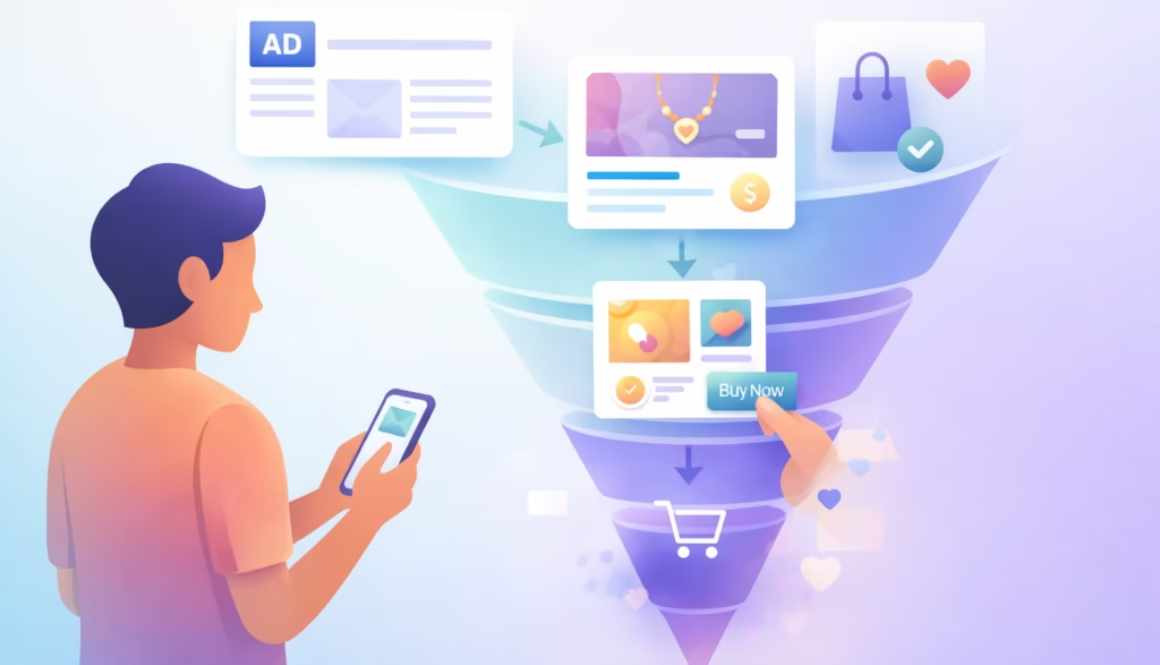
A marketing funnel is the path someone takes from hearing about you for the first time to actually buying from you.
That’s it.
Think about a real funnel. Wide at the top. Narrow at the bottom.
Your marketing works the same way.
At the top, tons of people just discovered you. They saw your Instagram post, found your blog on Google, or heard about you from a friend. These people know nothing about you yet.
As they learn more, some drop off. That’s normal. Others stick around and get curious.
By the bottom, you have way fewer people—but these are the ones who actually buy.
Here’s the key insight: people need different things at different times.
Someone who just found you needs different content than someone about to buy. Your job is to meet them where they are and guide them naturally through the journey.
That’s what a marketing funnel for beginners really means. Not manipulation. Just intentional guidance.
How a Marketing Funnel Works Step by Step
The marketing funnel concept follows a simple pattern:
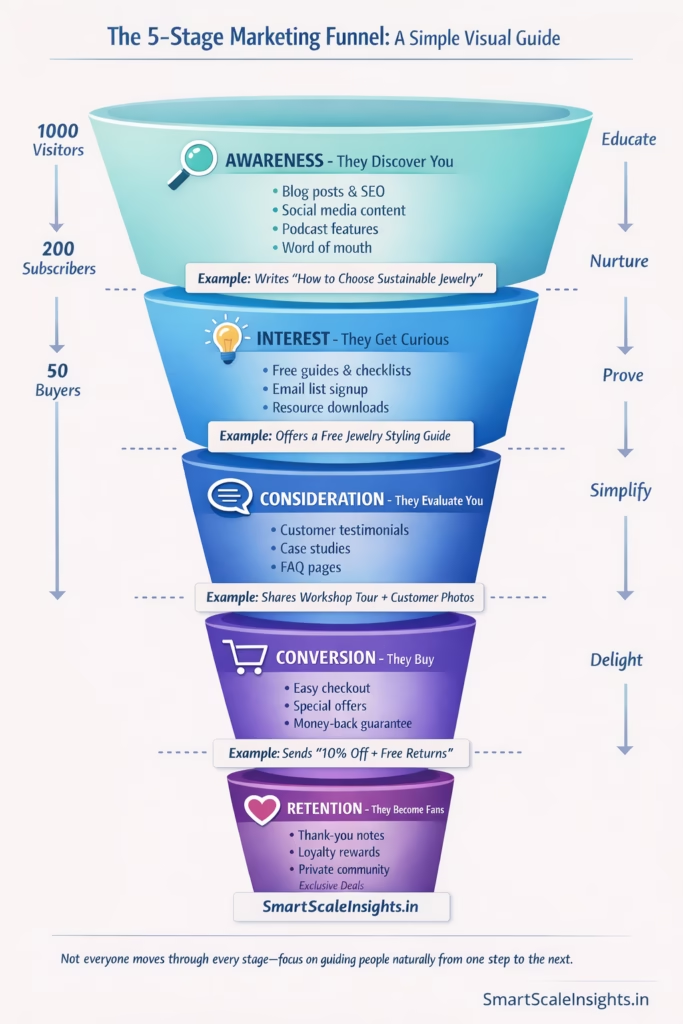
First, strangers discover you exist (Awareness).
Then, some get curious and want to learn more (Interest).
Next, they start seriously considering whether to buy (Consideration).
After that, they make the purchase (Conversion).
Finally, they either forget about you or become loyal fans (Retention).
According to HubSpot’s buyer’s journey research, 81% of shoppers research online before buying. This means you need to show up at every stage with the right message.
The funnel helps you understand where someone is in their decision-making process—and what they need from you at that exact moment.
Let me break down each stage.
Marketing Funnel Stages Explained for Beginners
Stage 1: Awareness – When They First Discover You
What’s happening: They don’t know you exist yet. They might have a problem, but they haven’t found you as a solution.
Your goal: Get discovered.
How to do it:
- Write blog posts answering real questions your customers ask
- Post consistently on social media where your audience hangs out
- Show up in Google search results through basic SEO
- Get featured on podcasts or guest posts
- Join online communities and be genuinely helpful
Example: Maya writes a blog post: “How to Choose Sustainable Jewelry That Actually Lasts.” When someone searches for this, they find her.
Key takeaway: You’re not selling here. You’re just introducing yourself and providing value.
Stage 2: Interest – Making Them Care
What’s happening: They know you exist now. Maybe they followed you or visited your website. They’re curious but not ready to buy.
Your goal: Build connection and give them reasons to stick around.
How to do it:
- Offer something free that genuinely helps (guide, template, checklist)
- Send a welcome email with personality and your story
- Share behind-the-scenes content
- Actually respond to comments and messages
Example: Maya creates a free PDF: “5 Ways to Style Minimalist Jewelry for Any Occasion.” Visitors download it, join her email list, and start receiving weekly styling tips.
Key takeaway: This is where you transition from stranger to friendly acquaintance. You’re building “know, like, trust” genuinely.
Stage 3: Consideration – Earning Their Trust
What’s happening: Now they’re thinking about buying but comparing options. They have questions and doubts.
Your goal: Address objections and show why you’re the right choice.
How to do it:
- Share testimonials from real customers
- Create comparison guides
- Provide detailed product information
- Share case studies or before-and-after examples
- Answer FAQ questions transparently
Example: Maya shares customer photos wearing her jewelry with testimonials about quality and ethical sourcing. She creates an Instagram Highlight showing her workshop and supply chain.
Key takeaway: This stage is about proof. The Content Marketing Institute emphasizes that consideration content should be solution-focused with clear differentiation.
Stage 4: Conversion – Getting the Sale
What’s happening: They’re ready to buy, but small friction points can still derail the sale.
Your goal: Make buying as easy and risk-free as possible.
How to do it:
- Simplify your checkout process
- Offer multiple payment options
- Create urgency with limited stock or seasonal offers
- Provide strong guarantees
- Send cart abandonment emails
Example: When someone adds Maya’s necklace to cart but doesn’t buy, she sends a friendly email 24 hours later: “Still thinking about that piece? Here’s 10% off to help you decide. Returns are free.”
Key takeaway: If you’ve done stages 1-3 well, conversion feels natural, not forced.
Stage 5: Retention – Turning Them Into Fans
What’s happening: They bought once. Now the question is: will they buy again and tell others?
Your goal: Turn one-time customers into repeat buyers and brand advocates.
How to do it:
- Send thoughtful follow-up emails
- Ask for feedback and reviews
- Create a loyalty program
- Offer exclusive deals for existing customers
- Provide exceptional customer service
Example: Maya sends a handwritten thank-you note with every order. She creates a private Facebook group for customers where they share styling tips. She offers 15% off their next purchase.
Key takeaway: Keeping an existing customer is 5-25 times cheaper than acquiring a new one. This stage is where real business growth happens.
Quick Recap: The Five Stages at a Glance
Awareness gets strangers to discover you. Interest makes them curious enough to stick around. Consideration builds the trust they need to choose you. Conversion removes friction so they can buy easily. Retention turns them into loyal fans who come back and refer others.
Real-Life Examples That Make Everything Click
The Dating Analogy
- Awareness: You notice someone cute at a coffee shop
- Interest: You strike up a conversation and exchange numbers
- Consideration: You go on a few dates and evaluate compatibility
- Conversion: You decide to be in a relationship
- Retention: You nurture the relationship and grow together
You wouldn’t propose at the coffee shop, right? Same with marketing—you can’t ask for a sale before building any relationship.
The Bookstore Analogy
- Awareness: You walk past a bookstore and notice an interesting title
- Interest: You go inside and read the back cover
- Consideration: You flip through pages and check reviews on your phone
- Conversion: You buy the book
- Retention: It’s so good you buy more from the same author and recommend it to friends
This is exactly how a simple marketing funnel explanation works—meeting people where they are in their decision-making process.
Why Marketing Funnels Matter (Even If You’re Just Starting)
You might be thinking: “Can’t I just post content and hope people buy?”
Sure. But here’s what happens without understanding how marketing funnels work:
The problems you’ll face:
- You waste time on wrong content—sales posts when people don’t know you, or only awareness content when you should be nurturing leads
- Your engagement doesn’t convert—tons of likes, zero sales, because you never move people forward
- You miss ready-to-buy opportunities by not addressing their final objections
- Everything feels exhausting without a clear framework
What changes with a funnel mindset:
- You create content with purpose—every piece has a specific job
- You understand why some marketing works and diagnose problems in your customer journey
- You build sustainable systems that generate predictable revenue
For freelancers and small business owners, this is what separates random income from predictable revenue.
Common Funnel Mistakes That Kill Your Results
Mistake #1: Selling Too Soon
You create a Facebook page today and immediately post “Buy my product!” to zero followers.
The fix: Build awareness and interest first. Give before you ask.
Mistake #2: Only Creating Top-of-Funnel Content
Great blog traffic and social media growth, but zero sales. You’re stuck at awareness.
The fix: Balance educational content with conversion-focused content for every stage.
Mistake #3: Forgetting Existing Customers
You celebrate the sale, then ghost them completely.
The fix: Have a post-purchase sequence. Stay in touch and make them feel valued.
Mistake #4: Creating Gaps in Your Funnel
People move from awareness to interest… then fall off because there’s no clear next step.
The fix: Map the journey with clear calls-to-action connecting each stage.
Mistake #5: Overcomplicating From Day One
You try building a 47-step automated funnel before making your first sale.
The fix: Start simple. Get basics working, then optimize.
Three Simple Funnels You Can Build This Week
Example 1: The Blog Content Funnel
The Setup:
- Awareness: Write SEO-optimized posts answering questions in your niche (“How to Start a Podcast in 2025: Complete Beginner’s Guide”)
- Interest: Offer a free relevant resource at the end (“Download my Podcast Launch Checklist”)
- Consideration: Send email sequence with case studies, tutorials, and testimonials
- Conversion: Special offer email (“Join my Podcast Accelerator Course—early bird pricing ends Friday”)
- Retention: Send regular updates, bonus content, invite to private community
Why it works: You attract people with real problems, provide immediate value, build trust through email, and pitch only when they’re ready.
Best for: Service providers, coaches, educators, and anyone who can create written content consistently.
Focus on first: Write one high-quality blog post targeting a specific search term your ideal customer uses.
Example 2: The Social Media Funnel
The Setup:
- Awareness: Create engaging Instagram or TikTok content showcasing expertise (quick tips, transformations, myth-busting)
- Interest: Direct people to free resource in bio (“Want my Design Toolkit? Link in bio!”)
- Consideration: Email sequence with success stories and deeper insights
- Conversion: Invite to free webinar where you soft-pitch your paid service
- Retention: Client Facebook group, monthly features, referral program
Why it works: Social media excels at awareness and interest. You’re using it to build your email list (where you have control), then nurturing toward sales.
Best for: Visual businesses, personal brands, and anyone building an audience on social platforms.
Focus on first: Choose one platform and commit to posting valuable content 3-4 times per week consistently.
Example 3: The Email Marketing Funnel
The Setup:
- Awareness: Run small Facebook or Google ad to free resource (“Free Guide: 10 Side Hustles You Can Start This Weekend”)
- Interest: Welcome sequence sharing your story, values, and helpful content
- Consideration: Case studies and testimonials after value emails
- Conversion: Limited-time offer email (“Join my 6-Week Passive Income Accelerator—early bird ends Friday”)
- Retention: Weekly value emails, exclusive bonuses, ask for reviews
Why it works: Email remains one of the highest-converting channels. You own your list and can strategically guide people through each stage. successful marketers focus on understanding the customer journey, not fancy automation.
Best for: Digital product creators, course sellers, and anyone with a clear paid offer.
Focus on first: Build your email list to 100 subscribers before worrying about complex automation.
Do You Actually Need This? (Honest Answer)
Here’s the truth: you’re already using a funnel whether you realize it or not.
Every business has a customer journey. The question isn’t whether you need a funnel—it’s whether you want to be intentional about it.
Without a funnel mindset: You post randomly and wonder why results are inconsistent. You’re flying blind.
With a funnel mindset: You understand why someone might not buy today and what you can do to help them get there tomorrow.
You don’t need fancy software or complicated automation.
What you actually need:
- Awareness of the stages people go through
- Content serving each stage
- A way to stay in touch (email list)
- A clear path from curious stranger to happy customer
Start simple. Even a basic funnel—blog post → free resource → email sequence → product offer—beats no strategy at all.
Questions Everyone Asks
What’s the difference between a marketing funnel and a sales funnel?
Technically, a marketing funnel covers the entire journey from awareness to loyalty. A sales funnel focuses just on the buying decision (consideration to conversion). But most people use these terms interchangeably and just say “funnel.”
How long should my funnel be?
Depends on what you’re selling:
- Low-priced products ($10-50): Short funnel, quick decisions
- Mid-range offers ($100-500): Medium funnel, a few touchpoints
- High-ticket services ($1,000+): Long funnel, multiple interactions over weeks or months
Do I need expensive software?
Nope. Start with free tools: Google Docs for strategy, Mailchimp or MailerLite for email (free plans available), your existing website, and social media. Fancy tools help later but don’t let them stop you from starting.
How do I know if my funnel is working?
Track these simple metrics:
- Website traffic (awareness)
- Email subscribers (interest)
- Email click-through rates (consideration)
- Sales (conversion)
- Repeat purchases (retention)
If you’re getting traffic but no signups, fix the interest stage. If you have subscribers but no sales, focus on consideration and conversion content.
Can I have multiple funnels?
Absolutely. Most businesses do—different funnels for different products, customer segments, or traffic sources. Just start with one, get it working, then expand.
What if people skip stages?
Totally normal. Some discover you and buy immediately. Others take months. Your funnel should accommodate both—have fast paths and slow paths.
Your Next Step
A marketing funnel isn’t magic or manipulation. It’s a framework for understanding how people naturally make decisions—and how you can support them through that process.
You don’t need genius-level strategy, a huge budget, or perfect execution.
You just need to think intentionally about your customer’s journey from discovery to becoming a raving fan.
Here’s what to do right now:
Beginner Action (Do This Today):
Map your current reality on paper. Write down where most people discover you, what happens next, and where they drop off. Identify the biggest gap. Then create ONE piece of content for that stage—an email sequence, a lead magnet, a testimonial page. Just one thing.
Advanced Action (When You’re Ready):
Set up basic analytics to track each funnel stage. Use Google Analytics for traffic sources, your email platform for subscriber metrics, and simple tracking for conversion rates. Review monthly and adjust based on data, not guesses.
Remember Maya? Once she stopped posting randomly and started thinking strategically, everything changed. She built a simple funnel: helpful articles → free styling guide → email sequence → product launches.
Her sales became predictable. She understood why people bought. She stopped feeling overwhelmed and started feeling in control.
You can do the same.
Pick one action from this post. Do it today. Not tomorrow—today.
Your future customers are out there searching for someone like you. Make it easy for them to find you, trust you, and buy from you.
That’s what a great marketing funnel does.
Now go build yours.
Go to Next Lesson:
Organic vs Paid Marketing: Which One Should You Start With? (A Beginner’s Decision Framework)
Understanding marketing funnels is the first step to building a system that turns strangers into customers. But a funnel only works if people actually enter it.
That leads to the next big question: where does your traffic come from?
Some businesses grow through organic marketing like SEO, content, and social media. Others rely on paid advertising to bring visitors quickly. Choosing the wrong approach too early can waste both time and money.
In the next guide, you’ll learn the key differences between organic vs paid marketing, when each strategy makes sense, and how beginners can decide which one to start with.
👉 Read next: Organic vs Paid Marketing: Which One Should You Start With? (A Beginner’s Decision Framework)