You’ve probably heard it a hundred times: “Start a blog. Create content. Build your audience.”
But here’s what nobody tells you—most marketing advice is written for people who already have teams, budgets, and years of experience. If you’re starting from zero, with no email list, no social following, and definitely no $5,000/month ad budget, that advice feels useless.
I’ve watched hundreds of beginners try to follow this advice and fail—not because they weren’t smart enough, but because the roadmap was wrong from the start. Look, I get it. The whole thing feels overwhelming.
Here’s what actually works: content marketing for beginners is the single most beginner-friendly, low-risk way to build a real online presence that compounds over time. Unlike paid ads that disappear the moment you stop paying, content marketing creates assets that work while you sleep.
In this guide, you’ll learn what content marketing actually means (without the jargon), why it works so well for people starting from scratch, and the exact step-by-step process to start seeing results in 90 days—even if you’ve never written a blog post before.
Let’s be honest about what happens when you Google “how to get customers online.”
You get told to run Facebook ads. Build sales funnels. Launch email sequences. Hire a team. Most advice assumes you have money to burn and time to waste figuring out complex platforms.
The beginner’s dilemma: You need customers to make money, but you need money to get customers. It’s a loop that keeps most people stuck, and frankly, it’s exhausting.
Traditional marketing channels like paid advertising require:
Immediate cash investment ($500-$5,000+ per month)
High risk (spend money before knowing if it works)
Content marketing flips this. You create valuable content once, and it brings people to you for months or years.
What Is Content Marketing for Beginners?
Content marketing for beginners is the practice of creating and sharing valuable, relevant content (blog posts, videos, guides, social posts) that attracts your ideal customers naturally—without paid ads.
According to the Content Marketing Institute, content marketing is a strategic approach focused on creating content that attracts and retains a clearly defined audience, ultimately driving profitable customer action.
Think of it like this: Instead of standing on a street corner shouting “Buy my product!” at strangers, you’re writing helpful articles that people actually search for on Google. When they find your content, they learn to trust you. When they trust you, they eventually buy from you.
Sounds simple, right? It is. But most people overcomplicate it.
Here’s what makes beginner content marketing different from other strategies:
You’re not interrupting people—you’re answering questions they’re already asking. Someone searches “how to start content marketing step by step” on Google, finds your guide, and suddenly you’re the expert who helped them. That’s powerful.
Your content is an asset—not an expense. A single blog post published today can bring you customers in 2027, 2028, and beyond. Paid ads? Gone the second your budget runs out.
You build real authority—by teaching, not selling. When you consistently publish valuable content, people start seeing you as the go-to expert in your space. Authority leads to trust. Trust leads to sales.
What Content Marketing Is NOT
Before we go further, let’s clear up common myths:
❌ It’s NOT just blogging (though blogs are one format) ❌ It’s NOT posting random thoughts on social media ❌ It’s NOT “write and pray people find it” ❌ It’s NOT a get-rich-quick scheme
Content marketing basics for beginners come down to this: You create content with a specific audience and goal in mind. You optimize it so people can actually find it. And you do it consistently enough that results compound over time.
When you run a Facebook ad, you pay $100 and maybe get 50 clicks. Tomorrow, if you want 50 more clicks, you pay another $100. Stop paying? Traffic stops.
But when you write one great blog post, here’s what happens:
Month 1: 100 visitors
Month 3: 400 visitors (Google ranks it higher)
Month 6: 1,200 visitors (backlinks and shares kick in)
Month 12: 2,500 visitors (it’s now a top-ranking page)
Same piece of content. Zero additional cost. Growing traffic every single month.
This is the compound effect. Your early content keeps working while you create new content. By month six, you might have 10-15 posts all bringing traffic simultaneously. That’s when beginners start seeing real momentum.
I didn’t believe this the first time I heard it. It sounded too good to be true. But after watching it happen dozens of times, I can tell you—it’s real.
These aren’t just “marketing skills”—they’re career skills. Whether you’re freelancing, building a business, or looking for a job, these abilities make you valuable anywhere.
4. Low Risk, High Reward
If you spend $2,000 on ads and they flop, that money is gone forever.
If you spend 20 hours writing content that doesn’t work? You learned what your audience doesn’t care about. Adjust and try again. The time wasn’t wasted—it was education.
Plus, even “failed” content can be repurposed, updated, or rewritten. Nothing is truly wasted in content marketing.
5. You Build a Real Audience (Not Rented Traffic)
Paid ads give you rented attention. The moment you stop paying, the audience vanishes.
Content marketing builds owned attention. People find you organically, subscribe to your email list, follow your social accounts, and remember your name. That audience is yours forever.
This is why content marketing is often called “the safest way to build long-term online income.” You’re building assets and relationships that can’t be taken away.
The Content Asset Flywheel (Why Beginners Win Long-Term)
Here’s something most marketing advice gets wrong: they treat content like a campaign with a start and end date.
But content marketing isn’t a campaign—it’s a flywheel that builds momentum over time.
The Content Asset Flywheel is a simple four-stage cycle that explains why beginners who stick with a content marketing strategy for beginners eventually outperform people spending thousands on ads.
Stage 1: Publish One Helpful Piece
You create your first blog post answering a real question your audience is asking. It could be “how to hire a virtual assistant” or “best budget laptops for students.” The key word here is helpful—not salesy, not promotional, genuinely useful.
This is where most beginners mess up. They try to sell too early.
Stage 2: Google Indexes and Ranks It
Within days, Google discovers your content. Over the next 30-90 days, it evaluates how helpful your content is compared to what’s already ranking. If you’ve done your job well (answered the question thoroughly, made it easy to read, optimized for the right keywords), Google slowly moves you up in search results.
Slowly. This part tests your patience.
Stage 3: Trust Builds Passively
Here’s where the magic happens. People start finding your content through Google searches. They read it. Some bookmark it. Some share it. Some sign up for your email list. You’re not selling anything yet—you’re just helping. But every reader is now thinking: “This person knows what they’re talking about.”
Trust compounds silently in the background while you sleep.
Stage 4: Traffic Compounds Without Extra Cost
By the time you’ve published 10-15 pieces of content, you have multiple articles all working simultaneously. One article brings 100 visitors per month. Another brings 200. A third brings 500. That’s 800+ visitors from just three posts—every single month—with zero ongoing cost.
And here’s the beautiful part: this traffic funds the creation of more content, which brings more traffic, which builds more trust, which creates more conversions.
The flywheel spins faster the longer you stay in the game.
[Visual suggestion: Circular diagram showing content → traffic → trust → conversions → more content. Alt text: “Content asset flywheel showing how content marketing compounds over time for beginners”]
This is why beginners win long-term. You’re not competing on budget. You’re competing on consistency and value.
Show up every week for six months, and you’ll have a content library that works harder than any ad campaign ever could.
Step-by-Step Content Marketing for Beginners
Okay, enough theory. Let’s walk through how to start content marketing with no money, no audience, and no experience.
Step 1 – Understanding Your Audience
Before you write a single word, answer this question: Who are you trying to help, and what keeps them awake at night?
Content marketing only works when you deeply understand your audience’s problems, fears, and goals.
Action Step: Create a simple audience profile.
Example:
Who they are: Freelance graphic designers trying to get their first clients
Main problem: Don’t know how to market themselves without feeling salesy
What they search for: “how to find freelance clients,” “freelance marketing tips,” “getting design clients without ads”
Once you know this, content ideas write themselves. You’re not guessing—you’re solving real problems people are actively searching for.
Step 2 – Choosing the Right Content Types
Beginners often freeze because they think they need to do everything: blog, YouTube, TikTok, podcast, Instagram, LinkedIn…
Stop. Pick ONE format to start.
Here’s how to choose:
If you enjoy writing → Start a blog (easiest to rank on Google) If you’re comfortable on camera → YouTube (second-best for long-term SEO) If you like quick tips and personality → Twitter/X or LinkedIn If you’re visual → Instagram or Pinterest
For most beginners, I recommend learning how to start a blog step by step because:
Google is the biggest search engine on Earth
Blog posts rank for years (YouTube videos can too, but editing is harder)
You don’t need to show your face or sound perfect
Writing forces you to think clearly about your message
You can always expand to other formats later. Start with one, do it well, then add more.
Don’t try to be everywhere. You’ll burn out in a month.
Step 3 – SEO Basics Without Complexity
Here’s the basic SEO checklist (the only things that truly matter at the start):
Use Google Autocomplete: Start typing a question in Google and see what it suggests
Check “People Also Ask” boxes on Google results pages
Use free tools like Ubersuggest, AnswerThePublic, or Google Keyword Planner
Look for keywords with 500-5,000 monthly searches (low competition, still valuable)
For a deeper understanding of keyword research for beginners, focus on finding questions your audience is already asking rather than chasing high-volume competitive terms. That battle comes later.
Make it easy to read (short paragraphs, bullet points, subheadings)
Add examples, visuals, or stories
Go deeper than competitors (if they write 800 words, you write 1,500)
That’s it. You don’t need to obsess over technical SEO, backlinks, or domain authority when you’re just starting. Focus on creating genuinely helpful content, and Google will reward you.
Seriously. Keep it simple.
Step 4 – Consistency Over Perfection
This is where most beginners fail. They publish one amazing post, wait for results, see nothing happen in week one, and quit.
Reality check: Content marketing takes 60-90 days minimum to show early results. That first post you publish in January might not rank well until March or April.
It’s frustrating. But it’s normal.
But here’s the magic: If you publish consistently (even just once a week), by month three you’ll have 12+ posts all working for you. Some will hit, some won’t. The ones that hit will carry you.
Beginner Publishing Schedule:
Minimum: 1 high-quality post per week (52 per year)
Ideal: 2 posts per week (104 per year)
Aggressive: 3 posts per week (156 per year)
Focus on sustainability. It’s better to publish one great post per week for a year than five mediocre posts per week for two months before burning out.
If you’re just starting, consider using a content calendar or planning tool to stay organized and maintain consistency without feeling overwhelmed.
Step 5 – Measuring Progress
You don’t need fancy analytics dashboards. Track three simple metrics:
1. Traffic (Are people finding my content?)
Use Google Analytics or your platform’s built-in stats
Goal: Gradual increase month-over-month
2. Engagement (Are people reading and staying?)
Average time on page
Scroll depth
Comments or shares
3. Conversions (Are people taking action?)
Email signups
Link clicks
Product purchases (if applicable)
Check these once a month. If traffic is growing, you’re doing it right. If it’s flat after three months, revisit your keyword research and content quality.
Beginner Tools & Resources
You don’t need expensive tools, but these free/affordable options help:
Google Search Console (free, shows what keywords you rank for)
Publishing Platforms:
WordPress.com (free, easy to start)
Medium (free, built-in audience)
LinkedIn (free, professional network)
Start with free tools. Upgrade only when you’re seeing consistent results and know exactly what you need.
Real Beginner Example: From Zero to First Results
Let’s walk through a realistic scenario so you can see what content marketing for beginners step by step actually looks like in practice.
Meet Sarah: She’s a virtual assistant who wants to attract small business owners as clients. She has zero online presence.
Month 1: Foundation (Slow Start, Normal Doubts)
Week 1: Researches audience (small business owners struggling with admin tasks)
Week 2: Identifies 10 keyword ideas (“how to hire a virtual assistant,” “virtual assistant cost,” “what does a VA do”)
Week 3: Publishes first blog post: “What Does a Virtual Assistant Actually Do? (Real Examples)” — feels unsure if it’s good enough
Week 4: Publishes second post: “How Much Does a Virtual Assistant Cost in 2026?”
Results: 12 total visitors. No clients yet. Sarah wonders if this is even working. (This is normal.)
Month 2: Building Momentum (Still Quiet)
Publishes 4 more posts (one per week)
Topics include: VA pricing, task lists, beginner tips, hiring guides
Shares posts on LinkedIn with her thoughts added
One post gets 3 likes. That’s it.
Results: 87 visitors total. Still no clients, but Google is indexing her content. She’s tempted to quit but doesn’t.
Month 3: First Signs of Growth
Publishes 4 more posts
One post (“10 Tasks You Should Delegate to a VA Today”) starts ranking on page 2 of Google
Gets her first email subscriber (someone she doesn’t know!)
Results: 340 visitors. One business owner reaches out asking about her services. Sarah realizes it’s actually working.
Month 6: Compound Effect Kicks In
Now has 20+ published posts
4 posts ranking in top 10 on Google
Getting 1,200+ visitors per month
Email list: 45 subscribers
Results: Books 2 clients directly from blog traffic. Earning $1,500/month in recurring revenue. Content marketing vs paid ads isn’t even a question anymore—she’d never go back.
Month 12: Established Authority
50+ posts published
3,500+ monthly visitors
Email list: 180 subscribers
Ranking for competitive keywords
Results: Consistently booking clients. No longer needs to do outbound marketing—clients find her through Google.
Key Takeaway: Sarah didn’t get overnight success. She had slow months. She doubted herself. But she showed up consistently, and her content compounded. By month six, her content was doing the marketing for her.
[Visual suggestion: Timeline infographic showing Sarah’s 12-month journey with traffic, posts, and revenue growth. Alt text: “Content marketing progress timeline showing growth from 0 to 3,500 monthly visitors over 12 months”]
Content Marketing vs Paid Advertising (Comparison)
Still not sure if content marketing is right for you? Here’s an honest comparison.
For most beginners, content marketing is the better starting point. Once you have proven demand and revenue, you can layer in paid ads to accelerate growth.
FAQ: Common Questions About Content Marketing
Is content marketing good for beginners with no experience?
Yes. Content marketing requires no upfront money and lets you learn as you go. Your first posts won’t be perfect, but each one teaches you more about your audience. Many successful businesses started with someone writing their first blog post with zero experience. The learning curve is real, but it’s manageable.
How long does content marketing take to work for beginners?
Most beginners see meaningful traffic between 60-90 days after starting. Real momentum typically builds around the 6-month mark when you have 20-30+ published pieces. Traffic compounds over time, so month 12 performs dramatically better than month 3. Don’t expect results in week two. It doesn’t work that way.
What type of content marketing is best for beginners?
Blogging is best for beginners because it’s the easiest format to rank on Google, requires no video editing or camera skills, and lets you think through your message clearly. Start with one blog per week, then expand to other formats once you’re comfortable. Master one thing before adding another.
Can beginners succeed with content marketing without paid ads?
Absolutely. Content marketing is specifically designed to work without ads. According to HubSpot’s research, organic search drives over 10x more traffic than paid social media. You’re creating assets that attract visitors naturally through search engines, not renting attention through ads. Is content marketing worth it for beginners? Yes, if you can commit to consistency.
How often should beginners publish content?
Weekly minimum. One high-quality post per week (52 per year) is enough to see results. Consistency matters more than volume. It’s better to publish reliably once a week for a year than daily for two months before burning out. Pick a schedule you can sustain for at least six months.
Next Steps: Your First Action Today
You’ve learned what content marketing is, why it works for beginners, and the exact steps to start. Now comes the most important part: taking action.
Here’s your simple first step:
Before you close this tab, pick one specific problem your ideal customer has and write it down. That’s your first content topic.
Examples:
“How do I find my first freelance client?”
“What’s the easiest way to start investing with $100?”
“How do I choose the right online course platform?”
Once you have that problem written down, spend 30 minutes researching what’s already ranking on Google for that topic. Look for gaps—what’s missing? What could be explained better? What questions are left unanswered?
Then write your version. Don’t worry about perfection. Worry about being helpful.
Content marketing for beginners isn’t about being the best writer or having the most resources. It’s about showing up consistently, teaching what you know, and building trust with people who need your help.
Start today. Your first post won’t go viral. Your tenth post might not either. But by your thirtieth post, you’ll have traffic, subscribers, and the beginnings of real online authority.
Don’t wait until it feels ready—it won’t.
Messy consistency beats perfect planning every single time.
If you do one thing this week, just write one imperfect post and hit publish. That’s literally all it takes to start.
Your move.
Go to Next Lesson: How to Do Keyword Research: The Beginner System I Wish I’d Used Before Wasting 4 Months
Content marketing works best when you create content people are already searching for. Without the right topics, even great articles can stay invisible in search results.
Instead of guessing what to write about, keyword research helps you discover the exact phrases people type into Google. When you target the right keywords, your content has a much better chance of appearing in search results and bringing consistent traffic to your site.
In the next guide, you’ll learn a simple step-by-step keyword research system that helps beginners find realistic opportunities and avoid targeting keywords that are too competitive.
Ready to dive deeper into digital marketing strategies? Subscribe below for weekly guides written specifically for beginners building their first online income stream.
You just launched your business. Your product’s ready. Website’s live. You know you need to market it.
And that’s where you freeze.
Should you spend time on organic marketing or throw money into paid ads?
After working with dozens of first-time founders and small business owners, I’ve seen the same mistakes repeat over and over. Someone burns $3,000 on Facebook ads before their website even explains what they’re selling. Or they spend five months writing blog posts while their bank account bleeds out because they needed sales three months ago.
Here’s what nobody tells you: Most people don’t fail because they chose organic or paid. They fail because they chose the wrong one first.
This guide is written for beginners, solopreneurs, and small business owners trying to grow without burning money on the wrong strategy.
There’s no universal answer. But there is a right answer for you—based on your budget, timeline, and what you’re actually trying to build. This guide will help you figure that out without wasting time or money on the wrong path.
TL;DR — Organic vs Paid Marketing
Start with organic if budget is limited and building trust matters.
Start with paid if offers are proven and speed is required.
Long-term growth comes from combining both—in the right order.
💡 This isn’t an organic vs paid debate. It’s a sequencing framework for beginners.
This guide isn’t about choosing sides—it’s about choosing order. Most advice tells you which channel is “better.” This framework shows you which one to start with based on where you actually are right now.
They should ask: “Which one matches where I am right now?”
You’ve probably read a blog post making SEO sound like free traffic forever. Then you saw a YouTube ad promising customers by next week. Both sound great. Both need different resources you might not have.
Then someone tells you to “do both.”
That’s fine advice if you have a marketing team. But if you’re doing this solo? Splitting your time and tiny budget across two complex strategies gets you mediocre results in both.
Statistics say 67% of marketers use organic social media. About 42% run paid ads. But here’s what those numbers hide: the order matters more than the choice.
Jump into paid advertising for beginners without understanding your audience? You’re paying to test messages that could’ve been validated for free first.
Pour months into organic content without any revenue? You might run out of cash before you see a single result.
The problem isn’t organic vs paid traffic. It’s knowing which one builds the foundation you need right now, and which one amplifies what’s already working.
Sequence matters more than the choice.
Most beginners lose money or time because they pick the strategy that sounds better, not the one that fits their situation. They follow advice meant for businesses with established audiences and revenue. That’s like following a marathon training plan when you’re still learning to jog.
Organic vs Paid Marketing for Beginners: What to Choose First
Let me give you the straight answer most articles avoid.
If you’re a complete beginner, start with organic marketing in almost every scenario.
Here’s why.
The Budget Reality for Beginners
Most beginners have $0-$500 monthly for marketing. That’s not enough for paid ads to work.
Most paid ad campaigns require 6-8 weeks of testing before becoming profitable. During that time, you’re losing money while you learn. If you only have $500/month, you’ll run out before learning anything useful.
With organic marketing, your budget can be $0. You just need time and consistency.
The Learning Curve Difference
Organic marketing teaches you:
How to communicate your value clearly
What your customers actually care about
Which problems matter most to them
How to create content that resonates
These skills transfer to everything. When you eventually run paid ads, you’ll already know what works.
Paid marketing throws you in the deep end:
Complex ad platforms with steep learning curves
Budgets that burn fast when you make mistakes
Pressure to optimize daily while still learning basics
Technical tracking setup that confuses most beginners
You’re paying to learn lessons that organic teaches for free.
Risk Tolerance Reality Check
Organic marketing risks:
Your time (which you have more of than money)
Opportunity cost (could’ve spent time differently)
Zero financial loss
Paid marketing risks:
Real money you might need for other business expenses
$2,000-$5,000 burned while learning (typical beginner loss)
Emotional stress of watching money disappear
Potential to quit business entirely after expensive failure
This is the part most people rush—and it’s exactly why they get stuck.
The Beginner Success Pattern
Here’s what works for most beginners:
Months 1-6: Pure organic. Learn to create valuable content. Build an audience slowly.
Months 7-12: Organic is working. Steady traffic. Some leads. Revenue starting.
Month 13+: Add small paid campaigns to amplify proven messages.
This sequence minimizes risk while maximizing learning.
When Beginners Should Consider Paid First
Only start with paid marketing as a beginner if:
You have $3,000-$5,000 you can afford to lose completely
You need market validation faster than organic allows
You have a high-margin product that can absorb learning costs
Someone experienced is guiding you (mentor, consultant, course)
Otherwise, start organic. Build your foundation. Learn your market. Then scale with paid.
Organic vs Paid Marketing: How Beginners Should Decide (Decision Framework)
Let me cut through the confusion.
Answer these questions honestly. You’ll know exactly where to start.
Step 1: Look at Your Bank Account
Less than $500/month for marketing?
Start organic. You don’t have enough budget to run paid campaigns long enough to learn anything. Most campaigns need $1,000-$2,000 monthly and 2-3 months of testing to work.
Think about it this way: $500 gets you maybe 200 clicks on Google Ads. If your conversion rate is 2% (which is decent), that’s 4 leads. Can you learn what’s working from 4 leads? Not really.
Between $500-$1,000/month?
This is the awkward middle. You could try paid, but you’ll struggle to get enough data. Consider starting organic and banking that money. When you have $2,000-$3,000 saved, then test paid campaigns with a proper budget.
More than $1,000/month and you need revenue in 60 days?
Paid might work. But finish Step 2 first.
Step 2: Check Your Foundation
Before you spend one dollar on ads, answer these:
Does your website clearly explain what you sell and how to buy it?
If people are confused, paid traffic won’t help. You’ll just pay to confuse more people faster.
Can someone understand your offer in 10 seconds?
Vague offerings don’t convert. Not even with perfect targeting. Your grandmother should be able to explain what you do after looking at your homepage.
Can you track where visitors come from and what they do? Can you see which pages they visit before buying or leaving?
Have you made at least one sale already?
Even one. To a friend, a family member, anyone. If you haven’t validated that someone will pay for what you’re offering, paid ads won’t magically fix that.
If any of these are broken, start with organic. You’ll be forced to clarify your message and understand your audience before paying for attention.
Step 3: Match This to Your Skills
Be honest about what you’re actually good at.
Start with organic marketing if:
You like writing or creating content
You have time but not much money
You can commit 5-10 hours weekly for 3-6 months
You’re willing to learn basic SEO (it’s easier than people claim)
You enjoy teaching or explaining things
You’re patient and think long-term
Start with paid marketing if:
Numbers don’t scare you
You can write short, punchy copy
You have budget you can afford to lose while learning (you should expect some loss while learning)
You need to test the market fast
You’re comfortable making daily decisions based on data
You can handle losing money for 2-3 months before seeing profits
Here’s something nobody mentions: Your personality matters. If checking numbers and adjusting bids stresses you out, paid ads will make you miserable. If writing consistently feels like pulling teeth, organic will burn you out.
Pick the one that matches how you naturally work.
Step 4: Be Honest About Timeline
This part frustrates people, but it’s true.
Organic marketing timeline:
Months 1-2: Nothing happens. Pure investment.
Months 3-4: You get your first trickle of traffic.
Months 6-12: Things start building. Results compound.
Year 2+: You have a machine that generates leads while you sleep.
Local services with clear value (plumbing, electricians)
High-margin products that can absorb ad costs
Time-sensitive offers (events, seasonal products)
Products with instant gratification appeal
Quick Decision Checklist
Start with Organic if:
✓ Budget under $1,000/month
✓ You have 3-6 months minimum
✓ Need to understand your audience better
✓ Building expertise or authority matters
✓ You enjoy creating content
✓ Your product needs education to sell
Start with Paid if:
✓ Already have a proven offer
✓ Know your exact target audience
✓ Have $2,000+ testing budget
✓ Need results in 30-60 days
✓ Comfortable with data and testing
✓ Can afford to lose money while learning
If you want a printable version of this decision framework, save this page or bookmark it—you’ll come back to it.
⏸️ Pause here. Look at your answers honestly.
Which path did you want to choose versus which one actually fits your situation right now? There’s usually a gap between those two answers—and that gap is where most beginners make expensive mistakes.
[Insert Decision Framework Flowchart]
Visual: Flowchart showing decision tree from budget → timeline → skills → recommended starting point
Purpose: Gives readers a visual reference they can screenshot and return to
Alt text: “Decision flowchart showing how to choose between organic and paid marketing based on budget, timeline, and skills”
Organic vs Paid Marketing: Key Differences Beginners Must Understand
Before we dive deeper, let’s clarify what actually separates these two approaches. Understanding these core differences will help everything else make sense.
The Intent Difference
Organic traffic: People are actively searching for solutions. They’re looking for answers to questions. They’re researching problems they already know they have.
When someone finds your blog post about “how to fix a leaky faucet,” they have a leaky faucet. They’re qualified. They’re motivated. They’re in problem-solving mode.
According to HubSpot’s research, organic search drives the majority of website traffic for most businesses because it captures existing demand rather than creating it.
Paid traffic: You’re interrupting someone’s browsing. They might not even know they have the problem you solve. You’re creating awareness or capturing attention they weren’t planning to give you.
When someone sees your ad for plumbing services while scrolling Facebook, they weren’t thinking about their plumbing. You have to capture attention, create interest, and convince them to act—all in a few seconds.
This intent difference changes everything about how you need to communicate.
Once you create content, it costs nothing to maintain. A blog post from 2020 can still bring traffic in 2025 at zero additional cost.
Paid marketing costs:
Ad spend (starts at $500-$1,000/month minimum)
Tools and tracking ($50-$200/month)
Creative production (time or money)
Ongoing learning and optimization time
Continuous investment required
Stop paying, traffic stops immediately. There’s no residual value. According to data from Statista, average cost per click across industries ranges from $1.16 to $6.75, which adds up fast.
The Timeline Difference
Organic marketing builds over time.
Month 1 is harder than month 2. Month 2 is harder than month 3. But month 12 is easier than month 6. It compounds.
Your 50th blog post gets easier to write than your 5th. Your 100th social media post performs better than your 10th because you understand your audience now.
Paid marketing stays consistently difficult.
Month 1 requires the same effort as month 12. You’re always testing, always optimizing, always managing. The work never gets easier. It just gets more expensive as platforms raise their costs.
The Trust Difference
People know when you’re paying to reach them.
They see “Sponsored” or “Ad” in the corner. Their guard goes up slightly. Not always a dealbreaker, but it’s there.
When they find you organically through search or a referral, there’s an implicit endorsement. Google chose to show you. A friend shared your content. You earned the attention rather than bought it.
For high-trust purchases or complex decisions, this matters more than you’d think.
The Control Difference
With organic: You control your content but not your ranking. Google decides if you show up. Social platforms decide how many people see your posts. You’re playing by their rules.
With paid: You control who sees your message and when. Want to target 35-year-old women in Denver who like yoga? Done. Want to show up only between 9am-5pm on weekdays? Easy.
You trade money for control.
Organic vs Paid Marketing for Small Business: What Actually Works
Small business owners face specific constraints that change the equation entirely.
Limited budget. Limited time. Usually one person doing everything.
Here’s what actually works in this situation.
The Budget Reality
Most small businesses start with under $500 monthly for marketing. That’s not enough for paid ads to work properly.
Here’s why: You need data to make decisions. To get data, you need volume. To get volume, you need budget.
With $500, you might get 200 clicks on Google Ads. Maybe 2-4 become leads. Maybe 0-1 become customers. Is that enough to know if your targeting is right? If your offer resonates? If your landing page works?
No. You’re guessing with expensive guesses.
But $500 monthly can cover your organic marketing completely:
You’re probably doing sales, product, customer service, and marketing. You’ve got maybe 10 hours a week for marketing if you’re lucky. Sometimes less.
Organic marketing fits this better. You can write one blog post a week. Or create three social posts. Or send one email to your list. Small, consistent actions compound over months.
You don’t need to check your stats every day. You don’t need to adjust anything mid-week. You create, publish, and move on.
Paid marketing demands constant attention. Check numbers daily. Adjust bids. Test new ads. Turn things off that aren’t working. Monitor your spend. Watch for click fraud. Optimize landing pages based on performance.
It’s a part-time job that never stops.
Why Most Small Businesses Should Go Organic First
Start with organic marketing strategies for three to six months. Here’s why:
You’ll learn what messages actually resonate. For free. Through blog comments, email replies, social media reactions. When you eventually run ads, you’ll already know which headlines work and which pain points matter.
You’ll build assets that keep working. A blog post you write today can still bring traffic in two years. According to HubSpot, organic search drives over 1000% more traffic than most channels once momentum builds.
You’ll develop skills that benefit everything else. Writing. Understanding your customer. Creating offers people want. These matter for all marketing.
You’ll validate your business model cheaply. If you can’t get people interested through free content, paying for attention won’t fix that.
The Small Business Success Pattern
Here’s the pattern I’ve seen work repeatedly:
Months 1-6: Pure organic. Blog, social, email. Build audience slowly.
Months 7-9: Start seeing traction. Some leads. Maybe first customers.
Months 10-12: Organic machine is working.
Month 13+: Add small paid campaigns ($500-$1,000/month) to amplify proven messages.
This works because you’re not guessing with expensive paid traffic. You’re scaling what already works.
That’s the sequence that works for most small businesses.
Social Media: Building an audience through valuable posts
Email: Nurturing subscribers over time
Content: Blog posts, videos, podcasts that teach or entertain
Community Building: Forums, groups, relationships
The Part Nobody Mentions
It’s slow. It’s inconsistent. You probably don’t have the skills yet. That’s okay. Nobody starts with the skills.
Most people quit around month three. Right when it’s about to work.
They publish 15 blog posts. Get 200 visitors total. Zero leads. They conclude “SEO doesn’t work.”
But research shows 49% of marketers say organic search has their best ROI. The catch? That ROI comes from compounding effects that take months.
You’re not building a sprint. You’re building a snowball rolling downhill.
[Insert Organic Growth Timeline Visual]
Visual: Timeline graph showing organic marketing growth curve from flat start to exponential results
Purpose: Helps readers visualize the compound effect and set realistic expectations
Alt text: “Timeline graph showing organic marketing growth curve from flat start to exponential results after 6-12 months”
The Real Organic Marketing Process
Month 1: You’re learning. Everything takes forever. You don’t know what topics to write about. You’re not sure if your content is good. You publish anyway.
Month 2: Still learning. Faster now. You’re finding your voice. Starting to understand what your audience wants. Traffic is still minimal.
Month 3: This is where most people quit. Still barely any traffic. But your early content is starting to age. Google is starting to notice you exist. Don’t quit here.
Months 4-5: First signs of life. One post gets 50 visitors in a day. Your email list grows from 0 to 50 subscribers. Someone asks a question. You’re making progress.
Months 6-9: Things accelerate. Several posts rank. Traffic becomes predictable. You know what works now. Creating content is easier because you’ve done it 30-40 times.
Months 10-12: You have a real asset. Content brings consistent traffic. Email list is growing. Some posts bring leads monthly without any additional work. This is what compounding looks like.
Year 2+: The compound effect is real. Old content still performs. New content ranks faster because you have authority. You’ve built something that works while you sleep.
When Organic Makes Perfect Sense
You’re building a business based on expertise.
Consulting? Coaching? Therapy? Financial advising? People need to trust you first.
Content demonstrates expertise better than any ad. When someone reads 5-10 of your blog posts before contacting you, they’re already convinced you know your stuff. They’re not price shopping. They’re ready to work with you specifically.
Your sales cycle is long.
B2B software? High-ticket services? These take months to research. Nobody buys enterprise software from one ad.
Content educates buyers throughout their journey. They find your guide at the beginning. Subscribe to your email list. Read your case studies. Watch your videos. Six months later, they’re ready to buy and you’re the obvious choice.
Your market is tiny.
Targeting “vegan dog trainers in Portland”? Paid ads might not have enough volume. Facebook might only find 200 people matching that description.
But those 200 people are definitely searching Google for solutions. Organic content attracts the few perfect customers who exist. You don’t need scale. You need precision.
You’re bootstrapped.
More time than money? Welcome to entrepreneurship.
Commit 10 hours weekly for six months. That’s 240 hours of content creation. If each blog post takes 4 hours, that’s 60 posts. Enough to establish real authority in a niche.
Organic marketing for beginners is your most realistic path. Not because it’s easier. Because it’s accessible.
Organic Marketing Examples That Work
SEO Content: Write guides solving specific problems your customers have.
“How to file taxes as a freelance writer”
“Best accounting software for therapists”
“What to pack for a week in Iceland in winter”
Social Media: Share insights, lessons, and personality consistently.
Daily tips on LinkedIn
Behind-the-scenes Instagram stories
Twitter threads breaking down complex topics
Email Marketing: Build a list by offering something valuable. Then nurture with helpful content.
Weekly newsletter with one actionable tip
Case studies and lessons learned
Exclusive content not available on your blog
Community Engagement: Answer questions where your audience hangs out.
Again, theory. Getting to 2% conversion takes testing multiple ad creatives, landing pages, and follow-up processes.
Instagram Ads for E-commerce:
You sell minimalist phone cases. You target people interested in minimalism, tech, and design.
You pay $15 per purchase (customer acquisition cost). Average order value is $45. You make $15 profit per order after costs.
Break even on first purchase. Make money on repeat purchases.
This works if you nail your targeting and creative immediately. Most don’t.
The Brutal Truth
Average click-through rate for Google Ads in 2024 was 6.42%.
That means 93.58% of people who see your ad won’t even click.
And here’s the kicker: PPC returns about $2 for every $1 spent. Sounds great until you realize it took most businesses 3-6 months of losing money to reach that return.
Most paid ad campaigns require 6-8 weeks of testing before becoming profitable. During those months, expect to lose $1,500-$3,000 as you learn what works.
Some businesses never reach profitability. They give up after burning through $5,000-$10,000.
Ads work. But they’re expensive to learn. You’re renting traffic, not building equity.
When Paid Makes Perfect Sense
You have proven offers that convert.
You know 5% of website visitors buy. Your website is optimized. Your checkout process works. You just need more visitors.
Paid ads get them fast. You’re not testing if your offer works. You’re scaling what already works.
You’re launching something time-sensitive.
Running a webinar next week? Opening enrollment for 10 days? Hosting an event next month?
You can’t wait for SEO. Organic takes months. Paid ads get eyeballs immediately.
Customer lifetime value is high.
One customer is worth $5,000? You can afford to pay $500 to acquire them while learning.
The math supports testing. Even with inefficiency during learning, you’ll be profitable.
You need market validation fast.
Testing five different product ideas? Not sure which angle resonates?
Run small ad campaigns to each idea. See what people actually click and buy. It’s faster than creating months of content to test the same questions.
You’re in a competitive market where organic is saturated.
Some industries are brutal for organic marketing. Personal injury law. Insurance. Mortgages.
The top ranking spots are occupied by sites with millions in SEO investment. You’re not breaking in anytime soon.
Paid ads let you compete immediately. You’re paying for position rather than earning it.
The Hidden Costs of Paid Marketing
Beyond the ad spend, here’s what paid marketing actually costs:
Learning time: 2-3 months of daily attention to understand what works. That’s 60-90 hours minimum.
Creative production: You need new images, videos, and copy constantly. Ads fatigue. You can’t run the same creative for months.
Landing page optimization: Your website needs to convert cold traffic. That means A/B testing, copywriting, and ongoing improvements.
Tracking setup: Google Analytics, Facebook Pixel, conversion tracking. This stuff is technical and frustrating to set up correctly.
Opportunity cost: Money spent on ads is money not spent on product, hiring, or anything else.
Most beginners only calculate ad spend. They forget everything else. Then they’re surprised when their “profitable” campaigns actually lose money.
Paid Marketing Tools Overview
Google Ads Platform – Run search, display, and YouTube campaigns
Pros: Massive reach, intent-based targeting
Cons: Steep learning curve, can burn budget fast
Cost: Ad spend only, platform is free
Facebook Ads Manager – Create and manage Meta platform ads
Immediate sales, testing offers, scaling what works
Maintenance
Low after initial creation
High, requires daily management
Competition
Depends on niche
Depends on budget
Understanding the Traffic Difference
It’s not just how you get organic vs paid traffic. It’s what happens after.
Organic traffic comes from people actively searching for answers.
They found you because your content matched what they needed. They’re in research mode. Looking for solutions. Often further along in their decision process.
These visitors are warmer. Often convert better. They’ve self-selected by choosing to click your result over 9 others.
Paid traffic interrupts people’s browsing.
They weren’t looking for you. You appeared in their feed or search results because you paid to be there. You’re creating awareness or capturing attention they weren’t planning to give.
These visitors are colder. Need more convincing. But you control exactly who sees your message and when.
AI overviews and featured snippets mean fewer clicks overall. But those clicks that do happen? They’re higher intent than ever.
The Conversion Rate Reality
Here’s something most people don’t talk about:
Organic traffic typically converts at 2-5%. Paid traffic typically converts at 1-3%.
Why the difference?
Intent. Organic visitors chose you. Paid visitors were chosen by your targeting.
This means you need more paid traffic to generate the same number of customers. Which means higher costs to achieve the same revenue.
But paid traffic lets you scale immediately. Organic requires patience.
Real Example: Why Sequence Matters
Outcome: Built steady traffic and leads using organic marketing before scaling with paid ads.
Let me show you what the right sequence looks like.
Result snapshot: From $0 marketing budget to $15,000 in annual recurring revenue in 12 months using organic-first marketing.
Sarah’s Situation:
Runs boutique bookkeeping for creative freelancers. Has $300/month for marketing. About 10 hours weekly to dedicate. Needs to replace her income within 12 months.
She looked at paid ads. Quickbooks was paying $30+ per click for “bookkeeping services.” She’d burn through her budget in 10 clicks.
Organic was her only realistic option.
Months 1-3: Building the Foundation
Sarah started a blog. Answered common bookkeeping questions her audience Googles.
“How to track business expenses as a freelancer” “What business expenses can I deduct” “QuickBooks vs FreshBooks for freelancers” “How much should I save for taxes as a freelancer”
Published two posts weekly. Each took 3-4 hours to write. She wasn’t fast yet. Didn’t know what she was doing. Published anyway.
Started an email newsletter. Offered a free expense tracking template for signups. Simple Google Sheets template she made in an afternoon.
Promoted it in Facebook groups where freelancers hang out. No spamming. Just helpful comments with a link in her profile.
Results: 30 blog visitors monthly. 12 email subscribers. Zero clients.
This looked terrible. Sarah felt like quitting. But she had no better option with her budget.
Most beginners quit right before this starts working.
Months 4-6: Things Shift
Earlier content started ranking. One post hit page one of Google for “business expense categories for freelancers.” Traffic jumped to 200 monthly visitors.
Email list grew to 75 subscribers. She sent one email weekly. Tips, tools, answers to common questions. Nothing salesy.
She got her first inquiry. From someone who’d been reading her blog for two months. Downloaded the template. Got value. Hired her.
Results: First client worth $3,000 annually.
[Insert Traffic Growth Chart]
Visual: Bar chart showing month-over-month visitor increase from 10 to 250
Alt text: “Bar chart showing Sarah’s blog traffic growth from 10 monthly visitors in month 1 to 250 visitors in month 6 using organic marketing”
Months 7-12: The Compound Effect
With 30 blog posts published, several ranked on page one. Traffic reached 800 monthly visitors.
Email list hit 200 subscribers. People were forwarding her emails to friends. That’s when she knew her content was working.
She landed 4 more clients. All from organic search or email nurturing. No ads. No cold outreach. Just helpful content consistently.
Results: $15,000 in annual recurring revenue.
[Insert Email List Growth Chart]
Visual: Line graph showing subscriber growth from 0 to 200 over 12 months
Purpose: Shows how organic content builds an audience asset over time
Alt text: “Line graph showing email list growth from 0 to 200 subscribers over 12 months through organic content marketing”
Month 13: Adding Paid Acceleration
Now Sarah had proof her messaging worked. She knew:
“Bookkeeping for freelancers” was her best angle
Her audience cared most about tax preparation and expense tracking
Her free template converted visitors to subscribers at 18%
Her email nurture sequence closed deals without any sales calls
She took $500 of profit and tested Google Ads. Targeted her best-performing keywords: “freelance bookkeeping,” “bookkeeper for freelancers,” “bookkeeping help for self-employed.”
Because she’d spent a year understanding her audience through organic marketing, her ads converted at 8%. Industry average is 2-3%.
She could profitably pay $30 per lead. Her cost per acquisition was around $240. Customer lifetime value was $3,000+. The math worked.
This approach works because organic validated demand before paid amplified it.
She didn’t burn money figuring out messaging. She didn’t waste budget on targeting that didn’t work. She amplified what organic already proved.
The Lesson:
Sarah’s organic-first approach worked because she had more time than money. She needed to understand her market. She could wait 6-12 months for results.
When she added paid marketing, it amplified what already worked. She wasn’t figuring everything out with expensive clicks. She was scaling a proven system.
If she’d started with paid ads at Month 1, she’d have burned $500/month for 12 months ($6,000 total) while learning the same lessons organic taught her for free.
Common Mistakes That Cost Beginners Thousands
After watching dozens of businesses make these mistakes, here are the most expensive ones:
Mistake 1: Starting Paid Too Early
You think: “I need customers now. Ads are fast.”
Reality: You don’t know your messaging yet. You don’t know your audience. You don’t know which offers convert.
You spend $3,000 learning lessons you could’ve learned for free through organic content. Your website isn’t optimized. Your offers aren’t clear. You’re paying for expensive lessons.
Fix: Wait until you have at least one proven customer acquisition channel. Even if it’s just referrals. Prove your messaging works before paying to amplify it.
Mistake 2: Giving Up on Organic Too Soon
You think: “I’ve been doing SEO for 2 months. It’s not working.”
Reality: Organic takes 4-6 months minimum. Most content doesn’t rank for 3-4 months after publishing. You’re quitting right before it works.
Fix: Commit to 6 months minimum. Mark it on your calendar. Don’t evaluate before then.
Mistake 3: Spreading Too Thin
You think: “I should do everything. Blog, social media, YouTube, podcast, AND run ads.”
Reality: You do everything poorly. Your blog posts are mediocre. Your social media is sporadic. Your ads don’t get enough budget to work. You’re exhausted and nothing’s working.
Fix: Pick ONE channel. Master it for 90 days. Then consider adding a second. Depth beats breadth every time.
Mistake 4: Copying Competitors Without Understanding Why
You think: “That competitor runs Facebook ads. I should too.”
Reality: You don’t know if their ads are profitable or their customer lifetime value. You’re copying tactics without understanding strategy.
Fix: Make decisions based on your situation, not someone else’s visible tactics.
Mistake 5: Not Tracking Anything
You think: “I’ll know if it’s working by checking sales.”
Reality: You have no idea what’s working. Which channel brings customers? Which content performs best? You’re flying blind.
Fix: Set up Google Analytics immediately. Track where every visitor comes from.
Mistake 6: Ignoring Your Existing Audience
You think: “I need new traffic. More visitors.”
Reality: You have warm audiences not being used. Email subscribers. Past customers. People who inquired but didn’t buy.
Fix: Maximize what you have before seeking new sources. Email your list. Follow up with past inquiries.
Mistake 7: Optimizing for Clicks Instead of Customers
You think: “My blog post got 1,000 views! Success!”
Reality: How many became subscribers? How many customers? Traffic means nothing if it doesn’t convert.
Same with ads. You’re proud of your $0.50 cost per click. But those clicks aren’t buying. You’re optimizing the wrong metric.
Fix: Track all the way to customers and revenue. That’s the only metric that matters.
How to Combine Organic and Paid Marketing for Small Businesses
Eventually, most businesses use both organic and paid marketing. Here’s how to add one to the other without breaking what’s working.
Adding Paid to Working Organic
You’ve been doing organic for 6-12 months. It’s working. Traffic is consistent. You’re getting customers. Now you want to accelerate with paid ads.
Step 1: Document what’s working organically
Which content brings the most traffic? Which keywords rank? Which topics generate leads? Which email sequences convert?
This is your testing roadmap for ads. Don’t guess. Amplify what’s proven.
Step 2: Start with retargeting
Your easiest paid win: show ads to people who already visited your website. They’re warm. They know you. They’re cheaper to convert.
Set up Facebook Pixel and Google remarketing tags. Run simple ads to your blog visitors offering your lead magnet or product.
Look at your Google Search Console data. Which keywords bring organic traffic? Run small Google Ads campaigns targeting those same keywords.
You already know people search for these. You already know your content resonates with them. Now you’re paying to show up while you also rank organically.
Step 4: Keep organic going
Don’t stop creating content just because ads are working. Organic compounds. Ads are temporary. You want both engines running.
Adding Organic to Working Paid
You’ve been running profitable ads. Now you want to build long-term assets through organic.
Step 1: Mine your ad data
Which ad headlines get highest click-through rates? Which images perform best? Which audiences convert? Which landing page copy works?
Turn this into blog content. Your ads are teaching you what resonates. Use those lessons in organic content.
Step 2: Turn landing pages into blog posts
Your landing pages that convert are goldmines. They’re already optimized. You know the messaging works.
Expand them into full blog posts. Add more context. Make them SEO-friendly. Rank organically for keywords you’re paying for.
Step 3: Build an email list from ad traffic
If you’re running ads directly to product pages, you’re wasting non-buyers. Most people won’t buy immediately.
Run ads to lead magnets. Build an email list. Nurture those leads organically through email. You paid to get their attention. Don’t waste it on a single visit.
Step 4: Create content around your best-performing products
Which products convert best from ads? Create comprehensive guides, comparisons, and tutorials around them.
This content ranks organically and brings qualified traffic forever. You’re turning temporary ad wins into permanent assets.
The Hybrid Approach
Once you’re proficient in both, here’s how they work together:
Use organic to test and validate. Create content around topics. See what resonates. Which topics get traffic? Which convert?
Use paid to accelerate winners. Once you know what works organically, run ads to amplify. You’re scaling proven messages, not testing blind.
Use paid for time-sensitive promotions. Product launches, sales, events. Organic can’t move fast enough.
Use organic for long-term authority. Education, thought leadership, community building. Ads can’t build this kind of trust.
Use paid for precise targeting. When you need specific demographics or behaviors. Organic reaches whoever finds you.
Use organic for relationship building. Nurturing, educating, warming cold audiences over time. Paid is too expensive for long nurture cycles.
The key: don’t run them in isolation. Let them inform each other. Let them compound.
Your Questions Answered
Should I start with organic or paid marketing as a complete beginner?
Start with organic if you have under $1,000 monthly budget and can commit 6-12 months. The skills you learn—content creation, SEO, understanding your audience—benefit everything later.
Start with paid only if you need sales within 30-60 days and have $2,000+ you should expect some loss while learning.
If you’re unsure, start with organic marketing unless you already have a proven offer and budget to test ads.
Is organic marketing better than paid ads for small business?
Neither is universally “better.”
Organic marketing for small business works when you’re building expertise-based trust, have limited budget, or target a niche audience. It’s accessible but slow.
Paid works when you have higher budgets, need fast validation, or want to scale proven offers. It’s expensive but fast.
Most successful small businesses use both, sequenced strategically.
What’s the organic marketing vs paid marketing ROI difference?
Organic shows minimal ROI in months 1-6. Then increasingly positive ROI that compounds over years. Research shows 49% of marketers report organic search has their best long-term ROI.
Paid can show positive ROI within weeks but requires continuous budget. PPC returns average $2 per $1 spent—but only after a testing period where you lose money.
Stop paying, results stop immediately.
When should I use paid ads vs organic traffic in 2025?
When budget-constrained (more time than money to invest)
Creating compounding assets (content that works for years)
With AI changing how people search and browse, organic relationships and trust are more valuable than ever. But paid still wins for speed and testing.
Which marketing strategy is best for beginners with no budget?
Organic marketing strategies are your only realistic option with zero budget.
Focus on SEO-optimized blog content, organic social media, email list building, and community engagement.
Start with free tools: WordPress for blogging, Mailchimp for email, Google Search Console for tracking, and Canva for graphics.
Accept that results take 3-6 months minimum.
Can I do both organic and paid marketing at the same time?
Technically yes. Practically, most beginners shouldn’t.
Running both requires enough budget ($1,000+/month), enough time (10+ hours weekly), skills in both areas, and mental bandwidth to optimize two strategies.
Most people who try both early do both poorly.
Better approach: Master one first, then add the other once it’s working systematically.
How long until organic marketing shows results?
Honest timeline:
Months 1-2: Almost nothing
Months 3-4: First signs of life, 20-200 monthly visitors
Months 5-6: Real momentum, traffic becoming predictable
Months 7-12: Compound effect kicks in
Year 2+: Consistent traffic and lead generation
Most people quit at month 3-4, right before it starts working.
How much should I budget for paid marketing as a beginner?
Realistic minimum: $1,000-$2,000 per month for 3-6 months.
This gives you enough volume to learn. Plan for 3-6 months of testing before profitability.
If you don’t have $3,000-$6,000 total you can risk, don’t start with paid. Start with organic and save money until you do.
What to Do Next
The organic vs paid marketing debate misses the entire point.
The question isn’t which strategy is superior. It’s which sequence creates sustainable growth for your specific situation right now.
Here’s what successful businesses understand: organic builds the foundation, paid amplifies what works.
Think of organic as building your house. Paid as turning on the lights and inviting people over. You can invite people before the house is built, but it’s awkward and expensive.
Your Final Decision: Organic vs Paid Marketing
If your budget is under $1,000/month: → Start with organic marketing. Build your foundation for 6-12 months. Learn your audience. Create assets that compound.
If you need customers in 30-60 days and have $2,000+ testing budget: → Start with paid marketing, but prepare for expensive learning. Track everything obsessively. Expect losses initially.
If you’re unsure which path to take: → Default to organic. Build something that compounds over time. Add paid later when you know what works.
If you have a proven offer already converting: → Use paid to scale what’s working while maintaining organic assets for long-term stability.
Here’s your default rule: If you’re unsure, start with organic marketing and use paid marketing only after something is already working.
This isn’t the sexy answer. But it’s the one that keeps most beginners from burning money they can’t afford to lose.
The biggest mistake isn’t choosing the wrong channel. It’s spreading yourself thin across both before mastering either, or giving up too soon because results aren’t immediate.
Commit for at least 90 days. Track everything. Learn obsessively. Only then consider adding the other channel.
Your Clear Next Steps
If starting with organic:
Choose one platform (SEO + blogging recommended for most)
Commit to publishing 2-3 pieces of content weekly for 12 weeks
Set up Google Search Console to track progress
Start building an email list from day one
Give yourself permission to be patient
Don’t evaluate results until month 4 minimum
If starting with paid:
Set aside a “learning budget” you can afford to lose ($3,000-$6,000 total)
Start with ONE platform only (Google or Facebook, not both)
Test for 60 days minimum before deciding if it works
Track everything obsessively (analytics, conversions, cost per acquisition)
Adjust weekly based on data, not feelings
Build organic assets with what you learn
The default rule if you’re unsure:
Start with organic marketing unless you already have a proven offer and budget to test ads. When in doubt, choose the path that builds assets and skills over the path that rents attention.
Final thought:
Six months from now, you’ll wish you’d started today. Not tomorrow. Not after you read three more articles. Not after you watch five more YouTube videos.
Today.
Pick your path. Start executing. Adjust as you learn. That’s how real marketing gets built.
Go to Next Lesson: Best Online Platform for Beginners: How to Choose Without Wasting Time (2026 Guide)
Now that you understand the difference between organic and paid marketing, the next big question is where you should actually focus your effort online.
Should you start a blog? Build a YouTube channel? Try freelancing platforms? Or focus on social media?
Choosing the right platform matters more than most beginners realize. The wrong choice can waste months of effort, while the right one can help you build momentum much faster.
In the next guide, you’ll learn how to choose the best online platform based on your goals, time, and skills—so you don’t waste months building in the wrong place.
Maya runs a small online jewelry business from her tiny apartment. She posts beautiful photos on Instagram, sends newsletters to her email list, and writes blog posts about sustainable fashion when she can.
Her products? Gorgeous. Her prices? Fair.
But here’s the problem.
Her sales are completely random. Last month she had 15 orders. This month? Three. And it’s already the 20th.
She has no clue why people buy when they do—or why most visitors leave her website without buying anything.
Does this sound familiar?
Maybe you’re not selling jewelry. Maybe you’re a freelance writer, a coach, or someone trying to sell digital products.
But the struggle is the same, right?
You work hard. You create content. You show up online. But everything feels scattered. Random. Like throwing darts in the dark.
I get it. I’ve been there.
Here’s what changed everything for me: understanding the marketing funnel.
Before you roll your eyes thinking “oh great, another corporate buzzword”—hear me out.
Most explanations are garbage. Written by people who’ve never struggled to make a sale. Full of jargon that makes your head spin. They assume you have a massive ad budget and a marketing team.
This isn’t that.
I’m going to explain what a marketing funnel actually is using normal words, real examples, and zero BS. By the time you finish reading, you’ll know exactly how to guide someone from “who are you?” to “take my money!” without feeling pushy.
What Is a Marketing Funnel? (No Jargon, I Promise)
A marketing funnel is the path someone takes from hearing about you for the first time to actually buying from you.
That’s it.
Think about a real funnel. Wide at the top. Narrow at the bottom.
Your marketing works the same way.
At the top, tons of people just discovered you. They saw your Instagram post, found your blog on Google, or heard about you from a friend. These people know nothing about you yet.
As they learn more, some drop off. That’s normal. Others stick around and get curious.
By the bottom, you have way fewer people—but these are the ones who actually buy.
Here’s the key insight: people need different things at different times.
Someone who just found you needs different content than someone about to buy. Your job is to meet them where they are and guide them naturally through the journey.
That’s what a marketing funnel for beginners really means. Not manipulation. Just intentional guidance.
How a Marketing Funnel Works Step by Step
The marketing funnel concept follows a simple pattern:
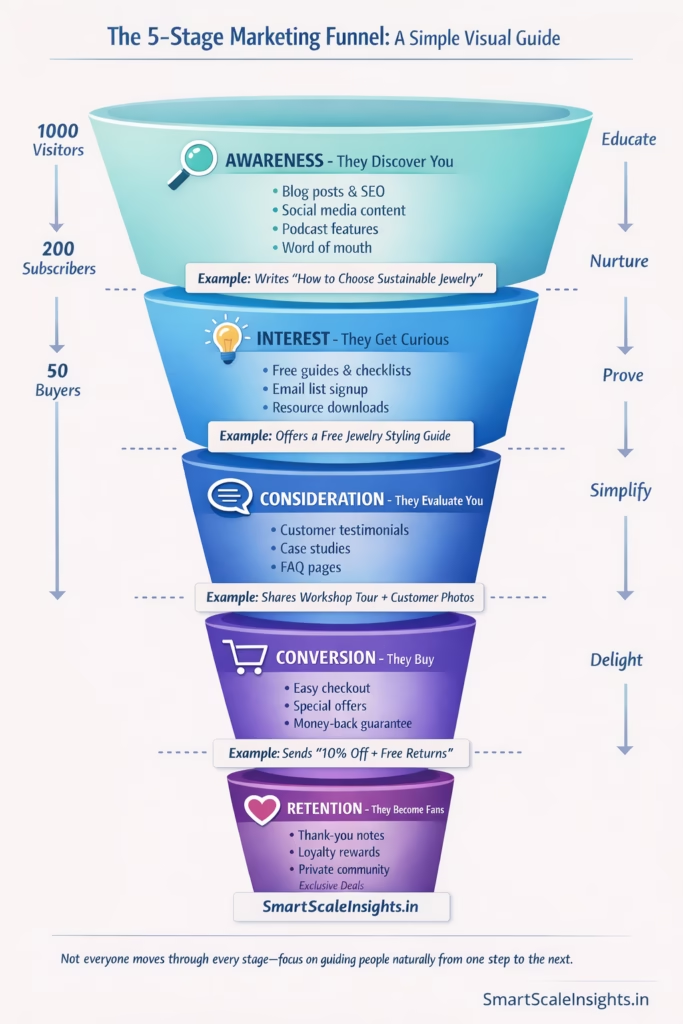
First, strangers discover you exist (Awareness).
Then, some get curious and want to learn more (Interest).
Next, they start seriously considering whether to buy (Consideration).
After that, they make the purchase (Conversion).
Finally, they either forget about you or become loyal fans (Retention).
According to HubSpot’s buyer’s journey research, 81% of shoppers research online before buying. This means you need to show up at every stage with the right message.
The funnel helps you understand where someone is in their decision-making process—and what they need from you at that exact moment.
Let me break down each stage.
Marketing Funnel Stages Explained for Beginners
A simple visual breakdown of marketing funnels, showing how visitors move from awareness to long-term customer retention.
Stage 1: Awareness – When They First Discover You
What’s happening: They don’t know you exist yet. They might have a problem, but they haven’t found you as a solution.
Your goal: Get discovered.
How to do it:
Write blog posts answering real questions your customers ask
Post consistently on social media where your audience hangs out
Show up in Google search results through basic SEO
Get featured on podcasts or guest posts
Join online communities and be genuinely helpful
Example: Maya writes a blog post: “How to Choose Sustainable Jewelry That Actually Lasts.” When someone searches for this, they find her.
Key takeaway: You’re not selling here. You’re just introducing yourself and providing value.
Stage 2: Interest – Making Them Care
What’s happening: They know you exist now. Maybe they followed you or visited your website. They’re curious but not ready to buy.
Your goal: Build connection and give them reasons to stick around.
How to do it:
Offer something free that genuinely helps (guide, template, checklist)
Send a welcome email with personality and your story
Share behind-the-scenes content
Actually respond to comments and messages
Example: Maya creates a free PDF: “5 Ways to Style Minimalist Jewelry for Any Occasion.” Visitors download it, join her email list, and start receiving weekly styling tips.
Key takeaway: This is where you transition from stranger to friendly acquaintance. You’re building “know, like, trust” genuinely.
Stage 3: Consideration – Earning Their Trust
What’s happening: Now they’re thinking about buying but comparing options. They have questions and doubts.
Your goal: Address objections and show why you’re the right choice.
How to do it:
Share testimonials from real customers
Create comparison guides
Provide detailed product information
Share case studies or before-and-after examples
Answer FAQ questions transparently
Example: Maya shares customer photos wearing her jewelry with testimonials about quality and ethical sourcing. She creates an Instagram Highlight showing her workshop and supply chain.
Key takeaway: This stage is about proof. The Content Marketing Institute emphasizes that consideration content should be solution-focused with clear differentiation.
Stage 4: Conversion – Getting the Sale
What’s happening: They’re ready to buy, but small friction points can still derail the sale.
Your goal: Make buying as easy and risk-free as possible.
How to do it:
Simplify your checkout process
Offer multiple payment options
Create urgency with limited stock or seasonal offers
Provide strong guarantees
Send cart abandonment emails
Example: When someone adds Maya’s necklace to cart but doesn’t buy, she sends a friendly email 24 hours later: “Still thinking about that piece? Here’s 10% off to help you decide. Returns are free.”
Key takeaway: If you’ve done stages 1-3 well, conversion feels natural, not forced.
Stage 5: Retention – Turning Them Into Fans
What’s happening: They bought once. Now the question is: will they buy again and tell others?
Your goal: Turn one-time customers into repeat buyers and brand advocates.
How to do it:
Send thoughtful follow-up emails
Ask for feedback and reviews
Create a loyalty program
Offer exclusive deals for existing customers
Provide exceptional customer service
Example: Maya sends a handwritten thank-you note with every order. She creates a private Facebook group for customers where they share styling tips. She offers 15% off their next purchase.
Key takeaway: Keeping an existing customer is 5-25 times cheaper than acquiring a new one. This stage is where real business growth happens.
Quick Recap: The Five Stages at a Glance
Awareness gets strangers to discover you. Interest makes them curious enough to stick around. Consideration builds the trust they need to choose you. Conversion removes friction so they can buy easily. Retention turns them into loyal fans who come back and refer others.
Real-Life Examples That Make Everything Click
The Dating Analogy
Awareness: You notice someone cute at a coffee shop
Interest: You strike up a conversation and exchange numbers
Consideration: You go on a few dates and evaluate compatibility
Conversion: You decide to be in a relationship
Retention: You nurture the relationship and grow together
You wouldn’t propose at the coffee shop, right? Same with marketing—you can’t ask for a sale before building any relationship.
The Bookstore Analogy
Awareness: You walk past a bookstore and notice an interesting title
Interest: You go inside and read the back cover
Consideration: You flip through pages and check reviews on your phone
Conversion: You buy the book
Retention: It’s so good you buy more from the same author and recommend it to friends
This is exactly how a simple marketing funnel explanation works—meeting people where they are in their decision-making process.
Why Marketing Funnels Matter (Even If You’re Just Starting)
You might be thinking: “Can’t I just post content and hope people buy?”
Sure. But here’s what happens without understanding how marketing funnels work:
The problems you’ll face:
You waste time on wrong content—sales posts when people don’t know you, or only awareness content when you should be nurturing leads
Your engagement doesn’t convert—tons of likes, zero sales, because you never move people forward
You miss ready-to-buy opportunities by not addressing their final objections
Everything feels exhausting without a clear framework
What changes with a funnel mindset:
You create content with purpose—every piece has a specific job
You understand why some marketing works and diagnose problems in your customer journey
You build sustainable systems that generate predictable revenue
For freelancers and small business owners, this is what separates random income from predictable revenue.
Common Funnel Mistakes That Kill Your Results
Mistake #1: Selling Too Soon
You create a Facebook page today and immediately post “Buy my product!” to zero followers.
The fix: Build awareness and interest first. Give before you ask.
Mistake #2: Only Creating Top-of-Funnel Content
Great blog traffic and social media growth, but zero sales. You’re stuck at awareness.
The fix: Balance educational content with conversion-focused content for every stage.
Mistake #3: Forgetting Existing Customers
You celebrate the sale, then ghost them completely.
The fix: Have a post-purchase sequence. Stay in touch and make them feel valued.
Mistake #4: Creating Gaps in Your Funnel
People move from awareness to interest… then fall off because there’s no clear next step.
The fix: Map the journey with clear calls-to-action connecting each stage.
Mistake #5: Overcomplicating From Day One
You try building a 47-step automated funnel before making your first sale.
The fix: Start simple. Get basics working, then optimize.
Three Simple Funnels You Can Build This Week
Example 1: The Blog Content Funnel
The Setup:
Awareness: Write SEO-optimized posts answering questions in your niche (“How to Start a Podcast in 2025: Complete Beginner’s Guide”)
Interest: Offer a free relevant resource at the end (“Download my Podcast Launch Checklist”)
Consideration: Send email sequence with case studies, tutorials, and testimonials
Conversion: Special offer email (“Join my Podcast Accelerator Course—early bird pricing ends Friday”)
Retention: Send regular updates, bonus content, invite to private community
Why it works: You attract people with real problems, provide immediate value, build trust through email, and pitch only when they’re ready.
Best for: Service providers, coaches, educators, and anyone who can create written content consistently.
Focus on first: Write one high-quality blog post targeting a specific search term your ideal customer uses.
Interest: Direct people to free resource in bio (“Want my Design Toolkit? Link in bio!”)
Consideration: Email sequence with success stories and deeper insights
Conversion: Invite to free webinar where you soft-pitch your paid service
Retention: Client Facebook group, monthly features, referral program
Why it works:Social media excels at awareness and interest. You’re using it to build your email list (where you have control), then nurturing toward sales.
Best for: Visual businesses, personal brands, and anyone building an audience on social platforms.
Focus on first: Choose one platform and commit to posting valuable content 3-4 times per week consistently.
Example 3: The Email Marketing Funnel
The Setup:
Awareness: Run small Facebook or Google ad to free resource (“Free Guide: 10 Side Hustles You Can Start This Weekend”)
Interest: Welcome sequence sharing your story, values, and helpful content
Consideration: Case studies and testimonials after value emails
Conversion: Limited-time offer email (“Join my 6-Week Passive Income Accelerator—early bird ends Friday”)
Retention: Weekly value emails, exclusive bonuses, ask for reviews
Why it works: Email remains one of the highest-converting channels. You own your list and can strategically guide people through each stage. successful marketers focus on understanding the customer journey, not fancy automation.
Best for: Digital product creators, course sellers, and anyone with a clear paid offer.
Focus on first: Build your email list to 100 subscribers before worrying about complex automation.
Do You Actually Need This? (Honest Answer)
Here’s the truth: you’re already using a funnel whether you realize it or not.
Every business has a customer journey. The question isn’t whether you need a funnel—it’s whether you want to be intentional about it.
Without a funnel mindset: You post randomly and wonder why results are inconsistent. You’re flying blind.
With a funnel mindset: You understand why someone might not buy today and what you can do to help them get there tomorrow.
You don’t need fancy software or complicated automation.
What you actually need:
Awareness of the stages people go through
Content serving each stage
A way to stay in touch (email list)
A clear path from curious stranger to happy customer
Start simple. Even a basic funnel—blog post → free resource → email sequence → product offer—beats no strategy at all.
Questions Everyone Asks
What’s the difference between a marketing funnel and a sales funnel?
Technically, a marketing funnel covers the entire journey from awareness to loyalty. A sales funnel focuses just on the buying decision (consideration to conversion). But most people use these terms interchangeably and just say “funnel.”
How long should my funnel be?
Depends on what you’re selling:
Low-priced products ($10-50): Short funnel, quick decisions
Mid-range offers ($100-500): Medium funnel, a few touchpoints
High-ticket services ($1,000+): Long funnel, multiple interactions over weeks or months
Do I need expensive software?
Nope. Start with free tools: Google Docs for strategy, Mailchimp or MailerLite for email (free plans available), your existing website, and social media. Fancy tools help later but don’t let them stop you from starting.
If you’re getting traffic but no signups, fix the interest stage. If you have subscribers but no sales, focus on consideration and conversion content.
Can I have multiple funnels?
Absolutely. Most businesses do—different funnels for different products, customer segments, or traffic sources. Just start with one, get it working, then expand.
What if people skip stages?
Totally normal. Some discover you and buy immediately. Others take months. Your funnel should accommodate both—have fast paths and slow paths.
Your Next Step
A marketing funnel isn’t magic or manipulation. It’s a framework for understanding how people naturally make decisions—and how you can support them through that process.
You don’t need genius-level strategy, a huge budget, or perfect execution.
You just need to think intentionally about your customer’s journey from discovery to becoming a raving fan.
Here’s what to do right now:
Beginner Action (Do This Today):
Map your current reality on paper. Write down where most people discover you, what happens next, and where they drop off. Identify the biggest gap. Then create ONE piece of content for that stage—an email sequence, a lead magnet, a testimonial page. Just one thing.
Advanced Action (When You’re Ready):
Set up basic analytics to track each funnel stage. Use Google Analytics for traffic sources, your email platform for subscriber metrics, and simple tracking for conversion rates. Review monthly and adjust based on data, not guesses.
Remember Maya? Once she stopped posting randomly and started thinking strategically, everything changed. She built a simple funnel: helpful articles → free styling guide → email sequence → product launches.
Her sales became predictable. She understood why people bought. She stopped feeling overwhelmed and started feeling in control.
You can do the same.
Pick one action from this post. Do it today. Not tomorrow—today.
Your future customers are out there searching for someone like you. Make it easy for them to find you, trust you, and buy from you.
That’s what a great marketing funnel does.
Now go build yours.
Go to Next Lesson: Organic vs Paid Marketing: Which One Should You Start With? (A Beginner’s Decision Framework)
Understanding marketing funnels is the first step to building a system that turns strangers into customers. But a funnel only works if people actually enter it.
That leads to the next big question: where does your traffic come from?
Some businesses grow through organic marketing like SEO, content, and social media. Others rely on paid advertising to bring visitors quickly. Choosing the wrong approach too early can waste both time and money.
In the next guide, you’ll learn the key differences between organic vs paid marketing, when each strategy makes sense, and how beginners can decide which one to start with.
hecking Instagram between meetings. Or Googling “how to get more customers” at 11 PM because your small business isn’t growing the way you’d hoped.
Here’s what nobody tells you: your competitors aren’t smarter than you. They’re just showing up online in the right places. And honestly? That’s all digital marketing really is.
I’m not going to throw fancy jargon at you. No complicated frameworks or expensive software recommendations. Just the straight truth about how regular people—freelancers, small shop owners, side hustlers—are using digital marketing to grow their businesses without burning through their savings.
According to Statista’s latest numbers, businesses are pouring over $600 billion into digital advertising worldwide. But here’s the kicker: most of that money goes to waste because people don’t understand the basics first.
What you’ll learn in this guide:
The real definition of digital marketing (and why it’s simpler than you think)
You’re not inventing the wheel here. You’re just meeting people where they already are—on Google, scrolling Instagram, checking emails, watching YouTube videos.
Think about your own life for a second. When’s the last time you bought something without checking online first? Exactly.
Your customers do the same thing. They Google “best coffee near me” or scroll TikTok looking for gift ideas or ask ChatGPT for recommendations. If you’re not part of that conversation, you’re invisible.
It’s trackable. You see exactly who clicked what and when.
It’s targetable. A bakery in Chennai can show ads only to dessert lovers within 3 kilometers.
It’s affordable. Sometimes it’s completely free.
And it levels the playing field. A one-person freelance operation can compete with million-dollar companies if they know what they’re doing.
Small businesses love this stuff because it works without the massive budgets traditional marketing demands. No need for billboard rentals or TV ad slots that cost more than your monthly revenue.
Google’s data shows that over 70% of people research a business online before buying anything. If they can’t find you? They’ll find someone else.
That’s not meant to scare you. It’s just reality in 2025.
Why Digital Marketing Matters More Than Ever Before
Let me paint you a picture.
You need a plumber at midnight because your bathroom’s flooding. What do you do? You grab your phone and Google it.
You want to try a new restaurant this weekend. Where do you look? Instagram. Food blogs. Google reviews.
This is how everyone operates now. Including your potential customers.
The shift is real:
People spend an average of 6-7 hours daily on their devices. That’s where attention lives now. Not on highway billboards or newspaper ads.
Digital marketing costs a fraction of traditional marketing. You can reach 1,000 targeted people online for what one radio ad costs.
You get instant feedback. Post something at 9 AM, see results by noon. Adjust. Improve. Repeat.
The barriers are gone. You don’t need a marketing degree or a fat wallet anymore. You need consistency and willingness to learn.
Statista reports that digital ad spending keeps climbing year after year. Why? Because it delivers results that businesses can actually measure.
Here’s the part that should excite you: small businesses report that digital marketing helps them punch above their weight. They compete with bigger players. They reach new customers daily. They build relationships that last.
You can do this too. Starting today.
Types of Digital Marketing Explained with Examples
Digital marketing isn’t just one thing. It’s a bunch of different approaches. Let me break them down without the marketing textbook language.
1. Search Engine Optimization (SEO)
This is about showing up on Google when people search for stuff you offer.
Someone types “best yoga classes in Mumbai” into Google. If you’ve done SEO right, your studio appears at the top. They click. They book a class. You just got a customer without paying for ads.
How it works: You create helpful content on your website. You optimize it with keywords people actually search for. Google notices. Over time, you rank higher. Free traffic flows in.
A fitness trainer I know writes blog posts like “15-minute workouts for busy parents.” These posts rank on Google. She gets 3-4 new client inquiries every week from people who found her through search.
The best part? Once you rank well, that traffic keeps coming without you paying for each click.
2. Content Marketing
You create stuff that helps people—blog posts, videos, guides, podcasts. Not to sell directly, but to build trust first.
Think about it. When someone helps you solve a problem for free, you remember them. When you need to buy something later, guess who you think of?
HubSpot does this brilliantly. They publish hundreds of free marketing guides and templates. Millions of people read them. Many eventually become paying customers because HubSpot already proved they know their stuff.
You don’t need HubSpot’s budget though. You just need to genuinely help your target audience with their actual problems.
3. Social Media Marketing
This is using platforms like Instagram, Facebook, LinkedIn, or TikTok to connect with potential customers.
It’s not just posting product photos and hoping for the best. It’s about building a community. Starting conversations. Showing the human side of your business.
A jewelry designer I follow on Instagram shares her creative process. Behind-the-scenes videos. Customer stories. She uses hashtags strategically. Engages in comments. Collaborates with small influencers in her niche.
She’s built a following of 15,000 people who genuinely care about her work. Sales happen naturally because she built relationships first.
4. Pay-Per-Click Advertising (PPC)
You create ads on Google or Facebook. You only pay when someone actually clicks on your ad.
An online tutoring service runs Google Ads for “chemistry tutor for class 12.” When students or parents search that exact phrase, the ad appears at the very top. They click. The service pays maybe ₹20 for that click. If the student signs up for a ₹5,000 course package, that’s a pretty good return.
PPC gives you instant visibility. You can start seeing traffic within hours of launching your campaign.
The key is targeting the right people and creating ads that actually address their needs.
5. Email Marketing
Don’t believe anyone who says email is dead. It’s very much alive and insanely effective.
You build a list of people who actually want to hear from you. You send them valuable content, updates, and occasionally, offers.
An online course creator offers a free 5-day mini-course via email. People sign up with their email address to access it. After those five days, she continues sending weekly tips and lessons. Eventually, she promotes her paid courses to this already-engaged audience.
Email marketing can generate ₹36 for every ₹1 spent. That’s a 3,600% return on investment according to marketing platform data.
The reason it works? You’re talking directly to people who already raised their hand and said “yes, I’m interested.”
6. Video Marketing
Video content is exploding right now. YouTube. TikTok. Instagram Reels. LinkedIn videos.
People retain 95% of information from videos compared to just 10% from text. That’s a massive difference.
A home renovation company creates YouTube tutorials showing DIY projects. They naturally mention the tools and products they use in these videos. Viewers watch. Learn. Trust them. Visit their website. Hire them for bigger projects.
You don’t need fancy equipment anymore. Your smartphone and decent lighting are enough to get started.
7. Affiliate Marketing
You promote other people’s products. When someone buys through your unique link, you earn a commission.
A tech blogger reviews laptops on his website. He includes affiliate links to Amazon. When readers buy those laptops through his links, he earns a percentage without handling inventory, shipping, or customer service.
This works well if you already have an audience and can recommend products you genuinely believe in.
8. Influencer Marketing
You partner with people who have engaged followings to promote your products or services.
A sustainable clothing brand collaborates with eco-conscious Instagram creators. These influencers create authentic content featuring the brand’s clothes. Their followers trust their recommendations. Sales increase.
Influencers don’t have to be celebrities with millions of followers. Micro-influencers with 5,000-10,000 engaged followers often deliver better results because their audience actually listens to them.
Digital Marketing for Beginners Step by Step: Your 30-Day Launch Plan
Enough theory. Let’s talk about what you’re actually going to DO.
This plan assumes you have 1-2 hours daily to work on digital marketing. If you have less time, stretch it to 60 days. The sequence matters more than the speed.
Week 1: Foundation Setup (Days 1-7)
Day 1-2: Define Your Goals
Sit down with a notebook. No computer. Just paper.
Write down exactly what you want to achieve. Be specific.
Not “get more customers.” Instead: “Get 10 new email subscribers this month” or “Make 5 sales through Instagram.”
Then define who you’re talking to. Your ideal customer isn’t “everyone.” It’s someone specific.
Give them a name. Alex, age 32, works in tech, struggles to find healthy meal options during busy workdays, scrolls Instagram during lunch breaks.
The more specific, the better. This person will guide every decision you make.
Day 3-4: Set Up Your Digital Home Base
You need somewhere to send people online.
Ideally, that’s a simple website. Don’t overthink this. You don’t need a fancy site with 20 pages.
You need three things:
Clear explanation of what you offer
Why someone should care
How to contact you or buy
If building a website feels overwhelming right now, start with a landing page using free tools like Carrd or even a well-optimized Instagram bio with a Linktree.
Just have SOMETHING. A place that’s yours.
Day 5-7: Choose Your Primary Channel
Here’s where most beginners mess up. They try to be everywhere at once.
Instagram. LinkedIn. TikTok. A blog. YouTube. Email. Pinterest.
Email: 1 email per week (once you have subscribers)
Create a simple spreadsheet. List out content ideas for the next 30 days.
Think about what your target audience (remember Alex?) actually needs help with. What questions do they ask? What problems keep them up at night?
Day 11-12: Batch Create Your First Week of Content
Block out 3-4 hours. Turn off your phone.
Create your first week’s worth of content all at once.
Write those blog posts. Design those social graphics. Record those videos.
Batching saves massive amounts of time and mental energy. You’re not scrambling daily to figure out what to post.
Day 13-14: Set Up Scheduling Tools
Use free tools like Buffer or Later to schedule your social posts in advance.
Set up Google Analytics on your website to start tracking visitors.
Connect your social accounts to their built-in analytics.
You want data from day one. Even if the numbers are small, you’re building the habit of checking what works.
Week 3: Engagement and Growth (Days 15-21)
Day 15-17: Active Engagement
This is the part most people skip. Don’t.
Spend 30 minutes daily genuinely engaging with your audience and community.
Respond to every comment on your posts. Every. Single. One.
Join Facebook groups or Reddit communities where your ideal customers hang out. Answer questions. Be helpful. Don’t sell.
Comment thoughtfully on other people’s content in your niche.
This isn’t busywork. This is relationship building. This is how you grow without ads.
Day 18-19: Start Building Your Email List
Create something valuable to give away for free. A checklist. A template. A mini-guide. A discount code.
Use a free email marketing tool like Mailchimp or MailerLite.
Add a signup form to your website or link it in your social bio.
Start collecting emails from day one. This will become your most valuable asset.
Day 20-21: Collaborate
Reach out to 3-5 other businesses, creators, or bloggers in your space (not direct competitors).
Suggest a collaboration. Guest post on their blog. Appear on their podcast. Co-host an Instagram Live. Share each other’s content.
This exposes you to their audience without spending money on ads.
Week 4: Analyze and Optimize (Days 22-30)
Day 22-24: Review Your Data
Check your analytics. What content got the most engagement? What flopped?
Which posts drove the most website traffic? Which emails had the highest open rates?
Look for patterns. Double down on what’s working.
Day 25-27: Adjust Your Strategy
Based on your data, make changes.
If Instagram Stories are getting way more views than feed posts, create more Stories.
If your SEO blog post about “budget meal prep” is driving tons of traffic, write three more posts on related topics.
If nobody’s opening your emails, try different subject lines.
Test. Learn. Adjust. Repeat.
Day 28-30: Plan Month Two
You’ve learned a ton in 30 days. Now plan the next month with that knowledge.
Set new, slightly bigger goals. Create next month’s content calendar. Consider adding a second marketing channel if you’re handling the first one comfortably.
This process never really ends. It just gets easier and more effective with time.
How to Start Digital Marketing with No Budget
Let me be straight with you. You don’t need money to start. You need time and consistency.
Some of the most effective digital marketing strategies cost exactly zero rupees. They just require showing up consistently.
Free Strategy #1: Organic Social Media
Post valuable content regularly. Use relevant hashtags. Engage genuinely with your audience.
Growth might be slower than paid ads, but it’s sustainable. And you own those relationships you’re building.
I’ve seen people grow Instagram accounts to 10,000+ followers without spending a single rupee on ads. They just posted consistently for a year and engaged thoughtfully with their community.
Free Strategy #2: Start an SEO-Optimized Blog
Platforms like WordPress.com or Medium let you start blogging for free.
Write about topics your target audience is actually searching for on Google.
Use free keyword research tools. Google’s Keyword Planner is free. So is Ubersuggest’s basic version.
One blog post can bring you free traffic for months or even years. That’s leverage.
A freelance graphic designer I know gets 5-7 client inquiries monthly from a blog post she wrote two years ago about “logo design pricing guide.” Free traffic. Every single month.
Free Strategy #3: Build Your Email List from Day One
Mailchimp offers a free plan for up to 500 subscribers. MailerLite gives you 1,000 subscribers for free.
Offer something valuable in exchange for email addresses. A template. A guide. A discount. A free consultation.
Start building that list immediately. Even if you only add 10 people in your first month. That’s 10 people you can reach directly without algorithm interference.
Free Strategy #4: Create Video Content
YouTube is completely free to use. So is TikTok. Instagram Reels costs nothing.
You don’t need expensive cameras. Your smartphone is enough. Good lighting (natural window light works great) matters more than equipment.
Share tips. Answer common questions in your industry. Show behind-the-scenes content.
Be consistent. Post weekly. The algorithm rewards consistency more than occasional viral hits.
Free Strategy #5: Collaborate and Network
Reach out to other creators, businesses, or bloggers in your space.
Offer to write a guest post for their blog. Suggest a joint Instagram Live. Propose a collaboration that benefits both audiences.
This exposes you to their audience. For free.
I’ve seen freelancers land their first paying clients simply by being active and helpful in free online communities related to their expertise.
SEO research: Ubersuggest free searches, Google Keyword Planner
Local visibility: Google My Business (crucial if you’re a local business)
The key to succeeding with zero budget is patience and consistency. You’re trading time for money. Both work. Choose based on what you have more of right now.
Digital Marketing Channels for Small Business Owners: Where Should YOU Focus?
Not all channels work equally well for all businesses. Let’s get specific.
If You’re a Local Business (Cafe, Salon, Gym, Retail Shop)
Focus on:
Google My Business – This is non-negotiable. It’s free and crucial for local SEO. When someone searches “coffee shop near me,” you want to appear.
Facebook and Instagram – Great for community building. Share daily specials, behind-the-scenes content, customer stories.
Local SEO – Optimize your website for local keywords. “Best pizza in Bangalore” not just “best pizza.”
Review management – Actively ask happy customers for Google reviews. They matter enormously for local search rankings.
Email marketing – Build a list. Send weekly updates about new products, special offers, events.
A local bakery in my neighborhood does this perfectly. Active Google My Business profile. Regular Instagram posts showing fresh pastries. Email subscribers get first dibs on new flavors. They’re always busy.
If You’re a Service Provider (Coach, Consultant, Freelancer)
Focus on:
LinkedIn – If you’re B2B, LinkedIn is gold. Share insights. Comment thoughtfully. Network genuinely.
Content marketing and SEO – Write blog posts, case studies, guides. Demonstrate expertise. Rank for searches related to your services.
Email marketing – Create nurture sequences that build trust over time. Share valuable content consistently before ever asking for a sale.
One primary social platform – Choose where your ideal clients actually hang out. Instagram for creative services. LinkedIn for B2B. Maybe TikTok if your audience skews younger.
A business coach I follow built her entire practice through LinkedIn. She posts valuable insights three times weekly. Engages in comments. Reaches out personally to potential clients. Books consultations directly through LinkedIn conversations.
If You’re E-commerce
Focus on:
Instagram and Pinterest – Both are highly visual platforms perfect for product discovery.
Google Shopping ads and PPC – Consider paid ads for faster results. You can start small and scale what works.
SEO for product pages – Optimize every product page for relevant keywords. This brings long-term organic traffic.
An online clothing store I know makes 40% of their revenue from email marketing. They send style guides, exclusive discounts, and new arrival announcements. Their subscribers actually look forward to these emails.
If You’re B2B
Focus on:
LinkedIn – This is your primary channel. Build authority. Share thought leadership. Network strategically.
Content marketing – Create in-depth guides, whitepapers, case studies. Show deep expertise.
Email marketing – B2B sales cycles are longer. Nurture leads with valuable content over weeks or months.
SEO – Target high-intent keywords. “Enterprise software for inventory management” brings better leads than just “inventory software.”
The pattern here is clear: choose channels based on where YOUR specific audience actually spends time. Not where you think they should be. Where they actually are.
Best Digital Marketing Tools for Beginners Free
You don’t need expensive software when starting. These free tools cover 90% of what you need.
For Website Analytics
Google Analytics 4 – Track who visits your site, where they come from, what they do. Essential. Free forever.
Google Search Console – See which keywords bring you traffic. Identify technical SEO issues. Monitor your search performance.
For SEO and Keywords
Ubersuggest – Basic keyword research and content ideas. Limited free searches daily but enough to start.
Google Keyword Planner – See search volumes. Find keyword variations. Completely free with a Google Ads account (you don’t need to run ads).
AnswerThePublic – Discover questions people actually ask about topics. Great for content ideas.
For Social Media
Buffer (free plan) – Schedule posts across multiple platforms. Plan content in advance.
Canva (free version) – Create professional graphics without design skills. Templates for everything.
Later (free plan) – Visual Instagram planning with drag-and-drop calendar.
For Email Marketing
Mailchimp – Free up to 500 contacts. Easy to use. Reliable.
MailerLite – Free up to 1,000 subscribers. Clean interface. Good automation features.
For Content Creation
Canva – I’m mentioning this again because it’s that important. Graphics, presentations, videos, social posts. All possible in the free version.
Grammarly – Catch writing mistakes. Improve clarity. Free version covers most needs.
Loom – Record quick videos to share. Great for tutorials or personal messages.
For Project Management
Trello – Organize your content calendar. Track tasks. Visualize your workflow.
Google Calendar – Simple but effective for scheduling content and deadlines.
For Local Businesses
Google My Business – Free business listing. Shows up in local searches and Google Maps. Absolutely crucial.
These tools give you professional capabilities without professional pricing. Start here. Upgrade to paid versions only when you’ve outgrown the free features.
Real Success Stories: Digital Marketing Working for Beginners
Let me share some inspiring examples. Real people. Real results. Nothing fancy or out of reach.
Alex: The Home Baker Who Built a Business on Instagram
Alex started baking custom cookies from her home kitchen as a side project.
She created an Instagram account in January 2024. Posted photos of her cookies. Used local hashtags like #BangaloreHomeBakers and #CustomCookiesBangalore.
She engaged with every comment. Responded to DMs quickly. Reposted customer photos.
No ads. No complicated strategy. Just consistency and genuine engagement.
By June, she had 4,500 followers. More importantly, she had 2-3 orders daily. She quit her corporate job in August to bake full-time.
Her secret? She showed the process, not just the final product. Behind-the-scenes videos of decorating. Stories about flavor experiments that failed. Personal connection with her audience.
Raj: The Freelance Writer Who Mastered SEO
Raj struggled to find writing clients through job boards and cold pitching.
Then he started a blog about freelance writing itself. He used HubSpot’s free resources to learn SEO basics.
He wrote articles like “How to set freelance writing rates in India” and “How to write cold emails that get responses.”
These weren’t just random posts. He researched keywords. Optimized his content. Answered real questions freelancers were Googling.
His article about setting rates ranked on Google’s first page within four months.
That single article brought him 40+ inquiries in the next year. He converted roughly 20% into paying clients. Revenue from that one piece of content? Over ₹5 lakh.
He now makes more from inbound leads (people finding him through Google) than from any outbound pitching.
Priya: The Life Coach Who Grew Through LinkedIn
Priya had coaching certifications but zero clients.
She committed to posting on LinkedIn three times weekly. Not salesy posts. Value-first content.
She shared insights from her coaching practice (without naming clients). Posted thought-provoking questions. Engaged thoughtfully in comments on other people’s posts.
She also reached out personally to potential clients. Not spammy cold messages. Genuine, personalized outreach to people whose content she’d engaged with.
In 12 months, she went from zero clients to fully booked. She now has a waitlist.
Her LinkedIn following? Only 2,800 people. But they’re the RIGHT people. Engaged. Interested in personal development. Many became clients or referral sources.
These aren’t exceptional people with unfair advantages. They’re regular folks who learned digital marketing basics, stayed consistent, and focused on genuinely helping their audience.
You can absolutely do this too.
FAQ: Your Burning Questions About Digital Marketing
How long does it actually take to see results from digital marketing?
Honest answer: it depends on the channel.
Paid ads can bring traffic within days. Sometimes hours.
Social media growth varies wildly. With consistent posting and engagement, expect to see momentum within 2-3 months. Going viral happens. But consistency matters more than viral moments.
Email marketing works immediately if you already have a list. Building that list? That’s ongoing.
The key is managing expectations and staying patient. Quick wins exist. But sustainable growth is a marathon, not a sprint.
Learn to write clearly. Create engaging visuals. Or produce helpful videos.
Everything else builds on this foundation.
You can hire people for technical stuff later. But understanding how to create content that resonates? That’s the core skill that transforms everything else.
Social media is just one channel within that broader landscape.
Think of it like asking “what’s the difference between transportation and cars?” Cars are one form of transportation. Social media is one form of digital marketing.
So here’s what I want you to do. Right now. Before you close this tab and forget about it.
Action Step 1: Choose ONE digital marketing channel you’ll focus on for the next 90 days. Just one. Write it down on paper.
Action Step 2: Set one specific, measurable goal for this month. Not vague. Specific.
Examples:
“Publish 4 SEO-optimized blog posts”
“Gain 100 engaged Instagram followers”
“Collect 25 email subscribers”
“Get 500 visitors to my website”
Write this goal down. Put it somewhere you’ll see it daily.
Action Step 3: Block out time in your calendar right now for digital marketing activities. Treat these blocks like important client meetings. Non-negotiable.
Even 30 minutes daily adds up to 15 hours monthly. That’s enough to make real progress.
Action Step 4: Sign up for ONE free learning resource today. Could be Google Digital Garage. HubSpot Academy. A YouTube channel about your chosen channel.
Start learning. Immediately.
Action Step 5: Create and publish your first piece of content within 72 hours. Yes, 72 hours from right now.
It won’t be perfect. That’s fine. Done is better than perfect.
Your first blog post. First Instagram post. First email to your tiny list. First YouTube video.
Just ship something. Learn from the experience. Improve next time.
Here’s what most people do: they read guides like this, feel motivated for 20 minutes, then do nothing. Life gets busy. Motivation fades. They’re back to square one.
Don’t be most people.
You don’t need more information. You need implementation. Action. Momentum.
The gap between where you are now and where you want to be? It’s filled with consistent action over time. Not perfect action. Just consistent action.
Your competitors aren’t smarter than you. They’re not more talented. They just started before you did. And they kept showing up.
You can catch up. You can surpass them. But only if you start.
Digital marketing isn’t some mystical skill reserved for tech geniuses. It’s a learnable, practical skillset that regular people use daily to grow their businesses.
People exactly like you. With the same doubts. The same limited time. The same tight budgets.
They figured it out. You can too.
Every expert was once a beginner. Every successful business started with zero followers, zero traffic, zero email subscribers.
What separated them wasn’t luck or secret knowledge. It was starting. And not quitting.
Your future customers are out there right now. Searching for solutions you provide. Scrolling through feeds. Checking their emails. Watching videos.
Digital marketing is simply showing up where they already are. Helping them. Building trust. Being consistent.
You now have everything you need to start. The knowledge. The action plan. The free tools. The examples.
The only thing missing? Your decision to begin.
So what’s it going to be?
Are you going to bookmarkRetry
SO
Continue
this for “later” and forget about it? Or are you going to choose one channel, set one goal, and take one action today?
I already know which choice leads where. You do too.
Your digital marketing journey starts now. Not Monday. Not next month. Not “when you’re ready.”
Now.
Go create something. Even if it’s imperfect. Even if it’s scary. Even if nobody sees it at first.
Start.
The rest will figure itself out along the way.
Free Download: The Beginner’s Digital Marketing Resource Library
Want all the tools mentioned in this guide in one convenient place? I’ve created a free resource library just for you.
Print it out and tape it to your desk, or save it to your phone for easy access. Either way, you’ll have everything you need in one place without spending hours Googling “best free tools for…”
Helpful Links to Deepen Your Digital Marketing Knowledge
Here are a few reliable, beginner-friendly places to explore if you want to learn more about digital marketing and access trustworthy resources. These platforms offer up-to-date insights, free courses, and practical guidance that can help you build your skills and stay on top of what’s changing in the industry. Whether you’re trying to understand how online advertising works, set up your first campaign, or simply level up your knowledge, these links are a great place to start:
To provide the best experiences, we use technologies like cookies to store and/or access device information. Consenting to these technologies will allow us to process data such as browsing behavior or unique IDs on this site. Not consenting or withdrawing consent, may adversely affect certain features and functions.
Functional
Always active
The technical storage or access is strictly necessary for the legitimate purpose of enabling the use of a specific service explicitly requested by the subscriber or user, or for the sole purpose of carrying out the transmission of a communication over an electronic communications network.
Preferences
The technical storage or access is necessary for the legitimate purpose of storing preferences that are not requested by the subscriber or user.
Statistics
The technical storage or access that is used exclusively for statistical purposes.The technical storage or access that is used exclusively for anonymous statistical purposes. Without a subpoena, voluntary compliance on the part of your Internet Service Provider, or additional records from a third party, information stored or retrieved for this purpose alone cannot usually be used to identify you.
Marketing
The technical storage or access is required to create user profiles to send advertising, or to track the user on a website or across several websites for similar marketing purposes.