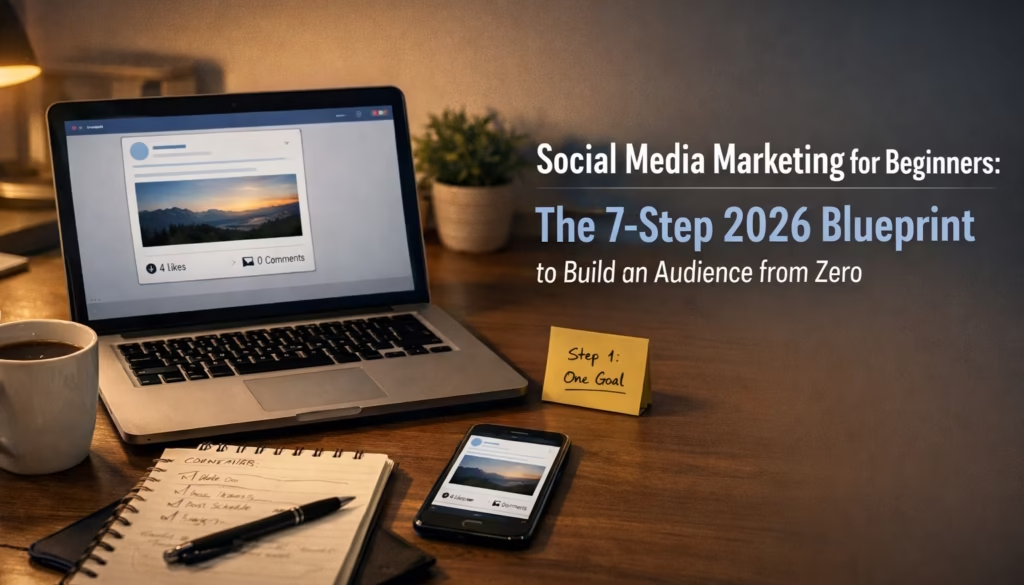
Social Media Marketing for Beginners: The 7-Step 2026 Blueprint to Build an Audience from Zero
You posted. Nobody came.
Thank you for reading this post, don't forget to subscribe!
Not even a pity like from your cousin.
You spent an hour on that graphic. Rewrote the caption three times. Added hashtags from some “top hashtags 2025” list you found at midnight. Hit publish. Refreshed seventeen times. Four likes — two of which were you, testing the button.
That’s the real beginning of social media marketing. Not the version where someone posts once and blows up. The quiet, slightly embarrassing reality of talking to nobody.
I deleted an entire month of posts once out of frustration. Thought starting fresh would feel better. It didn’t. What actually helped was understanding why nothing was working — which took longer than it should have, mostly because I was reading advice that was technically correct but practically useless.
This is the guide I wished existed then.
According to Statista’s social media usage data, over 5.2 billion people actively use social media globally. Your audience is in there. The problem isn’t that they don’t exist — it’s that you don’t yet know how to make them stop scrolling.
By the end of this, you’ll have a real strategy, a 30-day plan you can execute without burning out, and a much clearer picture of what social media marketing actually looks like when it works.
Table of Contents
- Why Social Media Marketing for Beginners Feels So Hard
- The 7-Step Strategy
- Choosing the Best Social Media Platforms for Beginners
- Realistic Posting Schedule + 30-Day Starter Plan
- Case Study: 0 to Traction in 90 Days
- FAQ
- Conclusion
- How to Improve This Strategy Further
Why Social Media Marketing for Beginners Feels So Hard
Most beginner advice skips the real problems entirely.
They tell you what to do. They skip why it’s harder than it sounds. And they definitely skip the part where popular advice sometimes makes things worse, not better.
Platform overload is real. Instagram. TikTok. LinkedIn. Pinterest. YouTube. Facebook. Threads. X. Each one operates with a different algorithm, a different culture, different content formats, and different audience expectations. Trying to understand all of them at once isn’t ambitious — it’s a trap. You end up mediocre everywhere instead of strong somewhere.
Algorithm confusion is genuinely confusing. Not just for beginners — experienced marketers debate this constantly. The short version: algorithms reward content that keeps people on the platform. Watch time, saves, shares, and comments matter far more than likes. Most beginners don’t know this and spend months optimizing for the wrong signal entirely.
Content burnout hits faster than you expect. You start with energy and three weeks of ideas. Week four, you’re staring at a blank Canva screen at 10pm trying to make something, anything, that feels worth posting. Without a content system — not just ideas, an actual production workflow — this happens to almost everyone.
Unrealistic timelines wreck momentum before it builds. You see an account that grew quickly. You don’t see the 11 months of posting to 200 followers that came before. You see the result, assume it should happen faster for you, and when it doesn’t, you conclude you’re doing something wrong.
Here’s the part most guides won’t tell you: follower count matters far less than conversion rate, and most beginners obsess over the wrong one. 500 engaged followers who trust you will outperform 5,000 passive ones every single time. That reframe changes everything about how you measure early progress.
You’re probably not failing. You’re probably just early — and measuring the wrong thing.
Social Media Marketing for Beginners: The 7-Step Strategy
Here’s how to actually start social media marketing for beginners. Not the infographic version. The real one.
Step 1: Get Brutally Clear on Your Goal
One goal. Not five. One.
“Grow my brand” is not a goal. “Get 300 Instagram followers who are local Toronto homeowners interested in interior design, within 90 days” — that’s a goal. The specificity isn’t pedantic. It changes every decision that follows: which platform, what content, what you actually measure.
I used to think setting vague goals was fine because flexibility felt smart. It wasn’t. It was just comfortable. Vague goals produce vague strategies, which produce vague results you can’t learn from.
Write the goal down. Put a date on it. Look at it every week — set a calendar reminder, because that last part is where most people fall off.
Tools Needed
Notion or Google Docs — free, flexible, good enough.
Pros: costs nothing, forces clarity, keeps you accountable.
Cons: only works if you revisit it regularly. Most people don’t.
Step 2: Know Your Audience Like You Know Your Best Friend
Demographics are a starting point, not a destination.
Yes — you need approximate age range, location, income bracket. But that’s surface-level data. The real question is: what keeps your audience up at 2am? What are they embarrassed to admit they struggle with? What would make them stop mid-scroll and think this person actually gets it?
A bakery owner I know spent months posting beautiful product photos. Minimal engagement. We shifted the content toward the emotional experience of baking — the stress-relief of it, how it connects to childhood memory, the satisfaction of making something with your hands. Engagement doubled in six weeks. Same product, same audience, different understanding of why they actually cared.
That’s the shift from demographic knowledge to audience understanding. One is a spreadsheet. The other is a relationship.
Tools Needed
Meta Audience Insights (free with any Facebook account) and Google Analytics (free) give you a solid behavioral and demographic foundation.
Pros: genuinely useful, free, regularly updated.
Cons: Google Analytics requires a website; Meta Insights is limited to Facebook and Instagram audiences only.
Step 3: Pick One Platform and Actually Commit to It
Most small businesses shouldn’t be on TikTok yet.
There it is.
TikTok is extraordinary for organic reach. It also demands near-daily short-form video with strong hooks in the first two seconds. If you’re running a lean operation — or you’ve never done video content before — trying to produce that volume and quality while running a business usually produces bad video and a burned-out founder.
Pick the platform where your audience lives AND where you can realistically sustain content creation. That second condition is the one everyone ignores, and it’s the one that determines whether you’re still posting in six months.
The best social media platforms for beginners are the ones you’ll actually show up on consistently — not the ones that sound most impressive.
Tools Needed
Native platform analytics — Instagram Insights, LinkedIn Analytics, Pinterest Analytics — all free.
Pros: accurate, built directly into the platforms, no learning curve.
Cons: completely siloed. You can’t compare across platforms without a third-party tool.
Step 4: Build a Content Strategy That Won’t Kill You
I used to believe consistency was everything. Post every day, show up constantly, and the algorithm rewards you.
That’s not quite right. Consistency matters — but what you’re consistent about matters more. Posting every day with no strategic direction is just noise on a schedule.
Here’s the actual structure: pick three content pillars. These are the themes you’ll rotate through. A financial advisor might use money mindset, practical tactics, and client wins. A home goods brand might use styling inspiration, product stories, and behind-the-scenes process. Three pillars. Every post fits one of them. You never stare at a blank screen wondering what to make.
Then apply the 80/20 rule. Eighty percent of your content educates, entertains, or inspires. Twenty percent promotes. That ratio feels wrong to business owners who want to sell — but audiences follow accounts that give them something. They buy from accounts they trust. The 80% is what builds the trust.
A social media content strategy for startups doesn’t need to be complicated. It needs to be clear enough that you could explain it to someone else in two minutes.
Tools Needed
Canva for design (free plan is genuinely solid; Pro plan adds brand kits and more templates).
Pros: beginner-friendly, massive template library, no design background required.
Cons: the free plan runs out of capability if you want animation or complex design. Good enough to start, not built to scale.
Step 5: Create Content in Batches — Stop Winging It
This single operational shift separates people who sustain social media from people who eventually ghost their own accounts.
Don’t create one post today and one tomorrow and one the day after. That workflow is exhausting, produces inconsistent quality, and burns creative energy in tiny daily doses that add up to almost nothing.
Instead: block three hours, once or twice a week. Create 6-10 pieces of content in that session. Schedule them. Done.
This requires knowing in advance what you’re creating — which is exactly why the content pillars from Step 4 matter. When you know the bucket before you sit down, half the creative work is already done.
Tools Needed
Buffer (free for up to 3 channels) or Meta Business Suite (free for Facebook and Instagram).
Pros of Buffer: clean interface, supports multiple platforms, includes analytics. Pros of Meta Business Suite: completely free, deep native integration, ideal if you’re focused on FB/IG.
Cons: Buffer’s free plan limits posts per channel. Meta Suite only covers Meta properties — LinkedIn and Pinterest need separate tools.
Step 6: Engage Every Day — This Is Not Optional
Set 15-20 minutes aside every day for pure engagement. Not content creation. Just conversation. Respond to comments. Answer DMs. Engage genuinely with other accounts in your niche — not “great post!” copy-paste responses everyone can see through. Actual reactions to what people said.
Engagement activity — both giving and receiving — signals to algorithms that your account is active and valuable. That signal expands your reach in ways pure posting can’t. It’s one of the most underused organic social media growth tactics available to beginners, and most people skip it because it feels slow.
It’s not slow. It compounds.
Tools Needed
Native platform notifications handle this fine at the beginning. As you grow, a social listening tool like Mention (free tier available) helps you track conversations about your brand beyond direct interactions.
Pros: genuine community-building, algorithmic benefit, real relationships with potential collaborators.
Cons: easy to deprioritize when things get busy. That’s exactly when you need it most.
Step 7: Look at Your Numbers and Actually Change Things
Most beginners either obsess over follower count daily — which tells you almost nothing meaningful early on — or ignore analytics entirely and keep doing the same things regardless of what’s working.
I once misread my own data badly enough to almost abandon video entirely. Thought it was underperforming because likes were low. Didn’t notice it was generating three times the saves and reach of everything else. Saves, it turned out, were the metric that actually mattered for my content type. That mistake cost me about six weeks of momentum.
Look at the full picture before you draw conclusions.
Beginner social media analytics metrics that matter — in priority order:
- Reach: How many unique accounts saw your content
- Engagement rate: (Likes + Comments + Saves + Shares) ÷ Reach × 100
- Saves: The most underrated metric for educational content; signals genuine value
- Profile visits: People interested enough to investigate beyond one post
- Link clicks: The direct conversion signal
- Follower growth rate: Week-over-week percentage, not raw numbers
Review these once a month. Monthly gives you enough data to see actual patterns rather than daily noise.
Tools Needed
Google Analytics for website traffic attribution, native platform analytics for content performance. Hootsuite’s analytics suite is worth exploring once you’re managing multiple platforms and need cross-platform reporting in one place.
Choosing the Best Social Media Platforms for Beginners {#platforms}
Hootsuite’s Social Media Trends Report found consistently that brands focusing deeply on two to three platforms outperform those spreading thin across many. That pattern holds especially true for small businesses and solo creators working with limited time.
The real problem isn’t lack of content. It’s lack of clarity on who you’re trying to attract — and where those people actually spend time. Platform selection without audience research first is just guessing.
Here’s the practical breakdown by goal:
For brand awareness — Instagram and TikTok. Instagram gives you multiple content formats in one ecosystem: Stories, Reels, carousels, static posts. TikTok gives you the most raw organic reach of any platform right now, especially if short-form video suits your style.
For B2B leads — LinkedIn. If your buyer is a business decision-maker, this is where they form professional opinions. Organic reach for specific, well-positioned thought leadership content remains strong compared to almost every other platform.
For e-commerce — Instagram Shopping and Pinterest. Pinterest’s content has an unusually long lifespan — a well-optimized Pin can drive traffic for over a year. Every other platform’s content expires within 48 hours. That’s a meaningful difference.
For personal branding — LinkedIn if you write well and think clearly. Instagram or YouTube if you’re comfortable on camera. Pick the format that matches how you naturally communicate, not the platform that sounds most impressive.
Realistic Posting Schedule + 30-Day Starter Plan
How Often Should Beginners Post on Social Media?
Less than you think. More consistently than you probably manage right now.
General starting guidelines by platform:
- Instagram (Feed + Reels): 3-4 times per week
- TikTok: 3-5 times per week
- LinkedIn: 2-3 times per week
- Facebook: 3-4 times per week
- Pinterest: 5-10 pins per week
Start at the lower end of every range. Three posts per week for six months without missing a week will outperform daily posting that collapses after a month. The algorithm rewards sustained consistency, not impressive sprints.
30-Day Starter Social Media Marketing Plan Template
Week 1 — Foundation Define your one goal. Choose your platform. Write your three content pillars. Optimize your profile completely — bio, photo, link, pinned post. Create your first six pieces of content before you publish anything.
Week 2 — Launch Begin posting on your schedule. Commit to 20 minutes of genuine engagement every day. Start building your content bank — always aim to be two weeks ahead of what you’re publishing.
Week 3 — Consistency + Community Maintain the schedule without exceptions. Respond to every comment within 24 hours. Start engaging proactively with accounts in your niche. This is where most beginners start cutting corners. Don’t.
Week 4 — Analyze + Adjust Review your monthly metrics. What got the most saves? What drove profile visits? What completely flopped? Use that data to shape Month 2 — not what you felt worked, what the numbers actually show.
Case Study: 0 to Traction in 90 Days
Background
Olive & Oak Co. is a small handmade home decor business. The owner, Maya, had an active Etsy shop but zero social presence. She’d tried Instagram twice before — posted inconsistently for a few weeks each time, got discouraged, stopped. Her husband was skeptical it was worth the time. Honestly, after two failed attempts, she was starting to agree with him.
The third attempt, she committed to a different approach. Two platforms only: Instagram and Pinterest. Nothing else.
Her first three Reels flopped. Completely — single-digit views. She almost quit at week five. Kept going anyway, mostly out of stubbornness.
Week seven, one Reel showing the process of hand-carving a wooden candle holder hit 14,000 views. Nothing changed in the production quality. The topic shifted — less product showcase, more process reveal. That one video told her more about her audience than three months of analytics could have.
The Strategy
- Platform: Instagram (primary) + Pinterest (secondary)
- Posting: Instagram 4x/week — two Reels, one carousel, one static post. Pinterest: 7 pins/week mixing product photos, lifestyle shots, and repurposed Instagram content
- Content pillars: product craft and process stories, home styling inspiration, behind-the-scenes of running a handmade business
- Daily engagement: 20 minutes responding to comments and genuinely interacting with interior design accounts
Results After 90 Days
| Metric | Day 1 | Day 90 | Change |
|---|---|---|---|
| Instagram Followers | 0 | 847 | +847 |
| Avg. Reach Per Post | — | 1,240 | — |
| Avg. Engagement Rate | — | 4.8% | — |
| Pinterest Monthly Views | 0 | 12,400 | — |
| Website Traffic from Social | 12/month | 310/month | +2,483% |
| Etsy Sales (attributed to social) | 2/month | 19/month | +850% |
847 followers isn’t viral. It was never meant to be. 19 Etsy sales per month from an audience that didn’t exist 90 days earlier — that’s the point.
Engagement Benchmarks by Platform (2025-2026)
| Platform | Avg. Engagement Rate | Recommended Posts/Week | Top Content Format |
|---|---|---|---|
| 1.5% – 5% | 3-5 | Reels | |
| TikTok | 2.5% – 8% | 3-7 | Short-form Video |
| 1% – 3.5% | 2-3 | Text + Carousels | |
| 0.5% – 1.5% | 3-4 | Video + Images | |
| 0.5% – 2% | 5-10 | Idea Pins |
Frequently Asked Questions
Define one specific goal. Choose one or two platforms where your audience actually spends time. Build three content pillars so you always know what you’re creating. Post consistently, engage daily, and review your analytics monthly. The framework is simple. Execution over 90+ days is where it gets hard — and where most people don’t make it.
The one that matches your actual resources. A solo founder needs a fundamentally different approach than a five-person team. What works universally: document your strategy before you start (HubSpot’s marketing research consistently shows documented strategies outperform undocumented ones), focus on fewer platforms, and build community instead of broadcasting at people.
Three to four times per week on most platforms, consistently, for at least 90 days before evaluating results. Algorithms and audiences both reward accounts that show up reliably over time. Frequency matters less than reliability.
Spreading across too many platforms. Posting without a defined audience in mind. Ignoring analytics. Being so promotional that followers have no reason to stay. And quitting somewhere between week six and ten — almost always right before compound growth would have started becoming visible. The timing is genuinely brutal.
Start with five: reach, engagement rate, saves, profile visits, and link clicks. These give you a complete enough picture to make good decisions without drowning in data. Add complexity as your strategy matures and your questions get more specific.
Conclusion: The Unglamorous Secret to Making This Work
Social media marketing for beginners ultimately comes down to something that sounds underwhelming when you first hear it: show up, consistently, for longer than feels comfortable, and actually pay attention to what the data is telling you.
Quick recap of the 7-step process:
- Define one specific, measurable goal with a deadline
- Understand your audience beyond demographics — know what they’re actually feeling
- Choose one or two platforms based on your audience and your capacity
- Build a content strategy with three clear pillars and an 80/20 value-to-promotion ratio
- Create in batches, schedule everything, stop winging it daily
- Engage every single day — community comes from conversation, not content alone
- Review analytics monthly and make actual changes based on what you find
Trying to grow on five platforms simultaneously is like opening five restaurants on the same street before you’ve learned how to cook. Pick one kitchen. Get good there. Expand when the foundation is solid.
The accounts you’re comparing yourself to right now have been doing this longer than you think. They had bad early posts and empty comment sections and moments of genuine doubt. The gap between them and beginners who quit is almost never talent. It’s almost always just time — and the willingness to stay in it past the awkward early phase.
Open your calendar right now. Block three hours this week for content creation. That single action, taken before you close this tab, is what separates people who implement from people who keep planning to. Your audience isn’t going to find you while you’re getting ready to start.
How to Improve This Strategy Further
Once the foundation is solid, here’s where to take it:
Add video systematically, even if it feels uncomfortable. HubSpot’s research consistently identifies short-form video as the highest-ROI content format across platforms. You don’t need equipment — a phone, decent window light, and one clear point per video is enough to start. The discomfort fades faster than you’d expect.
Find one micro-influencer to collaborate with. Accounts in the 1,000 to 50,000 follower range often have higher engagement rates than larger accounts because their audiences are more niche and more trusting. One well-matched collaboration can drive more qualified traffic than months of solo posting.
Build an email list in parallel from day one. Platforms change their algorithms. Reach gets throttled. Your email list is yours in a way your social following never fully is. Use a simple lead magnet — a checklist, a template, a practical guide — to convert social followers into email subscribers. Start earlier than feels necessary.
Test paid promotion on your best organic content. Once you understand what resonates organically, even $5-10 per day on Meta or LinkedIn can accelerate reach significantly. Use your top-performing organic posts as your creative — don’t guess what will work for paid, let the organic data tell you.
Repurpose everything that performs. One long video becomes three short clips, five quote graphics, a carousel, and a newsletter section. Your best ideas deserve more than one shot at finding the right audience.
The gap between knowing this framework and actually using it is where most people stay.
You don’t have to stay there. Block the time. Start this week.