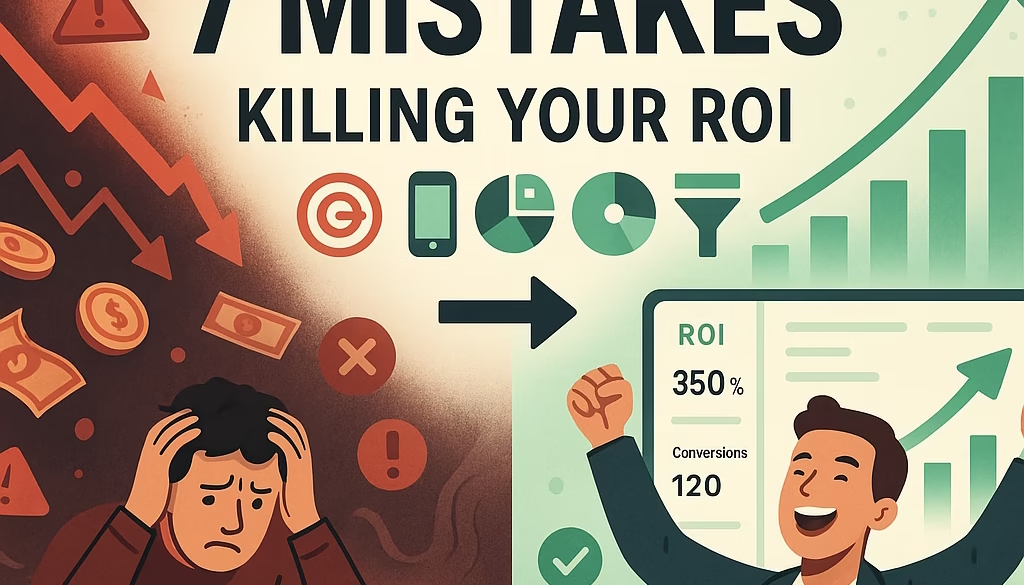
7 Game-Changing Performance Marketing Mistakes That Are Killing Your ROI (and How to Fix Them)
I’ll be honest with you—performance marketing isn’t as straightforward as the gurus make it seem. After working with hundreds of businesses over the past decade, I’ve watched brilliant entrepreneurs burn through five-figure ad budgets with nothing to show for it. I’ve seen seasoned marketers scratch their heads wondering why their “winning” campaigns suddenly stopped working.
Thank you for reading this post, don't forget to subscribe!
The truth? Most performance marketing failures aren’t caused by bad luck or market conditions. They stem from seven critical mistakes that even experienced marketers make repeatedly. These errors are silent budget killers that gradually drain your ROI while creating the illusion that you’re doing everything right.
Today, I’m going to walk you through each of these mistakes—not from some textbook perspective, but from real-world experience managing campaigns that have generated millions in revenue. More importantly, I’ll show you exactly how to fix them, with step-by-step solutions you can implement starting today.
Whether you’re a startup founder spending your first $1,000 on ads or a marketing director managing six-figure monthly budgets, these insights will fundamentally change how you approach performance marketing. Let’s dive in.
Why Performance Marketing Feels So Complicated (But Doesn’t Have To Be)
Before we jump into the mistakes, let me explain why performance marketing feels overwhelming to most people. Unlike traditional advertising where you throw money at billboards and hope for the best, performance marketing promises something revolutionary: measurable results for every dollar spent.
This sounds amazing in theory. In practice, it means drowning in data, second-guessing every decision, and constantly feeling like you’re missing something important. The platforms give you hundreds of metrics to track, but nobody explains which ones actually matter for your business.
Here’s what I’ve learned: successful performance marketing isn’t about tracking everything—it’s about tracking the right things. It’s not about perfection—it’s about consistent improvement. And most importantly, it’s not about short-term wins—it’s about building systems that generate profitable growth month after month.
The marketers who get this right don’t just drive more conversions. They build predictable revenue engines that scale with their business growth.
Topic to read: August 2025 Google Spam Update & June Core Update & Zero-Click Searches & AI Overviews
Mistake #1: Treating Attribution Like an Afterthought (And Why It’s Costing You Thousands)
The Problem That’s Hiding in Plain Sight
Let me tell you about Sarah, a client who came to me convinced that Facebook ads were worthless for her business. Her Facebook campaigns showed a 0.8x ROAS while her Google Search campaigns delivered a healthy 4.2x return. Her conclusion? Cut Facebook entirely and double down on Google.
But when we dug deeper into her customer journey, we discovered something fascinating. Most of her “Google converts” had actually discovered her brand through Facebook weeks earlier. They researched her products, compared alternatives, and eventually returned via Google search to make their purchase.
Facebook was doing the heavy lifting of introduction and education. Google was simply capturing the final decision. Yet her attribution model gave Google 100% of the credit while Facebook got blamed for “poor performance.”
This is the attribution trap, and it’s probably costing you more than any other mistake on this list. Default attribution models tell you which touchpoint closed the sale, not which touchpoints made the sale possible. It’s like giving the final relay runner all the credit for winning the race.
Here’s How to Fix Your Attribution (Without Getting Lost in the Weeds)
I’m not going to overwhelm you with complex attribution theory. Instead, let’s focus on three practical changes that will immediately improve your campaign decisions:
Start with Time-Decay Attribution This model gives more credit to recent touchpoints while still acknowledging earlier interactions. In Google Analytics, switch from “Last Click” to “Time Decay” attribution and watch how your channel performance changes. Most businesses discover that their upper-funnel campaigns (social media, display, video) perform much better than they realized.
Implement the 7-Day Window Test Set up custom attribution windows that track conversions 7, 14, and 30 days after the initial click. You’ll often find that channels appearing “unprofitable” in 1-day windows become highly profitable when you extend the measurement period. This is especially important for higher-consideration purchases.
Create Channel-Specific KPIs Stop judging every channel by the same metrics. Facebook might excel at introducing new customers (measure brand searches and email signups). Google might dominate final conversions (track immediate purchases). Email might drive repeat purchases (measure customer lifetime value). Give each channel credit for what it does best.
Track Assisted Conversions Monthly In Google Analytics, navigate to “Multi-Channel Funnels” and review assisted conversions monthly. This report shows which channels contributed to conversions without getting final credit. Use this data to defend budget allocation for channels that assist but don’t always close.
After implementing proper attribution tracking, Sarah discovered that her Facebook campaigns were actually generating 340% more value than initially measured. Instead of cutting Facebook, she increased the budget by 60% and saw her overall performance marketing ROI jump from 2.1x to 4.8x within three months.
Mistake #2: Getting Seduced by Vanity Metrics (The Numbers That Look Good But Mean Nothing)
When “Success” Isn’t Actually Success
I once worked with a startup CEO who was over the moon about his performance marketing results. His campaigns were generating thousands of clicks, impressive engagement rates, and a cost-per-click that made his competitors jealous. He was convinced he’d cracked the performance marketing code.
There was just one problem: his business was hemorrhaging money. Despite all those beautiful metrics, conversions were dismal, customer acquisition costs were through the roof, and the company was burning through its funding faster than expected.
This is the vanity metrics trap. When you have access to dozens of performance indicators, it’s tempting to focus on the ones that make you feel good rather than the ones that matter to your business. High click-through rates mean nothing if those clicks don’t convert. Low cost-per-click is meaningless if the traffic is unqualified.
Focus on Metrics That Actually Pay the Bills
Here’s how to restructure your performance marketing measurement around what actually matters:
Replace CPC with Revenue Per Click (RPC) Instead of celebrating low click costs, calculate how much revenue each click generates. A $5 click that generates $20 in revenue beats a $1 click that generates nothing. This simple shift completely changes how you evaluate campaign performance.
Swap CTR for Conversion Rate × Average Order Value Click-through rate tells you if your ad is interesting. Conversion rate multiplied by average order value tells you if it’s profitable. Focus your optimization efforts on campaigns that drive the highest value conversions, not the most clicks.
Track Customer Acquisition Cost vs. Lifetime Value This is the ultimate performance marketing metric. If you acquire a customer for $50 but they generate $200 in lifetime value, you have a sustainable business model. If acquisition costs exceed lifetime value, you’re slowly going out of business—regardless of how impressive your other metrics look.
Implement Revenue Attribution Windows Set up tracking that measures revenue generated 30, 60, and 90 days after customer acquisition. This longer view often reveals that channels appearing “expensive” actually drive the most valuable customers when you account for repeat purchases and referrals.
Create Cohort-Based Performance Reports Group customers by acquisition month and track their revenue contribution over time. This analysis shows which campaigns and channels consistently deliver high-value customers versus those that drive one-time purchases.
After shifting to revenue-focused metrics, that startup CEO made dramatic changes to his campaigns. He paused several high-traffic, low-conversion campaigns and increased budget for smaller, more targeted efforts. Within 60 days, his customer acquisition cost dropped by 43% while revenue per customer increased by 67%.
Mistake #3: The “Set It and Forget It” Syndrome (Why Your Winning Campaign Is Slowly Dying)
Why Yesterday’s Winner Becomes Tomorrow’s Money Pit
Here’s a story that might sound familiar: You launch a performance marketing campaign, spend weeks optimizing it, finally achieve great results, and then… you leave it alone. After all, why fix what isn’t broken?
Fast forward three months: that “winning” campaign is barely breaking even. The audience has grown tired of your ads, competitors have copied your approach, and market conditions have shifted. But because the decline was gradual, you didn’t notice until the damage was done.
This is the set-and-forget syndrome, and it’s killing more campaigns than any other mistake. Digital advertising is dynamic. Consumer behavior evolves, competitive landscapes shift, and platform algorithms change constantly. What worked brilliantly last quarter might be completely ineffective today.
I’ve seen businesses lose six-figure monthly revenues because they treated performance marketing like a savings account—something you set up once and expect to grow forever.
Build a System That Keeps Your Campaigns Fresh and Profitable
Weekly Health Checks (15 Minutes That Save Thousands) Every Monday, spend 15 minutes reviewing key metrics across all active campaigns. Look for declining click-through rates (audience fatigue), increasing costs per conversion (competition intensifying), or dropping quality scores (ad relevance declining). Catch problems early before they become expensive.
The 2-Week Creative Refresh Rule Consumer attention spans are shorter than ever. Create a calendar that introduces new ad creative every two weeks. This doesn’t mean completely new campaigns—often, you just need new images, headlines, or video content that maintains the same successful messaging with fresh presentation.
Competitive Intelligence Monitoring Set up Google Alerts for your brand name and main competitors. Use Facebook’s Ad Library to see what competitors are promoting. When you spot new competitive campaigns, be ready to adjust your messaging, increase bids on key terms, or launch counter-campaigns quickly.
Automated Optimization Rules Set up platform-specific rules that handle routine optimizations automatically. Pause ads when cost-per-conversion exceeds your threshold, increase budgets for campaigns beating target ROAS, and get alerts when performance deviates significantly from normal ranges.
Seasonal Adjustment Planning Create a calendar marking known busy periods for your industry, holidays that affect your audience, and any recurring events that impact demand. Adjust bids, budgets, and messaging proactively rather than reactively.
One of my e-commerce clients implemented systematic weekly reviews and discovered that their “best performing” campaign had been declining for six weeks straight. By catching this early and implementing creative refresh protocols, they prevented what would have been a $40,000 revenue loss and actually improved the campaign’s performance by 23%.
Mistake #4: Treating All Customers Like They’re the Same Person (The Personalization Problem)
When One-Size-Fits-All Becomes One-Size-Fits-None
I once audited a campaign for a software company that was targeting “small business owners” with a single, generic message: “Grow your business with our software.” The campaign was getting decent traffic but terrible conversion rates.
When we dug into their customer data, we discovered they actually served three distinct groups: restaurant owners struggling with inventory management, retail stores needing better point-of-sale systems, and service businesses wanting to automate scheduling. Each group had completely different pain points, but they were all seeing the same generic message.
No wonder the conversions were poor. Imagine being a restaurant owner worried about food waste, clicking on an ad, and landing on a page that talks about “growing your business.” You’d bounce immediately because the message doesn’t connect to your specific reality.
This is the personalization problem. In our rush to scale campaigns quickly, we often create broad, generic messaging that speaks to everyone but resonates with no one.
Create Campaigns That Speak Directly to Your Audience’s Reality
Start with Customer Research, Not Campaign Creation Before you write a single ad, talk to your existing customers. Ask them what problems your product solves for them specifically. What language do they use to describe these problems? What hesitations did they have before purchasing? This research becomes the foundation for all your messaging.
Develop Behavioral Segmentation Group your audience based on actions they’ve taken: people who visited your pricing page (high intent), people who downloaded a free resource (interested but researching), people who abandoned their cart (ready to buy but have concerns). Create different campaigns with messaging that acknowledges where each group is in their journey.
Create Industry-Specific Landing Pages If you serve multiple industries, create dedicated landing pages for each one. Use industry-specific language, showcase relevant case studies, and highlight benefits that matter most to that particular audience. The extra effort pays off dramatically in conversion rates.
Implement Dynamic Content Where Possible Use platform features that automatically customize ad content based on user behavior. Show different products to repeat visitors, highlight special offers to price-sensitive segments, or display testimonials from similar businesses to first-time visitors.
Geographic and Demographic Customization Adjust your messaging based on location (different regions often have different priorities), age groups (millennials and baby boomers respond to different appeals), and other demographic factors that influence buying decisions.
That software company redesigned their campaigns around these three distinct audiences. Instead of one generic “grow your business” campaign, they created separate campaigns for restaurant owners (“Cut Food Waste by 30%”), retail stores (“Process Transactions Twice as Fast”), and service businesses (“Eliminate Double-Booking Forever”). Their overall conversion rate increased by 189% while cost per acquisition dropped by 34%.
Mistake #5: Ignoring the Mobile Reality (Why 60% of Your Traffic Gets a Second-Class Experience)
The Desktop Bias That’s Costing You Conversions
Here’s an embarrassing confession: I once spent three months optimizing a client’s performance marketing campaigns on my desktop computer. The numbers looked great on my 27-inch monitor. The landing pages were beautiful, the checkout process was smooth, and the forms were easy to fill out.
Then I checked the mobile experience. It was a disaster. The landing page took 12 seconds to load. The signup form required scrolling and zooming to complete. The checkout process involved typing long credit card numbers on a tiny keyboard. No wonder mobile conversion rates were 70% lower than desktop, despite mobile representing 65% of total traffic.
This is the mobile reality: most of your traffic is coming from mobile devices, but most campaigns are still designed for desktop experiences. Every friction point on mobile is costing you money, yet it’s often invisible when you’re managing campaigns from your computer.
Make Mobile Your Priority, Not an Afterthought
Mobile-First Landing Page Design Design your landing pages on your phone first, then adapt them for desktop. Use large, thumb-friendly buttons, minimize text entry requirements, and ensure key information is visible without scrolling. Test everything on actual mobile devices, not just desktop browser simulations.
Implement One-Click Purchase Options Enable Apple Pay, Google Pay, and platform-native checkout options that reduce mobile friction. The easier you make it to complete a purchase on mobile, the more conversions you’ll capture from your mobile traffic.
Mobile-Specific Ad Creative Create vertical video content optimized for mobile consumption, use larger fonts that are readable on small screens, and design graphics that work well in mobile news feeds. Remember that mobile users are often multitasking or on the go—your message needs to be instantly clear.
Device-Specific Bidding Strategies Analyze conversion data by device type and adjust your bids accordingly. If mobile users convert at lower rates but higher volumes, you might bid less per mobile click while maintaining higher budgets to capture more traffic. If mobile users have higher lifetime value, bid more aggressively for mobile traffic.
Page Speed Optimization Mobile users abandon pages that take more than 3 seconds to load. Use Google PageSpeed Insights to identify mobile loading issues and fix them immediately. Every second you shave off loading time directly improves conversion rates.
Simplified Mobile Forms Replace long forms with progressive profiling (collect information over multiple interactions), use dropdown menus instead of typing where possible, and implement auto-fill features that pull information from user profiles or previous interactions.
After implementing mobile-first optimization, that client saw mobile conversion rates increase by 156% within 30 days. More importantly, overall campaign ROI improved by 89% because they were finally capturing the value from their mobile traffic instead of watching it bounce away.
Mistake #6: Flying Blind with Your Budget (The Allocation Problem That Kills Scale)
When Budget Distribution Becomes Budget Destruction
Let me paint you a picture of budget allocation gone wrong. A client came to me spending $15,000 per month across 12 different campaigns, with roughly equal budgets for each one. On the surface, this seemed logical—diversify your risk, test multiple approaches, see what works.
But when we analyzed the data, we discovered something shocking: three campaigns were generating 80% of the profitable conversions, while six campaigns were barely breaking even and three were losing money. By spreading the budget equally, they were essentially subsidizing poor performers with profits from winners.
Even worse, the top-performing campaigns were budget-constrained. They could have profitably spent 3-4x their current budget, but instead, that money was feeding underperforming campaigns that should have been paused months ago.
This is the allocation problem. Without systematic budget management, you end up spreading money across campaigns based on gut feeling rather than performance data.
Turn Budget Allocation into a Competitive Advantage
The 70-20-10 Budget Strategy Allocate 70% of your budget to proven performers (campaigns consistently hitting target ROAS), 20% to scaling opportunities (newer campaigns showing promise), and 10% to testing (completely new audiences, creative, or strategies). This ensures most of your money goes to profitable activities while maintaining innovation pipeline.
Performance-Based Budget Rebalancing Review campaign performance weekly and shift budget toward overperformers. If Campaign A is generating 5x ROAS while Campaign B struggles at 1.5x, gradually move budget from B to A until A reaches its efficiency ceiling or B improves to acceptable levels.
Implement Portfolio Bidding Strategies Use platform features that optimize across multiple campaigns simultaneously. Google’s Target ROAS bidding and Facebook’s Campaign Budget Optimization can automatically shift spend toward your best-performing ad sets within your budget constraints.
Geographic and Temporal Budget Optimization Analyze when and where your audience converts most efficiently. If you get better results during weekday evenings, increase bids during those hours. If certain geographic regions consistently outperform, allocate more budget there while reducing spend in underperforming areas.
Competitive Response Budgeting Maintain a reserve budget (15-20% of monthly total) for responding to competitive threats or capitalizing on unexpected opportunities. When competitors launch aggressive campaigns or market conditions shift favorably, you can respond quickly without robbing budget from proven performers.
Seasonal Budget Planning Map your budget allocation to known demand patterns throughout the year. Increase budgets before peak seasons, reduce spend during slow periods, and maintain flexibility to shift between campaigns as seasonal trends emerge.
After implementing systematic budget allocation, that client’s performance transformed dramatically. By concentrating 70% of budget on their three best-performing campaigns and gradually testing improvements to underperformers, they increased overall ROAS from 2.3x to 5.1x while actually reducing total monthly spend by $3,000.
Mistake #7: Sacrificing Your Brand for Short-Term Gains (The Long-Term Disaster)
When Performance Marketing Becomes Brand Suicide
This mistake is the most dangerous because it’s almost invisible until it’s too late. I worked with an e-commerce company that was crushing their performance marketing goals—5x ROAS, rapidly growing sales, and expanding into new markets. By every immediate metric, they were winning.
But after 18 months of aggressive performance marketing, they started noticing troubling trends: customer acquisition costs were steadily increasing, organic traffic was declining, and customer lifetime value was dropping. Worst of all, when they tried to expand into new product categories, nobody recognized their brand name.
Here’s what happened: in their obsession with immediate conversions, they’d focused entirely on bottom-funnel campaigns. Every ad was a direct sales pitch, every landing page was optimized for immediate purchase, and every dollar was measured by same-day ROAS. They’d stopped investing in brand awareness, customer education, and relationship building.
The result? They’d trained their audience to view them as a commodity provider rather than a trusted brand. Without brand equity, they were vulnerable to every competitor with a lower price or better promotion.
Build Brand Equity While Driving Performance
The 80-20 Brand-Performance Split Allocate 80% of your budget to conversion-focused performance campaigns and 20% to brand awareness and education campaigns. This maintains short-term results while building long-term brand strength. Measure brand campaigns by metrics like brand search volume, social media engagement, and assisted conversions rather than immediate ROAS.
Create Educational Content Campaigns Develop campaigns that teach your audience something valuable related to your industry. These campaigns build authority and trust while attracting potential customers early in their research process. They might not convert immediately, but they create positive brand associations that influence future purchase decisions.
Implement Brand Safety and Messaging Consistency Ensure all performance marketing campaigns reinforce your brand values and personality. Even conversion-focused ads should maintain consistent visual identity, tone of voice, and value proposition. Your ads are often the first interaction potential customers have with your brand—make sure it’s a good one.
Track Brand Health Metrics Monitor branded search volume (how often people search for your company name), direct traffic growth, and social media mentions alongside performance metrics. Declining brand searches often predict future increases in acquisition costs, giving you early warning to adjust strategy.
Customer Lifetime Value Optimization Measure campaign success not just by immediate ROAS but by customer lifetime value. Campaigns that acquire customers with high LTV are more valuable than those driving one-time purchasers, even if their immediate ROAS appears lower.
Organic and Paid Synergy Coordinate your performance marketing with content marketing, SEO, and social media efforts. Use paid campaigns to amplify high-performing organic content, retarget website visitors with educational material, and support SEO efforts by driving traffic to important pages.
That e-commerce company restructured their approach to include brand-building campaigns alongside performance efforts. They launched educational content campaigns, implemented brand-consistent messaging across all ads, and started measuring customer lifetime value alongside immediate ROAS. Within six months, their organic traffic rebounded, customer acquisition costs stabilized, and new product launches began succeeding because customers recognized and trusted their brand.
Your 90-Day Performance Marketing Recovery Plan
Now that you understand the seven critical mistakes, let’s create a realistic plan for fixing them without disrupting your current results:
Days 1-30: Foundation Fixes
- Implement proper attribution tracking and review how it changes your channel performance assessment
- Identify and eliminate vanity metrics from your regular reporting
- Set up weekly campaign review sessions to catch performance declines early
- Audit your mobile experience and fix the most critical user friction points
Days 31-60: Strategic Improvements
- Develop audience segmentation and create personalized messaging for your top three customer segments
- Implement the 70-20-10 budget allocation strategy across your campaigns
- Launch your first brand awareness campaign to balance performance efforts
- Set up automated optimization rules to handle routine campaign management
Days 61-90: Advanced Optimization
- Create comprehensive customer journey mapping to identify optimization opportunities
- Implement advanced attribution models and adjust budget allocation based on new insights
- Launch cross-platform retargeting campaigns to maximize customer lifetime value
- Establish quarterly planning sessions to align performance marketing with long-term business goals
Measuring Your Progress
Track these key indicators to measure your performance marketing transformation:
Month 1 Results to Expect:
- 15-25% improvement in attribution accuracy
- 10-20% reduction in mobile bounce rates
- Better campaign performance visibility through improved metrics
Month 2 Results to Expect:
- 20-35% improvement in audience engagement through better segmentation
- 15-30% increase in overall ROAS through better budget allocation
- Stabilized or improved organic search performance
Month 3 Results to Expect:
- 30-50% improvement in customer lifetime value from new acquisitions
- 25-40% reduction in customer acquisition costs
- Sustainable growth systems that scale with your business
The Reality Check: This Isn’t a Magic Bullet
Before you dive into implementing these changes, let me give you a reality check. Fixing these seven mistakes won’t transform your performance marketing overnight. It requires consistent effort, ongoing optimization, and a commitment to measuring what actually matters rather than what makes you feel good.
Some of these changes might initially make your numbers look worse before they look better. When you switch from last-click attribution to multi-touch models, some campaigns will appear less profitable. When you shift from vanity metrics to revenue metrics, your “wins” might seem smaller. When you start investing in brand building, your immediate ROAS might dip slightly.
This is normal and expected. You’re trading short-term metric inflation for long-term business health.
Building Your Performance Marketing Future
The digital advertising landscape will continue evolving. New platforms will emerge, privacy regulations will change tracking capabilities, and consumer behavior will shift in unpredictable ways. But the principles we’ve covered—accurate attribution, revenue focus, active optimization, audience personalization, mobile prioritization, strategic budgeting, and brand building—will remain relevant regardless of technological changes.
Your competitive advantage doesn’t come from mastering the latest platform features or growth hacks. It comes from building systematic, sustainable performance marketing operations that consistently generate profitable growth for your business.
The businesses that win in performance marketing aren’t necessarily the ones with the biggest budgets or the fanciest tools. They’re the ones that avoid these seven critical mistakes while building systems that compound over time.
Start with the mistake that resonates most strongly with your current situation. Implement the fixes systematically, measure the results honestly, and gradually expand your improvements across all areas. Your future self—and your business’s bottom line—will thank you for taking action today.
Remember: performance marketing isn’t just about driving more traffic or generating more leads. It’s about building a predictable, scalable system that turns advertising spend into sustainable business growth. Fix these mistakes, and you’ll be well on your way to achieving exactly that.
For more comprehensive guidance on performance marketing strategies, check out WordStream’s Performance Marketing Guide for additional insights and best practices.